Discussing The Food System: Beyond GMOs

ID-100187159

Lately it seems like every discussion in the food world  centers around GMOs/organic/local. It is all about what we see on the plate and getting caught up in it, I realized I was no longer paying attention to the journey of food from the fields to the fork as is the stated goal of my blog.

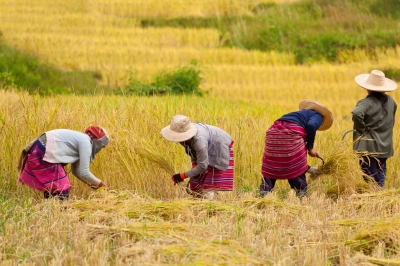
That got me thinking about the people who make this food journey possible: farmers and farm workers.  And around the globe, it would seem, crises are everywhere: in Mexico, farm workers are striking and stopping work to demand better wages and conditions; in Bangladesh farmers specially from minority groups are being forcibly dispossessed of their land, an issue which resonates next door in India as well; a theme that is echoed in Egypt. And in a closing of the circle, Chipotle says it is paying close attention to its customers and banning GMOs, but perhaps need to better care of their workers who bring the food to our plates.

(Image Courtesy: noppasinw at FreeDigitalPgotos.net)

Equipment Investment: How Much is Enough?

I just came upon this blog and discovered it to be a great learning resource. The food conversation is dominated by a few issues which obscure the many other factors at work in the growing of food specially from the farmer’s perspective.

brentgloy's avatarAgricultural Economic Insights

Flickr: johnnyalive. Johnny Klemme

by Brent Gloy

The rapid descent of crop prices and resulting margin squeeze have forced farmers to carefully evaluate their financial structure and look for ways to reduce their cost of production. Because prices for inputs such as fertilizer and seed have been slow to adjust, much of the attention has turned to fixed costs such as land rents and equipment costs. These are typically the largest categories of fixed costs on most farms. While we have looked at costs associated with farmland extensively, equipment costs are often very large on many farms and deserving of attention. There is likely great variation in equipment investment and costs across most farms.

View original post 865 more words

#Farming Friday 34: The Reality of Raising Animals

ID-100186429

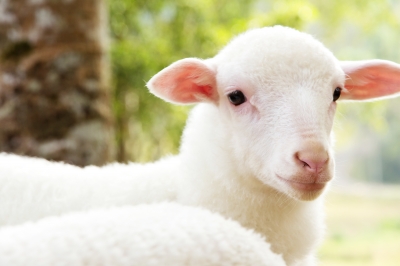
Lately we have been reading a lot about the conditions under which animals are raised. This is an issue which many urban consumers do not like to dwell on because our mental image of  cute lambs running around on green fields collides with the reality that this going to be on a plate, maybe our plate , one day. While that is a reality, that is no indicator of how the animals are raised. Farmers raise their animals with care no matter what their purpose, here is an account from a farmer about the reality of raising animals and how her children are learning about it as well.

(Image Courtesy Polansuk at FreeDigitalPhotos.net)

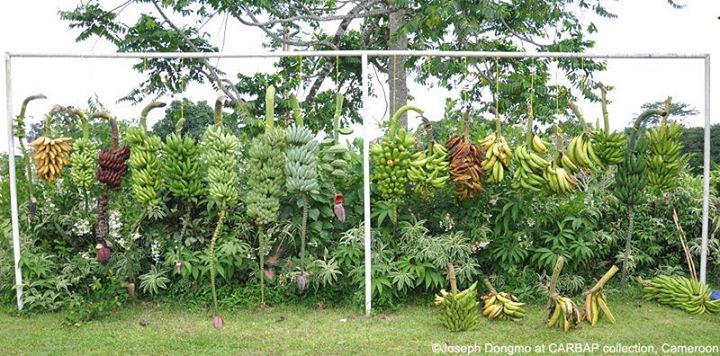
Bananas! May 22 International Day for Biological Diversity

banana

ProMusa Banana Community celebrates with this stunning visual of banana diversity! Read more here.

The Chipotle Saga

ID-100274127

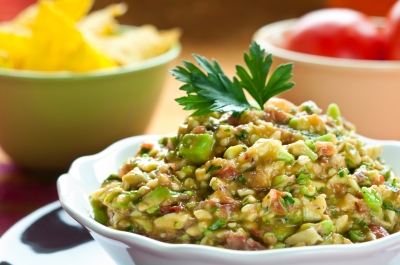
Much has been written about Chipotle’s recent GMO policy announcement, most of it amazingly sane and factual. This is quite a change from the reflexive aversion to anything GMO that the media often comes up with. It is cheering to think that the fog of hysteria is slowly lifting to let the facts shine!

  • Here are some interesting reads on this:
  • From The Washington Post
  • From the Iowa Farm Bureau
  • From a farmer who raises pigs
  • From NPR who can’t take it seriously
  • From Quartz who point out that all corn is genetically modified so what about the tortillas?


(Image Courtesy: tsunamistudio at FreeDigitalPhotos.net)

How To Deal With Cow Poop


ID-100175391

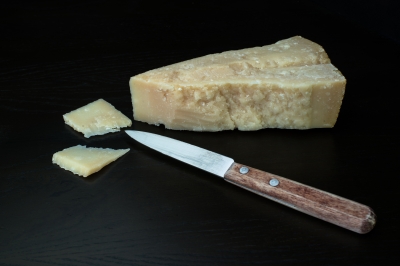
Ever thought about the cows that provide the milk that makes the cheese that brings so much delight to so many of us? Most of us, people of the cities would have a mental image of a cow , standing in a field, perhaps swishing it’s tail and munching slowly. All that munching would certainly make for healthy cows that provide high quality milk, but, also, it provides a lot, and I do mean a lot, of poop.

Now, of course, this is not a subject that would pop up in daily conversations; but it has been in the news recently for its contribution to climate change. It is an issue so what to do about it? The options, according to one farmer from Italy are endless, as he shows us in his Museo della  Merda, The Museum of Shit.  Here you can see how cow dung is transformed into energy, plastic, bricks and urea. It is a stylized, surprising  and in fact inspiring presentation of the possibilities of a subject we usually do not want to see much of!

(Image Courtesy franky242 at FreeDigitalPhotos.net)

Three Myths About Food & Farming

#Farming Friday 34 : do read this farmer’s excellent piece on myths about farming and the unnecessary fears around the food we eat.

Climate Change and US Agriculture

ID-10060783

A brief note on an important initiative: the discussion around agriculture and climate change often highlights the resilience issue. The concern is with ensuring that we are able to grow enough food for all the people on the planet as growing conditions change, often in sudden and unexpected ways. Less often is there a discussion on tackling the contribution of agriculture to the process of climate change by reducing emissions from agriculture. So the announcement of a set of steps intended to bring about just such changes by the USDA. The measures include promoting no till, renewable energy, forest conservation,energy efficiency in farming, containing methane emissions from livestock etc and are voluntary; thought the government proposes to incentivize the measures in several ways.  It is estimated that this policy would reduce agricultural emissions by about 120 million metric tons, a 20% reduction from the present level.

(Image Courtesy: kangshutters from FreeDigitalPhotos.net)

Food News!

ID-10055209

A few things in food news that were interesting….

Grist.org has an absorbing series on farm size, is “big” always “evil”?

Lessons from watching Gwyneth Paltrow  attempt to live on a SNAP allowance for a week, something squirmy about trying to replicate another person’s reality and complete cluelessness reflected in the lime factor!

Agriculture and the Sustainable Development Goals  insights into different variables like biodiversity, resilience, trade etc.

How the changing climate is impacting coffee production and ways to deal with it.

What does Chipotle’s announcement that they are eliminating GMOs from their menu actually mean? Their attitude to farmers in the past is also intriguing.


(Image Courtesy: Stuart Miles from FreeDigitalPhotos.net)

SIGNS OF SPRING

#Farming Friday 34: Spring on the Farm!