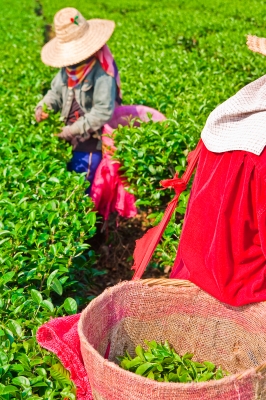
On International Women’s Day, a story celebrating women farmers’ efforts at climate mitigation and; a reminder of the challenges they continue to face, specifically in land ownership issues.
(Image Courtesy: freedigitalphotos.net)

On International Women’s Day, a story celebrating women farmers’ efforts at climate mitigation and; a reminder of the challenges they continue to face, specifically in land ownership issues.
(Image Courtesy: freedigitalphotos.net)
Posted in Uncategorized
Coffee is leading the markets right now, taking over from oats which had a price spike recently. With the wheat supply from Ukraine uncertain due to recent events, wheat futures are also soaring. All this is troubling news….
Posted in Uncategorized
You may have seen Chipotle’s “Farmed and Dangerous” campaign. It is supposed to be a satire but is basically an attack on those who grow our food. So for #Farming Friday here are thoughts on this from a farmer on this issue.
Posted in Uncategorized

Not literally, of course! but two new books give a peek into the cuisine that Abraham Lincoln and Thomas Jefferson enjoyed. Abraham Lincoln , apparently, did actually cook and some of the food served in his time is explored in the book, “Abraham Lincoln In the Kitchen: A Culinary View of Lincoln’s Life and Times”.Perhaps you have never asked yourself what kind of barbecue sauce could be served at a campaign event before there was paper ware but now, come to think of it, i ma curious to discover the answer!
Thomas Jefferson made a pact with his chef that he would be free after he learnt the intricacies of French cuisine and could prepare them for Jefferson! “Thomas Jefferson’s Creme Brulee: How a Founding Father and his Slave James Hemings Introduced French Cuisine to America” describes their journey to France and the subsequent introduction of French cooking techniques in the President’s kitchen.
Nice reading for President’s Day!
Posted in Uncategorized
This piece evoked a very personal response. I cook fish frequently for my family. My native cuisine is rich in fish dishes and catfish is ideal for making curries with the flavor of the cooking I grew up with. While imported catfish may be cheaper, its quality is not always comparable to US catfish (this is based on my shopping experience), even fish bought way before the sell by date looks unappetizing at times. We were taught as kids that if the fish is really fresh, it does not require much dressing up, it is already tasty and this quality comes up sharply for curries but is easily masked if the fish is marinate/coated and then fired/grilled/baked. Perhaps American catfish is higher priced but it tastes better and I know what safety standards it is required to meet. I do not doubt that other countries have rigorous standards as well but just from the cook’s point of view, imported catfish can be disappointing.
Posted in Uncategorized

Everyday children go hungry all over the world. Not just in poor countries but even in places which seem to be rich in resources. These children might make the trip to school but are too weak to learn because their bodies and minds are deprived of nourishment. Just when children are excited to hear about snow in the forecast bringing a day off from school, others cry because they will miss their only meal of the day.We think we feel their pain but nothing in our daily lives quite prepares us for the child who sits apart from others at lunch because watching other kids eat makes the pangs of hunger even harder to bear.
The Lunchbox fund is an initiative in South Africa to provide lunch in school to children who would otherwise go hungry. 65% of children in South Africa live in poverty, 20% have been orphaned by AIDS; without parents and without food they are likely to slip out of school into a bleak future. This week, The Giving Table (http://www.givingtable.org/#home) has organized a campaign to support The Lunchbox Fund and I am proud to donate this post toward this effort.
The theme for bloggers donating posts is lunch. In keeping with that, I thought I would share my story of packing lunch for my kids. When Kid 1 started school, we agreed that she would buy lunch on one day, usually on Friday when pizza was offered and the rest of the days I would pack lunch for her. Mindful of children with nut allergies, the school prohibits peanut butter but other than that we experimented and tried out every kind of sandwich filling we could imagine and my child was happy to eat sandwiches everyday. I would listen to the complaints of other parents about packing lunch for a picky eater and be thankful for my blessings. Then came Kid2 and my world turned upside down: the lunchbox would come back almost just as it was sent out, sandwiches were boring, pasta was “too cold”, chicken smelled “funny”, I just could not get it right.
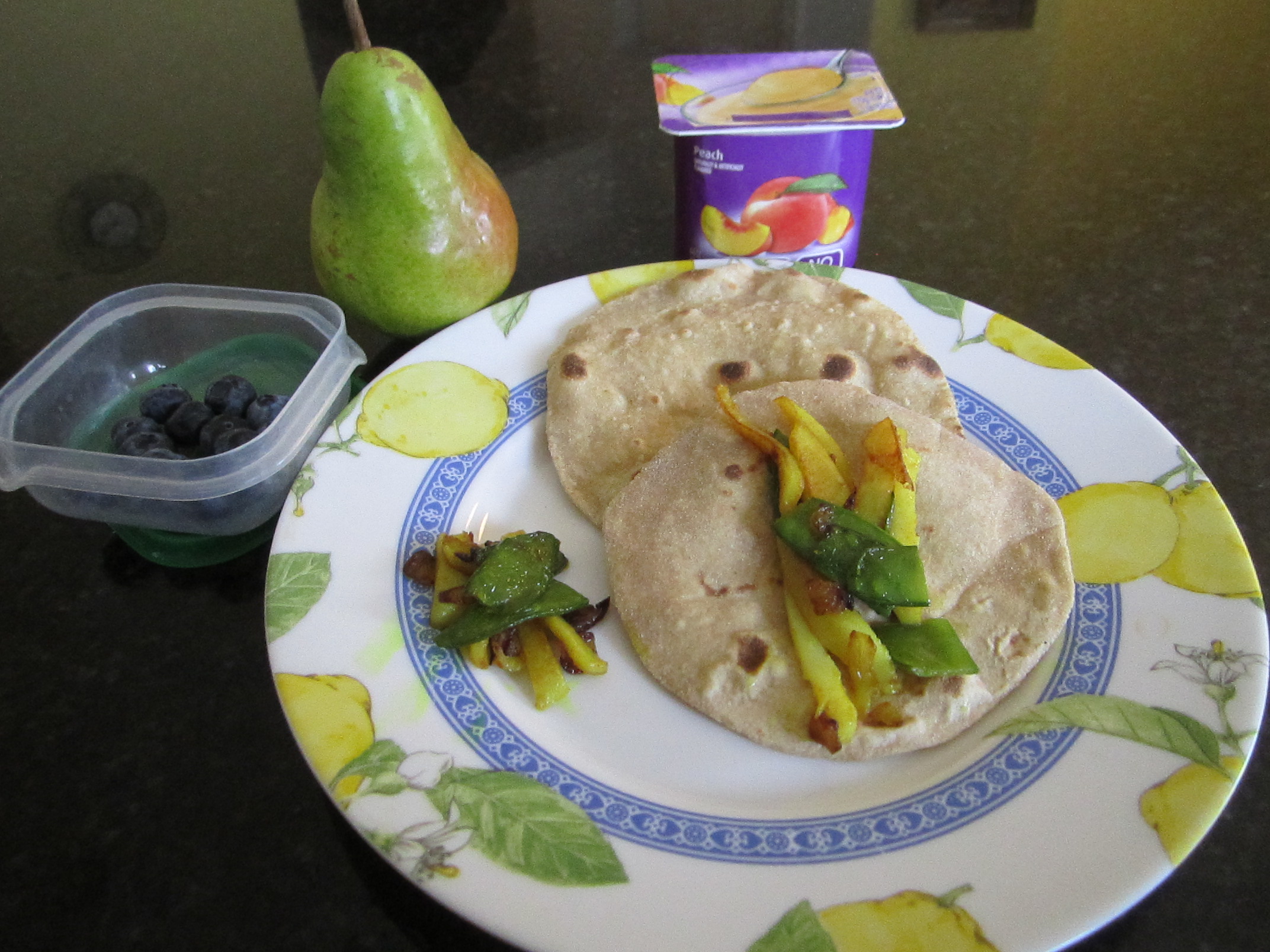
Desperately searching for a solution, I fell back on the lunches of my childhood, the soft rotis , the delicious stuffing that my mother would roll up in them; and I decided to try and replicate it. Since Kid 2 is constantly vowing to become a vegetarian “from my next meal”, I have to chosen a simple and easy vegetable dish that makes the lunch nutritious and yummy.

Easy Indian Vegetable Medley
Ingredients:
1 onion
1 potato
1 carrot
A few green beans/flat beans
2 or 3 stalks of cauliflower/broccoli
1 green chilli
1/2 tsp cumin seeds
1/2 tsp turmeric powder
Salt to taste
Method:
Slice the onion finely. The vegetables should be chopped fine, length wise. This ensures that all the ingredients are roughly the same size and will cook at the same rate so none are left too raw or overcooked. Any combination of vegetables will work but I have included our favorites, sometimes I have only two or three of these to hand but the recipe works just as well.
Heat oil in a pan. Keeping the heat at medium, add the cumin seeds (these are available at all Indian grocery stores and many regular grocery stores as well. if you do not have them, you can still go ahead and make this). When the seeds are toasted, they turn a darker shade and it is time to add the onions. Let them cook till they are soft and then add the vegetables. Toss all the ingredients together and let this cook for 2-3 minutes, stirring occasionally. Then add the turmeric (availability same as that of cumin) and salt ,and mix well. Cover and let it cook for about 5-7 minutes. Take off the lid and check to see if vegetables are tender but not mushy. At this stage you can add the green chilli, sliced in half, for a little bite if you like. Increase the heat and cook for a minute so the vegetables are crisp and bright.
I usually roll this up in a roti made at home with whole wheat flour. This can also be purchased at the Indian store or substituted with tortillas. Since the school day is long, this is supplemented with fruits and yogurt. Often, this is what I have for lunch as well.
The campaign runs through this week and even donating my weekly coffee budget would make a difference, and I certainly intend to do so.We have many choices for lunch, I intend to share this good fortune with those who have none and make a donation here.Please do consider it as well.
Posted in Hunger, Living, Nutrition, Uncategorized

Since my last post was about the one acre farm, I am not posting for Framing Friday but decided instead to provide a recap on the Farm Bill which, as you might remember started life as the Farm Bill 2012, had some near death experiences, spent some time as a zombie and had now been restored to life as the Farm Bill 2014.
It is important to remember that given this disastrous past, it is something of an achievement that the bill finally got passed, at all. Sad commentary on our times! And, the news is not all bad. Yes, there have been cuts on conservation spending and food stamps but direct payments have been replaced by an extended crop insurance program (there will be no more “over the dairy cliff” scares) , a plan to double food stamps when used at farmer’s markets and investment in renewable energy, research, specialty crops, to name a few.
Hopefully, the good things will take root and give a good foundation to agricultural policy.
Here are some useful links:
Posted in Uncategorized
We hear a lot about industrial farming and big farms but what happens if all the farmer has is one acre? Can he/she make a successful livelihood? A small change in variables, it seems, can bring about a big change on the one acre farm and in the life of the farmer.

As facts go, the facts of the small African farm are grim, and seldom grasped. You need to start here, though, because 70% of the world’s poorest people live on very small farms.
Their poverty is nothing but straightforward: if you’re farming the size of farm the poorest farm, with the kind of technology the poorest have access to and getting the yields that pass for normal in the poorest countries, you just don’t produce enough calories to feed even two adults –
[A note on sources is at the end.]
A household working one acre at South Sudanese yields just can’t feed itself. Notice, we’re talking calories here. So this is before we even start thinking about protein, or micronutrients, to say nothing of the thousand other things people need to survive (cookware, salt, oil, housing, clothes, etc. etc. etc.) It doesn’t get more elemental than this.
The second column…
View original post 379 more words
Posted in Uncategorized
One of the issues in the GMO debate that seems to concern people a lot is that of corporate control over seeds. In today’s Farming Friday, a farmer talks who uses both GMO and non-GMO seeds talks about his choices and decisions.
Image Courtesy: Freedigitalphotos.net
Posted in Farm Technology, Farmers view, Uncategorized
Tagged Farmers voice, Farming Technology

There is the science of GMOs, there is the fear and hysteria over GMOs but where are the numbers on GMOs? In other words, what does it cost us to delay or forgo the adoption of this technology?
Consider this: according to World Bank estimates ,the Maternal Mortality Rate in India is 200 (MMR is the number of women who die during pregnancy or childbirth per 100, 000 live births). Compare this to China (21) or Germany (7) and clearly there is a long way to go. One of the main causes of a high maternal mortality rate is iron deficiency anemia. Yet the possibility of bringing fortified bananas ,developed in Australia, to Indian consumers to address this issue was blocked by anti-GMO groups.Here was the possibility of improving health outcomes, not only at birth, but in the life cycle ahead as children born to anemic mothers are more prone to stunting. The number of lives lost/negatively impacted by this blockade is not going to be a small one.
While we do not have exact numbers for that story, a recent study has looked into the actual cost of the delay in making Golden Rice available in India . The study looks at the perceived costs of adopting Golden Rice ,and how raising doubts about the benefits makes these perceived costs larger and the ultimate cost to the country. In this case, the opposition to Golden Rice and delay in its availability to those suffering from Vitamin A deficiency was estimated at 1.4 million life years over the past decade. The paper can be read in its entirety here.
From another perspective, here is a study which calculates the impact of foregoing growing GM crops like corn, soybean and canola. The yields for these crops would fall, prices for these crops and their derivatives would be 5%-9% higher , prices of related cereals and oil seeds would also be higher by 3%-4%.
This is merely a pointer to the issue at hand and I would like to emphasize that the studies should be read in full to understand that there is a real cost to delaying or opting out of adoption of GM technology. It is, of course, much easier to go the “GMOs kill Butterflies” route than actually follow the data and the equations: one reason why talking about the food system is so fraught!
Posted in Uncategorized
 Thought + Food