
More on the history and possibilities of goldn rice
Golden Rice: Why We Need It

When Golden Rice (rice enriched with Vitamin A) hit the news recently, it seemed like more of the same: some are excited about its potential while others caution about its negative consequences. Lately, I have found myself too often reading and responding to the same arguments on this topic on Facebook and Twitter so I was intending to just watch from the sidelines the sidelines. What makes the debate on Golden Rice different, though, is that it was developed by scientists and the results of this research were handed over to the International Rice Research Institute (IRRI). There are no corporations involved so I wondered what the anti-GMO group would base their argument on this time; now that the all encompassing Monster Monsanto flag cannot be raised. Instead of building up their case with evidence, however, they decided to go the “shout louder” route and opted to destroy a field of trial golden rice being developed by IRRI in the Philippines.
Timely and accurate reporting ensured that we learnt that the farmers who were supposed to be protesting actually watched in dismay, while a crowd which was brought in for the purpose vandalized the field. This has provoked a strong reaction and protests from scientists the world over who came out in support of the freedom to conduct scientific research. This is, by no means, an isolated event. Incidents of vandalism of experimental work in GMOs is so rife that Switzerland recently found that about three quarters of the research budget for GMOs was actually being used for security. Those who demand the freedom to make their choices are, apparently, not too keen on freedom for others to make their own discoveries.
Then came this piece questioning the need for genetic modification of food and there were some points that really merit further discussion. First, the fortification of rice with Vitamin A through genetic modification does work. There is a suggestion that eating more carrots or yams or distributing supplements might be just as effective in terms of health outcomes and less expensive than the money spent on GM research. Here, we need to open a little window into the world of those who would benefit most from this technology. The children suffering from Vitamin A deficiency often belong to the poorest sections of society, living in remote rural areas or urban slums. Distributing supplements to the would require the use of a public distribution system which can just as effectively used to distribute golden rice itself.
Next, why the focus on rice? In the lowest income groups, the largest portion of expenditure on food is on staples like cereal, even fruits and vegetables might be an occasional purchase. In India for example, the lower income group diet might consist of rice and lentils with chillies or onions as a side (hence the turmoil over the current rise in onion prices!). It makes sense to add the nutrient to the food group that is consumed at almost every meal and it is important to remind ourselves that in this world, far removed from our own comfortable one, there would be perhaps two meals a day (and certainly no snacks like those cute carrot sticks that are ubiquitous in schools and sand boxes here); so directing the nutrient in the most effective way is crucial. Carrots, yams or any other vegetable would be available only in season (unlike rice) and even then might not make the budget of many households; thus, they are not the best candidates for addressing the deficiency.
Of course, the best outcome would be for the diet to consist of golden rice and also carrots/yams. This brings us to another point of contention. Why frame this debate as an either/or question? There is a grave problem to be addressed here, let us bring the best combination of tools to the table to solve it. Let us celebrate Golden Rice as much as fortified pearl millet and let us do all we can to bring fresh produce to kitchens all over the world.
And then, of course, comes the question of safety. GMOs, we are cautioned, have not been proven safe for human consumption. So let us look at it one more time: the safety and benefits of genetic modification have been endorsed by many institutions so there is no credibility issue here. If one chooses to mistrust these institutions, then that is their personal choice and this should not be allowed to squander the chance to prevent blindness and death for millions of children. Again, we see the demand for freedom to choose for a certain section at odds with their acceptance of others’ right to the same.
No decision comes without a cost and opting for any course of action will involve a cost: do we allow children to to suffer now and try to find a different solution or alleviate suffering with the knowledge that we have today. (An excellent explanation of costs is here). Would we find a solution that satisfies the opponents of genetic modification? How long would this take if we started today? All this is uncertain. What is certain, however, is that we have a tool that can prevent blindness and death in children today and millions of children in need of it.
Posted in Farm Technology, Food Choices, Food Safety, Food Security, Hunger, India, Nutrition, Uncategorized
Tagged Farming Technology, food decisions, food safety, food security, India, Living, nutrition
Just a Note….
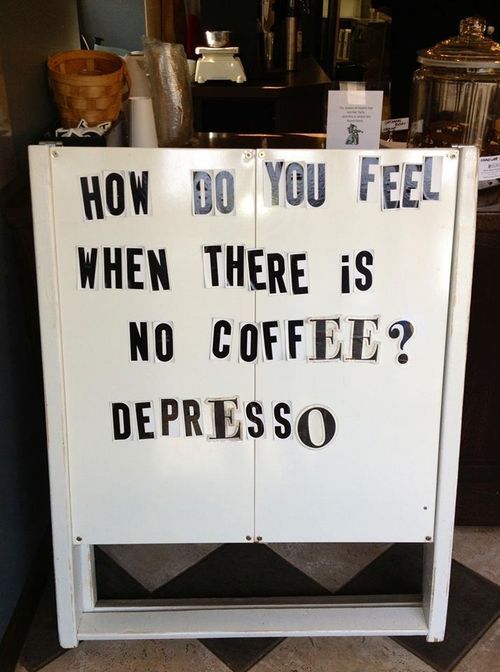
…..to wind down the summer. I spent a part of it in India, hence some of the more India-centric posts and travel left little time for writing so there have have been some reblogs. I hope all of it was interesting and now it is time to get back to work again. Of course, the first step to that is a good cup of coffee. apparently, there is more to that than I knew! So here is a primer on how to make the perfect cup, really important information to keep from getting into the “depresso” state!
Hope you all had a lovely summer and we all come back with more energy to achieve a better food system.
Posted in Uncategorized
Choco Pie Withdrawal: North Koreans Crave Their Favorite Treat
News from North Korea that is, for once, not totally gloomy, had to share!
Posted in Uncategorized
The people are hungry: The link between food and revolution
Food insecurity fuels political instability….
Posted in Uncategorized
Another Green Revolution in India?
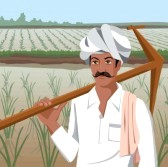
In the 1960s, India was facing a severe food shortage. The Indian economy was decimated by 200 years of colonial rule and the 3 wars fought after gaining Independence in 1947. The country was struggling to grow enough food to feed its people and did not have the resources to import food either. Finally, it was food aid under the US PL480 program that enabled India to to stave off the threat of starvation for millions. It was in this situation that India decided to adopt Dr. Norman Borlaug’s newly developed variety of medium wheat and what is known as the Green Revolution got its start. As productivity increased, so did rural incomes and many lives that might have been lost to famine were saved.
Despite the criticisms that have since been directed at this program, the enormous good that it did cannot be denied. This video captures the sense of what the adoption of this technology meant to India. While it highlights Dr. Borlaug’s efforts, what struck me most was the enthusiasm of the farmers for innovation, the openness to technology and the unsettling awareness that the path to adoption of technology today may be more difficult. Fifty years ago the decisions about farming were the domain of the farmer who had the knowledge to make those decisions, today the scenario is fraught with those who trust neither science nor those who have grown our food for years (in the case of Indian family farmers, this would mean over centuries!).
Posted in Farm Technology, Food Policy, Food Security, Hunger, India
Tagged Farming Technology, food decisions, food policy, food security, Hunger, India
Your burning questions about GM answered

 Ever wanted to know if GMOs are dangerous to human health or if GMOs pose a risk to the practice of harvesting and saving heirloom seeds? Well now you can have your questions answered. A new website, GMO Answers, has been recently launched. It is an initiative aiming to respond to questions about how food is grown and to make information about GMOs in food and agriculture easier to access and understand.
It is funded by the members of The Council for Biotechnology Information, which includes BASF, Bayer CropScience, Dow AgroSciences, DuPont, Monsanto and Syngentaand supported by the American Farm Bureau Federation, American Seed Trade Association, American Soybean Association, and National Cotton Council.
Standing at the forefront of the GM market, founders of the site acknowledge that they haven’t done the best job in communicating around their work. This website gives us a chance to grill them…
View original post 51 more words
Posted in Uncategorized
Bangladesh Gets Bt Brinjal
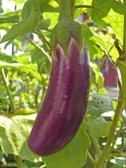
It has been a recurring theme here at Thought+Food that the debates going on about the food system should not be overwhelmed by special interest groups. Instead, there must be room for the farmer to make her voice heard. This piece from a farmer in India who looks on in frustration as Bt Brinjal is being adopted in Bangaladesh while it has been blocked in India by the fear mongering of anti biotech interests drives home this point. If anyone thinks we can solve our food problems by shutting out the very people who grow the food, then the road to reform and progress will be long one indeed.
Posted in Farm Technology, Food Security, Nutrition
Tagged Farming Technology, food policy, food safety, food security
OzHarvest Feeds 5000 in Sydney’s Martin Place
Loved this piece on acting to save food waste! Thanks for sharing, Julie Green.

Yesterday was a little different to most Mondays. I journeyed to the city to eat food, but it wasn’t any old lunch. It was made from rescued food that would’ve otherwise gone to waste and it was entirely free.
One of Australia’s leading food-rescue charities, OzHarvest (named the official Australian partner of the United Nations Environment Programme (UNEP) global campaign Think. Eat. Save.), hosted Feeding the 5000 in Sydney’s Martin Place to highlight how simple it can be to reduce food waste* and to show ways that governments, businesses and individuals can help.
I didn’t have to wait long before I got my beautiful vegie curry with onion relish, rice, natural yoghurt, and a chapati wrap. For dessert (after waiting in the biggest line there – I gotta give it to the OzHarvest volunteers), I drooled over my apple crumble with cream, it was amazing!
With a pop-up milk…
View original post 117 more words
Posted in Uncategorized
A brave fight being fought by Filipino scientists, regulators and others for biotechnological science, technology and innovation
The Biotechnology Battle in the Philippines

I have met with many of these scientists, regulators and other stakeholders involved in the responsible regulation of GM biotechnologies in the Philippines. I know they are extremely conscious about due diligence and for doing what is best for their country. These are people which have been quite active in the discussions leading to formulating policies and positions, as well as, innovative approaches to delivering appropriate biotechnologies and other technologies for the improvement of Filipino farmers’ livelihoods. Technologies which have already been delivering benefits to farmers.
I have been quite energized every time I have visited the Philippines when learning about the innovative approaches to technology especially when learning also of the many financial and human resources limitations they have. My support goes to these communities who are battling for their sovereign rights and for doing what is best for their country. I do hope that those pressure groups who…
View original post 819 more words
Posted in Uncategorized
 Thought + Food