
South Korea’s cheese binge is driving American milk prices to an all-time high
Posted in Uncategorized
#Farming Friday: Honoring Women Farmers
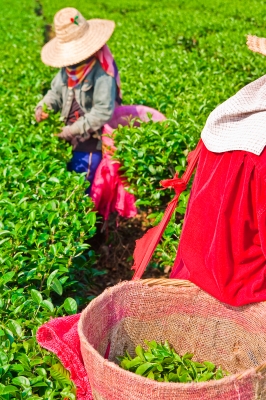
On International Women’s Day, a story celebrating women farmers’ efforts at climate mitigation and; a reminder of the challenges they continue to face, specifically in land ownership issues.
(Image Courtesy: freedigitalphotos.net)
Posted in Uncategorized
One chart that tells you everything you need to know about the markets this year
Coffee is leading the markets right now, taking over from oats which had a price spike recently. With the wheat supply from Ukraine uncertain due to recent events, wheat futures are also soaring. All this is troubling news….
Posted in Uncategorized
#Farming Friday 5: What is Wasabina?

This series was a part of my New Year resolution and at the back of my mind was the misgiving that it might be difficult to keep it up. But it has turned out to be one of the best things I ever did! There are so many wonderful blogs from farmers all over the world which are a delight to read; and my new challenge is to choose just one among the many for Farming Friday.
Today’s blog is from Echigo Farm in Springfield, MO which specializes in growing traditional Japanese produce! They grow wasabina, mizuna, komatsuna, Japanese momotaro tomatoes and many other vegetables. Stopping by their blog to discover how these exotic sounding vegetables are flourishing in the Ozarks was an experience I wanted to share with you. Oh, and wasabina is a variety of Japanese greens which is rich in iron and calcium and features in the farm’s winter greens mix.Hopefully, I will find it in a store somewhere near me!
How Math Predicts Revolutions Based on Food Prices

The point about rising food prices being a factor in social unrest has been explored before but now there is a model that can predict when and where revolutions will occur based on food prices. According to this, when the FAO food price index reaches 210, social unrest is triggered. Among the list of countries are some where this has happened on a large scale(Venezuela is a current example), some where it is still contained (India) and also some surprises (Sweden?!). The author of the study, Prof. Yaneer Bar-Yam of the New England Complex Systems Institute , points to two major causes for rising food prices: the rise of biofuels and speculation in commodities. And what happens to these two variables will determine if prices will be lower this year. Ethanol mandates are being debated in the US and EU, but speculation is another matter. It is spoken of much less than labeling, or any other food issue of the day.
Consider, also, the impact of climate change. (This was an important factor in the case of Syria, for instance.) Unpredictable weather events, a sudden drought or flood may result in a below average harvest; but higher prices in the global market (fueled by speculation) provide an incentive for exporting most of the crop. This would mean less is available for domestic consumption and prices would rise for whatever is on the market. If prices were to rise to critical levels, as predicted by this model, social unrest would follow.
What are the chances of regulating commodity speculation, proposing , for example, some limits for trading? It is difficult, perhaps, to be optimistic on this issue but it has to be highlighted in any conversation on the food system. Food is a commodity, yes, but it is not like any other commodity. If trading in future, hypothetical, stocks of grain means people are starving in the present then that is not an acceptable situation and efforts to correct it should not be blocked by purely financial interests.
(Image Courtesy: freedigitalphotos.net)
Posted in Climate Change, Food Policy, Food Security, Hunger, India, Price Rise
Tagged climate change, food policy, food security, Hunger, India, Price Rise
Opinion: A farmer’s challenge to Chipotle
You may have seen Chipotle’s “Farmed and Dangerous” campaign. It is supposed to be a satire but is basically an attack on those who grow our food. So for #Farming Friday here are thoughts on this from a farmer on this issue.
Posted in Uncategorized
Can a Rice Gene Save the Banana?

Can a gene from rice help combat the pathogen that threatens the extinction of bananas? That was just one of the many interesting issues featured in Dr. Pamela Ronald’s lecture at the SAIS Global Issues in Agriculture series. Dr. Ronald is a plant geneticist at the University of California, Davis. Many of us following the debate on GMOs might have read her book, “Tomorrow’s Table”, co-authored with her husband, Mr. R.W. Adamchak, who is an organic farmer.
Speaking to a (mostly) non-scientific audience, Dr. Ronald explained in clear terms that growers have been trying to enhance desirable traits in crops forever. The older method of simply crossing Type x with Type y and waiting to see whether the hybrid plant had the desired trait . This method focused on the outward result but modification at the genetic level did take place but was unobserved. Genetic modification today is precise, and efficient and enables quick and accurate results. In addition, it is backed by years of research data.
Why do we need genetic modification anyway? Consider, Dr. Ronald said, the case of the GM papaya. The papayas grown in Hawaii were attacked by the ringspot virus which devastated the crop, even moving the crop to another island did not help. Ultimately, the plants were “vaccinated” with a dose of the virus which enabled them to resist when the virus actually attacked. And so it is that we still have papayas in Hawaii. Perhaps a similar solution could be found for coffee rust? We will never know if we cannot try this option in the real world. Dr. Ronald spoke of her own work with rice: how a rice gene could possibly be used to battle the pathogen which threatens bananas with extinction.
One possible application of genetic modification could be in building climate resilience in crops.Dr. Ronald shared her work on building flood tolerance in rice. In many parts of the world rice is grown in flood prone areas and with increased flooding possible from climate change; the development of a strain of rice which can stand water logging for up to 17 days as compared to the current maximum of 3 days is great news. But all these wonderful possibilities would take years to negotiate the stringent regulatory process and even then be opposed due to fear mongering. In that context, I was hoping to ask Dr. Ronald for her views on labeling of GMO products. But , sadly, there was not enough time; most of the discussion was taken up by two journalists from Germany, which, given that country’s staunch opposition to GMOs was interesting….
The main point to learn from this lecture was that the seed (around which so much of the storm is swirling) is but a small part in the whole process of growing food and we need to incorporate all options, technology and good agro-ecological practices to achieve sustainable development.
While I was learning all this; with ease, I would like to add, as Dr. Ronald is great at making all this scientific information accessible to those not from a science background; I wished more people could hear her, instead of being bombarded by myths of “dangerous farming” and GMOs killing bees.
Cooking With the President

Not literally, of course! but two new books give a peek into the cuisine that Abraham Lincoln and Thomas Jefferson enjoyed. Abraham Lincoln , apparently, did actually cook and some of the food served in his time is explored in the book, “Abraham Lincoln In the Kitchen: A Culinary View of Lincoln’s Life and Times”.Perhaps you have never asked yourself what kind of barbecue sauce could be served at a campaign event before there was paper ware but now, come to think of it, i ma curious to discover the answer!
Thomas Jefferson made a pact with his chef that he would be free after he learnt the intricacies of French cuisine and could prepare them for Jefferson! “Thomas Jefferson’s Creme Brulee: How a Founding Father and his Slave James Hemings Introduced French Cuisine to America” describes their journey to France and the subsequent introduction of French cooking techniques in the President’s kitchen.
Nice reading for President’s Day!
Posted in Uncategorized
#Farming Friday 4: Difficult Choices for Small Farmers
In this installment of Farming Friday, a farmer in Colombia talks about his dilemma , to eat or sell what he grows and the constraints under which he works.
Americans’ catfish is going to be Made in the US once again and also more expensive
This piece evoked a very personal response. I cook fish frequently for my family. My native cuisine is rich in fish dishes and catfish is ideal for making curries with the flavor of the cooking I grew up with. While imported catfish may be cheaper, its quality is not always comparable to US catfish (this is based on my shopping experience), even fish bought way before the sell by date looks unappetizing at times. We were taught as kids that if the fish is really fresh, it does not require much dressing up, it is already tasty and this quality comes up sharply for curries but is easily masked if the fish is marinate/coated and then fired/grilled/baked. Perhaps American catfish is higher priced but it tastes better and I know what safety standards it is required to meet. I do not doubt that other countries have rigorous standards as well but just from the cook’s point of view, imported catfish can be disappointing.
Posted in Uncategorized
 Thought + Food