Category Archives: Uncategorized

Just a Note….

9a858d7e28113095c086162b48fac02f


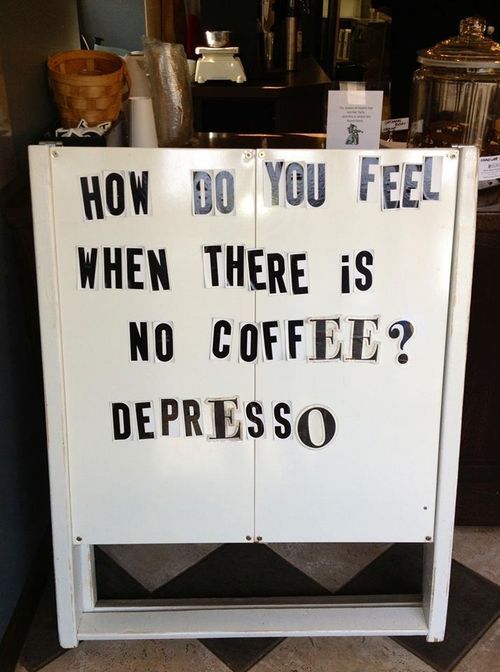
…..to wind down the summer. I spent a part of it in India, hence some of the more India-centric posts and travel left little time for writing so there have have been some reblogs. I hope all of it was interesting and now it is time to get back to work again. Of course, the first step to that is a good cup of coffee. apparently, there is more to that than I knew! So here is a primer on how to make the perfect cup, really important information to keep from getting into the “depresso” state!

Hope you all had a lovely summer and we all come back with more energy to achieve a better food system.

Choco Pie Withdrawal: North Koreans Crave Their Favorite Treat

News from North Korea that is, for once, not totally gloomy, had to share!

The people are hungry: The link between food and revolution

Food insecurity fuels political instability….

Your burning questions about GM answered

canwefeedtheworld's avatarOne Billion Hungry: Can We Feed the World?

ID-100184657 (2)Ever wanted to know if GMOs are dangerous to human health or if GMOs pose a risk to the practice of harvesting and saving heirloom seeds? Well now you can have your questions answered. A new website, GMO Answers, has been recently launched. It is an initiative aiming to respond to questions about how food is grown and to make information about GMOs in food and agriculture easier to access and understand.

It is funded by the members of The Council for Biotechnology Information, which includes BASF, Bayer CropScience, Dow AgroSciences, DuPont, Monsanto and Syngentaand supported by the American Farm Bureau Federation, American Seed Trade Association, American Soybean Association, and National Cotton Council.

Standing at the forefront of the GM market, founders of the site acknowledge that they haven’t done the best job in communicating around their work. This website gives us a chance to grill them…

View original post 51 more words

OzHarvest Feeds 5000 in Sydney’s Martin Place

Loved this piece on acting to save food waste! Thanks for sharing, Julie Green.

Julie Green's avatarJulie Green Artist

Yesterday was a little different to most Mondays. I journeyed to the city to eat food, but it wasn’t any old lunch. It was made from rescued food that would’ve otherwise gone to waste and it was entirely free.

One of Australia’s leading food-rescue charities, OzHarvest (named the official Australian partner of the United Nations Environment Programme (UNEP) global campaign Think. Eat. Save.), hosted Feeding the 5000 in Sydney’s Martin Place to highlight how simple it can be to reduce food waste* and to show ways that governments, businesses and individuals can help.

I didn’t have to wait long before I got my beautiful vegie curry with onion relish, rice, natural yoghurt, and a chapati wrap. For dessert (after waiting in the biggest line there – I gotta give it to the OzHarvest volunteers), I drooled over my apple crumble with cream, it was amazing!

With a pop-up milk…

View original post 117 more words

A brave fight being fought by Filipino scientists, regulators and others for biotechnological science, technology and innovation

The Biotechnology Battle in the Philippines

jfalck's avatarSocio-Economics, Biosafety & Decision Making

I have met with many of these scientists, regulators and other stakeholders involved in theImage responsible regulation of GM biotechnologies in the Philippines. I know they are extremely conscious about due diligence and for doing what is best for their country. These are people which have been quite active in the discussions leading to formulating policies and positions, as well as, innovative approaches to delivering appropriate biotechnologies and other technologies for the improvement of Filipino farmers’ livelihoods. Technologies which have already been delivering benefits to farmers.

I have been quite energized every time I have visited the Philippines when learning about the innovative approaches to technology especially when learning also of the many financial and human resources limitations they have. My support goes to these communities who are battling for their sovereign rights and for doing what is best for their country. I do hope that those pressure groups who…

View original post 819 more words

India’s “Right to Food” Debate

food

My vacation mornings here, in India, are usually spent in a leisurely session of  sharing newspapers with my father. As I read, I am fascinated  by the lively debate around the Food Security Bill. which basically ensures the right to a certain amount of food for everyone. The discussion is quite sharply divided among those who feel that these would amount to hand-outs and create the Indian version of  “takers”, a term familiar to us from the recent US election. The other side argues that despite impressive growth in recent years, the benefits remain limited to a few sections while most Indians, specially in the rural areas; live in crippling poverty without access to basic amenities like clean drinking water, sanitation, electricity and education. Some effort, they argue, is required on the part of the state that everyone can partake of the growth pie.

This debate is front and centre right now because the political parties are using it in one way or other to substantiate their position in the upcoming elections; the ruling party is pushing for it and worked around the problem of passing it in Parliament by getting it passed as an executive order. This would be applicable for 6 months, close enough to the elections for those in power to claim it as their record. Others think this a bad idea for several reasons: difficulty in deciding eligibility, execution of the program through the existing, leaky public distribution system, cost to the taxpayer etc. But it is simply the more visible version of an underlying dilemma: should India pursue growth alone and let the results work out for themselves or should social goals like education, sanitation etc. be actively pursued by the state? And it is one that reflects the differing attitudes to economic development in India, presented in an excellent article here.

Despite the differences on the ground between India and the US there are ways in which they echo each other: a certain impatience/indifference to those who are struggling. The “if they were any good they would have pulled themselves out, instead they are holding us back” school of thought has supporters everywhere it seems; the ability to ignore increasing inequality is global and the willingness to exploit the issues for political points is robust on every continent.

A very good summary of the debate  can be found here.

Genetic engineering vs. natural breeding: What’s the difference?

Grist.com is running a new series exploring the truths and myths regarding GMOs:

Australian wheat has a new defence to a rusty old problem

Lettuce in a Bag: Green or Not?


An interesting piece  in The Atlantic magazine looks at the downside of buying bagged lettuce. First, is the fact that the between the time it was packed in the bag and the day  it is actually used, the lettuce would have lost a lot of its nutrient value. Secondly, enormous amounts of water are required to wash the lettuce before packing. It would seem that it is better to buy heads of lettuce and wash and cut it at home as needed. I am undecided about the water issue here: washing individual lettuce heads at home also means using a lot of water, perhaps more then washing a lot of lettuce at one time? But the nutrient question does bother me so I try to use the lettuce as soon as I can after I get it. My one attempt at lettuce growing was unsatisfactory because it requires a lot of lettuce plants (not the cute patch I had allocated it in my back yard) to provide salad for a family on a regular basis.  Where do you stand on the lettuce in a bag debate?