
So, there you are, grilling a Tilapia fillet for dinner (perhaps with a side of quinoa or broccoli!) and congratulating yourself on eating right. Well, the new York Times has a piece that will make you think again. Farm raised Tilapia is fed a corn based diet and is a meager source of fish oil, DHA and EPA which are the reason for eating fish in the first place. Plus, all those fish farms have huge adverse environmental impacts.Read and weep…….
Tag Archives: nutrition
Food Trends to Celebrate!
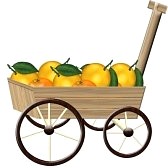 Mark Bittman celebrates good news from the food world. I particularly like the introduction of food into the national conversation and growing our own food. “A planter on every deck” seems to be the motto in my neighborhood this spring: not only does this make us feel connected to our food, it also draws us outside and gardening is a great activity for kids and parents to do together. Of course, closest to my heart is what he aptly calls “the edible school lunch”, chocolate milk is a thing of the past in our county and more vegetable options are coming up. The shoots of a better food world are peeking through. Spring is really here!
Quinoa: trendy abroad, scarce at home
Recently, everyone seems to be talking about the wonders of quinoa. It is commonly but mistakenly thought to be a grain but is actually related to vegetables. It is still relatively expensive here, but can be found in many grocery stores. While we learn about its wonderful nutritional benefits and try to incorporate it in our diet, back in Bolivia where it was first grown, quinoa is a more complex story. Rising prices abroad have diverted more of the quinoa crop for export leaving less for domestic consumption. The domestic price has also gone up and consumers now turn to cheaper alternatives like white rice. Perhaps, the problem could be solved by expanding production but changing consumer preferences (soda instead of quinoa-based drinks) also contributes to limiting production. This story says a lot about the importance of a certain food is perceived. Quinoa is the latest trend so people will pay a premium for it but sodas are new and cool to someone else and they will change over to it from a healthier alternative. Even if we know what food choices we should make as people, as a country and as a planet, perceptions often drive the situation in a whole different direction.
Good News on School Lunch Program
 How often do we hear that? Not often enough. But here is a story to make our rainy (where I am , anyway!) Sunday feel a lot better. On a shoestring budget, New York city schools are serving up healthy, cooked meals; changing the children’s perception of food and influencing the choices that become available from food suppliers. I would have liked to know how they worked the budget to change over from steamers and freezers to actual functioning kitchens. Perhaps that happened earlier, (the program is about 7 years old) in times when knives were for chopping salads and not for slashing school budgets. Here is the report from the New York Times.
Agricultural Subsidies
 Here is Mark Bittman’s proposal for subsidies for the Farm Bill 2012. He advocates reallocating instead of abolishing subsidies, we could not agree more! Let’s move resources from corn and soy and boost vegetables and fruits. An increased supply in these areas will hopefully lead to a fall in their prices and more people getting their five-a-day!
The Thing About Vegetables….

…..is that we have forgotten how to cook them! So says Francis Lam in this piece, and I have to agree. If I eat outside (not in an ethnic restaurant), my options with vegetables seem are usually limited to raw salads, boiled/steamed or at best a quick stir-fry. Even some vegetarian restaurants seem to be preoccupied with trying to make their diners comfortable with the no-meat situation rather than celebrating the vegetables themselves. And that is sad, because not only are vegetables (and black beans, kidney beans etc) good for us, they pack a real taste punch. So , lets make this year of the vegetables and also give the poor planet a break! For starters, I am going to try to grow some of my own vegetables this year. Planter+ soil+seed+water+sunlight how hard can it be, right? Will keep you posted on that! And once they ripen, break out the olive oil, dust off the spice jars and revel in a summer feast!!
A (Whole) Chicken in Every Pot
 Once in a while I read an article that is totally engrossing because it tells me so many new things about a subject that I thought I already knew about. Case in point: Nadia Aramugam’s article on the chicken industry’s problem with excess chicken legs. Breast meat being favored by consumers, there is a huge surplus of legs and thighs which need to be sold elsewhere. According to the article , there is virtually no difference, from the nutritional point of view, between white and dark meat. This perception was created by the poultry industry to make the breasts a “premium product”. It also explains the cultural preference for breast meat in America. This is often a mystery to consumers from other nations such as Asian countries where dark meat ,with a more intense flavor, is actually prefered over white. All this while, Americans have been choosing breast meat and the legs and thighs were welcomed in Russia. Not any more, as President Putin has warned against using them for health reasons (but more likely to implement his “self-sufficiency in chicken by 2012” policy). So where will all the legs and thighs go? The chicken industry which has demonstrated such resourcefulness thus far, will no doubt find a way out. “Legs! The Other White Meat” is a distinct possibility. Perhaps providing nutritious dark meat parts fresh for school lunches might be an option? Or we could go back to the days of using the whole chicken, for stock, soups and then move onto yummy grills and curries? Nose to tail for the poultry world….
When is a Centrist a Radical?

The answer, according to James E. Mcwilliams, is the moment when you enter the domain of food and take up position in the middle. In his book, “Just Food” he notes how polarizing the food wars can be: either you are a diehard supporter of organic farming or you are a “frankenfood” fan. “The dull but respectable place called the center” he finds, is a lonely place.
The subtitle of the book is “Where Locavores get it wrong and how we can truly eat responsibly” and this goes against the current push towards buying and eating locally. I started out with some scepticism but his essential arguement is convincing : eating locally may be a good plan on a personal level but we are not going to be able to solve the problems of the food system at the global level by eating and growing only local, organic food. The book is an easy read, the evidence is presented in an accessible way. So, pick it up if you can and see if you agree that “To be a centrist when it comes to food is, unfortunately, to be a radical.
Posted in Food Policy, Food Safety, Food Security, Nutrition
Tagged food policy, food safety, food security, nutrition
Fixing the Food System
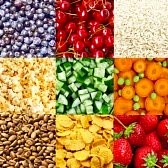
Despite well-meant efforts, the food system is a long way from being fixed. Why is this so? In an insightful article at Grist.com, Tom Philpott concludes that it may be impossible to fix the food system without fixing the economic system first. The food system mirrors the distortions of the economic context and the existence of economic inequalities creates barriers to fixing the flaws of the food system. He describes the economic system as having three layers: a large low-income/poor class, a small class getting squeezed in the middle and a tiny group of the super rich. It is the latter which controls the economic system and their goal is to increase their wealth; environmental, nutritional or health outcomes are not a part of their calculus. As long as the masses are fed and working, that’s all the system needs. So cheap food, high in calories and low in nutrients is readily available and the food system provides unhealthy choices , which in their turn lead to poor health outcomes in terms of rising diabetes and obesity rates.
The discussion which followed the article was also enlightening. People pointed out the lack of access to fresh produce, lack of time, lack of money, lack of energy to cook one’s own dinner and the consequent capitulation to the allure of fast food outlets and convenience stores. To that, it may be argued that we succumb to that choice because it is available. Go to a poor area in a large city in any less developed nation. The people who work two or more jobs there, sometimes in horrible conditions, still come home and cook their food. Lack of transportation is certainly an issue as is lack of funds but there is something beyond all of this. As a society, we do not value nurturing. To make dinner at home everyday, we need to work less hours, have access to ingredients that are nutritious and above all, cherish this effort. All this involves a cost which we are not willing to pay and a state of mind that we cannot get to or at least have a struggle understanding.
Speaking to the issue of the economic system: the food system is a part of this larger system. If the big agri-businesses are the most active stakeholders in the economic system, we would logically expect them to resist efforts to reform the food system. So, is there nothing to be done? Not quite. One thing that gets the message across is money: withhold your purchases of empty calorie products or those produced by unsustainable methods and sooner or later the corporations will modify their behavior as well. Highlighting bad practices in the public domain is another tool as businesses try their best to avoid bad publicity.
Beyond these issues, there is an intangible variable as well. What we eat is not merely a commodity, it is a part of who we are. Immigrants in a foreign land will rush around trying to find familiar ingredients, cold days will bring up childhood memories of soup, the smell of coffee will lure us out in the fading hours of the afternoon. We are sentimental about what we eat, we do not like changing our habits and we resent being told we need to change.
So, yes, from all perspectives, this is likely to be a long and weary struggle but it is one that cannot be let go so let us gather up our strength to get on with it. The struggle to change the food system has to be waged at the personal level (of the consumer or producer), in the business arena ( to ensure nutritional standards are maintained and sustainable methods of production are followed) and in the domain of civil society ( reform efforts need to be backed by the necessary legislation).
FTC goes after kids’ vitamin claims (yogurt, too!)
Do you read the package claims to compare different brands of yogurt or juice before making a purchase for your kids? Well, the FTC has moved to prevent companies from making unsubstantiated claims on the packaging. This is good news! I wonder if it would also be possible to ban the use of cartoon characters on packaging so that we can prevent the “I want Dora (or princess or whatever) yogurt” meltdowns at the grocery store. Children cannot make a choice with regard to what is nutritious for them, so packaging designed to attract them simply subverts the process of rational decision making.
 Thought + Food