Tag Archives: Hunger

Read the Whole Label for the Whole Truth about Whole Grains

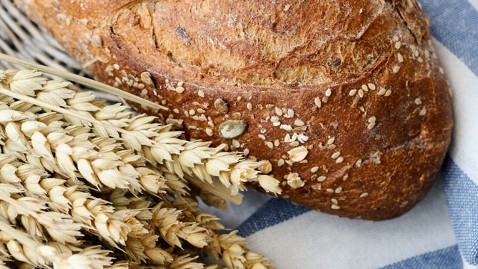
If you thought reading the box cover and checking that your cereal contains whole grains or is ” multi-grain” is enough, think again: the truth actually lies in the ingredient list at the back of the box. This is what we need to read to make sure that whole grains are actually included and if they figure somewhere in the middle of the list, perhaps there isn’t a whole lot of them in the box after all.

“On Wednesday, the Center for Science in the Public Interest will petition the Food and Drug Administration to stop letting manufacturers label their foods “Whole Grain” when they really aren’t and to start putting the percentage of whole grain on the packaging. The government has encouraged Americans to eat…

via Companies Not Telling the Whole Truth About Whole Grains.

Is Small Always Beautiful?

In the midst of all the bad food news: the obesity epidemic, use of hormones and toxic chemicals in the food industry, food deserts, to name a few; reports of flourishing urban gardens are always encouraging. But are they really a long term solution to the problems in our food system?  It can be argued that their small size prevents them from spurring economic growth in the community in a meaningful way and they can do little to solve the problem of global hunger.

As in most issues related to the food world, it is essential not to take an extreme view. Urban gardens are an important step toward revitalizing devastated urban areas like Detroit or New Orleans and in small ways their scale can be ramped up to spread the benefits in the community but they are not a magic wand which we can wave and fix the food system.

In this piece the author argues that it would be more efficient to have a Wal-Mart instead as that would create more jobs and bring economic growth to the area. Before we knock the idea, check out a Wal-Mart store. In my neighborhood, the store stocks wild caught fish, organic produce, milk and eggs and has organic options to regular cereals, granola bars and other basics on the shelves, all at an affordable price.

We cannot all grow our own food and small farms cannot feed everyone. We have also learned our lessons from the consistent growth of huge industrialized farms and the subsequent breakdown of the food system. Can we try for a middle path where local, nutritious produce is available at prices consumers can actually afford?

Look Before You Buy

It is the weekend and many of us are going to be grocery shopping for the week, so this might be a good time to reflect on this fact: an average American family throws out an estimated $130-$175 a month in food that is spoiled, or simply not required. This number reflects what we pay at the checkout but think also of the inputs, soil, nutrients, water, labor that went into producing that food, which were taken from the planet and simply destroyed. So, before we rush out to buy more stuff  to stick in to the refrigerator, here is a checklist:

First, make a menu plan for the week. You do not have to plan all the details but get a basic idea, like, Tuesday dinner will be grilled chicken and vegetables and that can be worked into a packed lunch for the next day.

Second, inspect the fridge and pantry to see what ingredients might already be available there.

Third, now make a list of  what you need to get.

Four, do not hit the grocery store without having a meal first.Research shows that we buy more stuff and more unhealthy stuff when we are hungry.

Hopefully, this will lead to less waste and more savings!

Change Comes to Retail Food Industry in India

Most Indians have always bought their fruits and vegetables at the stall at the corner of the road, or the nice store that would deliver even a bunch of cilantro or a bunch of carrots to your home if you were in a fix. The supply chain that brought this produce to the market was haphazard at best. Now, all that is set to change, with the Indian government deciding to allow foreign investment in the retail sector, upto 51% for multi-brand retailers like Walmart and Carrefour. There will be various conditions that they will have to satisfy, such as a minimum amount invested in 5 years, support for rural infrastructure and jobs etc. How all these plans work out remains to be seen but the retail scene for food will change drastically. The new policy is expected to dampen inflation, bring in more efficiency and productivity and reduce wastage. Matthew Yglesias pointed out that it will probably result in the top 1% getting extremely rich but so along as the families around the median and the extremely vulnerable are not squeezed, the policy should be a positive one. I am not so sure ,mostly for the food sector. All the people involved in growing, transporting and bringing this food to the family table ( and they number in the millions)will be affected as this policy is put in place. In time, they may benefit but the initial impact will be hard. At a time when there is mounting hunger , malnutrition and concerns about the impact of climate change on agricultural productivity ( specially in South Asia), this new policy will add another variable to an already volatile situation. Caution and a long term perspective should be the way to go in this regard.

Trading in Hunger

Worldwide, food inflation is a worry.The rising prices have been attributed to failing harvests, rising population and increased demand for food, increased consumption/changing consumption patterns in emerging economic powers, the demand for ethanol etc. But a key factor that is not often mentioned is speculation in agricultural commodity prices which often cause severe fluctuations in the price of staple foods like corn, wheat, or soy, for the consumer. When we click a button to execute a trade and then look at the profits afterward, we may sometimes lose sight of the fact that food is not like any other commodity and trading in food is often the same as trading in hunger. It would seem obvious that there is a need to ban or at least limit trading in essential food commodities. Like other contentious issues such as subsidies, however, there is a lack of political will and consensus in making this happen. More on this here.

Food Waste and Climate Change

When food is wasted, the impact is two-fold: not only has the process contributed to continuing global hunger but it also impacts climate change. Food products that go bad and are thrown out emit greenhouse gases that contribute to global warming. Some products have a larger impact than others, meat is a bigger concern than vegetables. So, what can we do to tackle the issue?

Common sense answer: plan the grocery list so we buy what we need and avoid impulse buying; clean, pack and store leftovers or extras in a way that preserves freshness; consider  making meat products a smaller portion of our meals and opt for better options like beans or whole grains.

This article has interesting links and the numbers to convince us of the need to watch what we waste as much as we watch what we eat.

Seeds of Change

They say every cloud has a silver lining and with this long downturn it seems like the clouds have been here forever. But,even in these difficult times, there is some good news. Rising food and healthcare costs are forcing people to rethink the way they live. Farmer’s markets are thriving and people are trying to grow their own produce. The next step is the revival of (almost) lost skills like canning, pickling and preserving produce. That is how people used to live in the past: enjoy produce when it is fresh and also prepare for the rest of the year. But grocery stores continue to be a source of produce for many and I wonder if this trend will impact what we pay in the store for fruits and vegetables?

Note: the link above is to the New York Times article on the changes in produce growing in rural Kentucky. There is some issue with the link that I am trying to fix at the moment, you could go straight to the new York Times site to read it in full.

Can conventional and GM based crops coexist?

USDA seeks method to compensate farmers for GM contamination.

It would seem from Marion Nestle’s post on her blog (link above) that the government is trying to find ways to ensure that both forms of agriculture can coexist. The effort to discuss compensation methods would also include a discussion of contamination prevention in the first place.  This is where any discussion on the adoption of biotechnology in agriculture should start, with a consideration for environmental and health concerns. These concerns can then be addressed by setting up  suitable biosafety standards. In this way, we can ensure that the best use is made of the gains of biotechnology without undermining traditional /organic agriculture.

How to Feed the World

Jason Clay of WWF identifies 8 steps to “freeze the footprint of food” in his article in Nature. While he examines the issue particularly with regard to Africa, these points are relevent in a global context as well. For instance, recent discussion in food and foreign policy areas have focused on the practice of “land grabbing”; Clay points out the need to restore degraded, underperforming or abandoned land instead of looking for fresh land to cultivate.

But what makes the top of the list of options is genetics: it cannot be said often enough, we are facing a huge problem here and time is not on our side. Using a technology which allows us to catalyse the process of selection of existing desirable traits and also prepare to combat climate change by including traits such as drought or disease resistance; should be an integral part of any solution (accompanied, of course, by a robust biosafety framework). Organic methods can yield good results but time is short and the technology for genetic modification is already available.

The Debate on GM Potatoes

Prof. Jonathon Jones of the John  Innes Centre in England writes in the Guardian to defend the his group’s work on introducing  blight resistant traits in potatoes.Blight causes huge losses for commercial potato growers every year and the work in question consists of experiments to introduce blight resistant traits found in wild potatoes into commercial potatoes without losing the desirable properties already present in them. What was intriguing about the article was not just the description of the work or the case made for biotechnology but the plea that Prof. Jones makes for better communication between the supporters and opponents of biotechnology.  Like any other technology, genetic modification comes with advantages and concerns. All too often, opponents of GM  seek to demonize it  and following this path would mean we also lose out on the potential of this option to address issues like climate change, global hunger and public health.  We need a sane dialogue on this issue , the time for fear mongering should be over now.