Revisiting the “eat local” Idea

market

I just came across this review of a book called “The Locavore’s Delusion”, and yes, it is a nod to that other book, in case you were wondering! The authors of the book tried to answer the question: why did we start eating a more global diet anyway? The article gives a summary of reasons that most people offer for opting to eat local: more tasty, nutritious, helps local economy etc , and the most often cited reason: it is good for the environment. This has been the subject of much discussion (some of which I wrote about here) and the point at issue is that the contribution to greenhouse gases comes more from the actual cultivation of crops rather than their transportation.

The answer the authors provide to the query, why did global food trade develop, is that it provides increased variety of foods, reduced prices and stability of supply. They also argue that efforts to counter this are really an effort to turn back the clock with negative consequences. If a region was hit by unexpected weather events or pest infestations and the crops failed, there would be no relief available if we functioned as closed off food islands. Indeed, they see the problem as being one of inadequate globalization where subsidies, trade barriers and other distortions are hindering an optimum situation of low prices and assured availability of food.

Some of the discussion here has been heard before but I liked the way the question was posed: why did we start expanding out of the local market? Perhaps we could ask the same question for the GMO question: why did we start developing them in the first place? Was it because some evil people were working up weird stuff in their labs and injecting it into food to try and rule the world like in some bad movie? No, it was because we need to tackle pests to stop crop loss. We will need it in the future to combat climate change. Imagine a flood event that submerges crops. Since genetically modified crops that could withstand the submersion were not planted, there is no food. But there is also no way to acquire it from anywhere else because food trade has given way to purely local markets. It could happen….


(Image Courtesy: freedigitalphotos.net)


We thought trees and fungi were socialist, but they’re actually capitalist

Apparently fungi are playing the nitrogen market in the forests and we now we have a new variable in climate change action!

The Episode of the Disappearing Oysters

boat


Thanks to a free weekend from Showtime, I was able to catch up on another episode of their show on climate change, “Years of Living Dangerously”. (I reviewed the first episode here).This episode had two story lines: one, in which Ms. Lesley Stahl travels to Greenland to explore the melting glaciers; and the second, where Mr. Ian Somerhalder brings us the climate debate going on in the evangelical community in the USA, a debate that has a significant impact on actual policy making.

We were treated to stunning views of glaciers which drove home the point of how beautiful our planet is and how callous we are in our stewardship of all that it offers. The rumble of the glaciers cracking served as reminders of how quickly all this could vanish. In fact, the melting of glaciers is also opening up possibilities for oil exploration and there is more investment going on in this right now than the GDP of Greenland! This provides income boosting opportunities for the inhabitants of Greenland and here we come up against the reality of climate change: when the environment changes and people’s livelihoods are threatened, policy making and taking action becomes more fraught.

The other narrative thread revisits some territory from the first episode: the attempt to establish that climate change is real and happening now to those whose belief in their faith casts doubt over this. The starting point is the campaign to shut down coal plants in North Carolina and elsewhere in the country. Mr. Somerhalder’s foundation has been committed to calling attention to the issue of  the impact of coal in an effective campaign on social media. But, initiatives like this are being met with resistance by certain faith based groups. We meet pastor Rick Joyner who remains unconvinced about the evidence on climate change despite his daughter’s efforts. She is joined in her effort by Dr. Katherine Hayhoe  who also featured in the first episode; and is a skilled and dedicated communicator on climate change issues.

To illustrate the impact of climate change, we are introduced to the oyster fishermen of Apalachicola Bay which was once full of oysters but is almost empty today. Increased use of water upstream due to drought, and a rise in the sea level, has changed the salinity level of the bay waters making it unsuitable for oysters. A source of income and food has disappeared and, as we know, this story with different players is being repeated all over the world.

The show does not present easy answers: we hear the dilemma of the leadership of Greenland, “our country is not a museum”, people have to survive and they want to give their families a good life; we watch as a tentative coexistence between faith and science develops,  but finally it is up to each of us to find our position and act on it. What is worrisome is that time is not on our side and we need to make changes soon.

I wish that the potential impact of climate change on our food system was highlighted in Years of Living Dangerously. Perhaps that will come in other episodes, there is certainly enough material on it for a whole show to itself!


(Image Courtesy: freedigitalphotos.net)


Will There Be A Second Green Revolution?

paddy

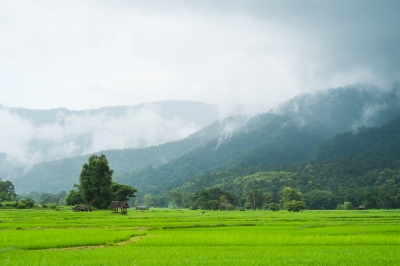
Last week, The Economist published a piece on the possibility of a second Green Revolution on rice fields in Asia and Africa. The possibilities outlined in it make one hopeful for the future, at a time when stasis on climate change and polarization among the players in the food system usually make for a grim outlook.

The second revolution, if it comes, will be crucial in feeding the growing population as current yields are dropping off from previous levels. And what is remarkable is that the increase in yield required to meet demand can be obtained almost entirely from areas missed by the first Green Revolution. This is because, the green revolution took off in irrigated areas while passing by the rain dependent regions. These areas fall in the marginal category where harvests are often disrupted by drought or floods. Now, the International Rice Research Institute is  offering farmers a rice variety that stays dormant during long periods of flooding and then resumes growth. This would be an invaluable trait for dealing with the possibility of increased rainfall and  flooding due to climate disruption. And, because this offers the possibility of increased production on marginal lands, the impact in terms of greater income would go to the most vulnerable sections of the rural poor whose impoverishment is a result of their dependence on unproductive land.

But how was this new strain of rice developed? The scientists at IRRI had identified a rice strain from Odisha, in eastern India, as having a high flood tolerance. This was then crossed with other rice varieties but the experiments were not successful. Finally, the scientists identified the gene that enabled flood tolerance, and spliced into other rice varieties, to achieve more than a dozen varieties of rice , all flood tolerant and collectively known as “Sub 1”.This is what was so striking for me: decades of traditional breeding saw no success, yet once the genetic sequence of the rice from Odisha was marked, it took only four years for flood tolerant seeds to be produced!

This presents a promising option for making agriculture resilient to future climatic uncertainties in a short period of time, in addition to increasing production on marginal lands and providing income opportunities for the rural poor. This would be a revolution indeed! The article is here and an interesting account of the farmers growing Sub 1 rice in Odisha is here.

(Image Courtesy: freedigitalphotos.net)


#Farming Friday 14: Holiday On A Farm

it


All of us cannot be farmers and some of us might not even be ready to give it a try, that too on a holiday. But here is the charming account from someone who took a working holiday on a farm in Italy. I might like to go there now, after reading this, but am still not sure about the “herding the pigs” part!

(Image Courtesy: freedigitalphotos.net)

Young Children Are Getting Sick Working on U.S. Tobacco Farms

If the thought of kids doing manual labor for long hours makes you wonder about their living conditions (is there enough food at home? what about school?), the comment reported here from a legislator for the area will make you wonder how we can hope for things to change.

Mother’s Day Flavors

MD


Happy Mother’s Day!  As we celebrate our mothers, perhaps the first connection we make is with all favorite dishes they made for us. Even when I tried recreating my mother’s recipes, they would never be as good and I would accuse her of giving me the wrong recipe! For a special read today, the sweet story of cooking forging a bond between a mother-in-law and a daughter-in-law from different cultures.

It is also a day to revisit my post from a year ago about fortified bananas helping to tackle widespread anemia, so crucial in maternal health. Sadly, nothing much has changed here.

And finally, a big thank you to all the mothers tending their families and also raising crops to feed the world!


#Farming Friday 13: Fewer Women Farmers in US

farm2

Fewer women farmers showed up in the agriculture census. This is consistent with farmers leaving the very small farm sector due to falling profitability. The change comes after a quarter century of numbers for women farmers showing an increase.

Marginalised issues in food security: Oxford Food Security Forum 2014

Farmers Respond to Climate Change

millet

As the last post mentioned,  the US government’s latest report on climate change takes note of the challenges that await farmers in the coming years. But, as we know, farmers are dealing with variable and unpredictable weather right now, so that the crops they grew and the way they grow them is also changing.How are they doing so, what are they changing?

One interesting aspect of the response to changes in climate has been the rediscovery and resurgence of neglected/marginal crops. Often, these would be crops indigenous to a certain area which required little tending and were, sort of, taken for granted. Now, their ability to grow in marginal areas has become an advantage. An example here would be the case of the lima bean in Kenya. This bean remains dormant in the soil, waiting for the rain and so can survive dry spells,so it has moved from being a marginal crop to the center stage of  cultivation.

“Climate Smart Agriculture”  which consists of ensuring food security, adaptation and mitigation (as defined by the FAO) is redefining farming in different countries. The success stories range from harvesting water to grow millet in the Sahel to adoption of rice production techniques to use less water by smallholder farmers in Vietnam; from carbon farming initiatives in Australia to reduction in the  contribution of Danish agriculture to emissions by better use of manure and lower use of inorganic fertilizers.

And what about American farmers? Some of them, it seems, see the disruption in climate as simply another weather pattern, but they are also aware of the  need to follow good practices on the farm to be able to deal with the weather patterns. This means that they are quick to adopt the climate efficient techniques suggested by the USDA: practicing no-till farming, planting cover crops etc.

Whether changes come by way of policy decisions , as responses to the threat to a way of life or as pragmatic reactions to constraints, all these changes  will add up to a better food system. But will they be enough to get us through the crisis ahead?

(Image Courtesy:freedigitalphotos.net)