
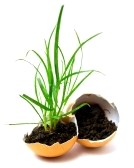
 As I prepared to write this post, it struck me how much things have changed in the past few years. Phrases like urban gardening, local food, sustainable living (even composting!) have become a part of out life. Just looking out of my backyard, I see many more hopeful planters with future tomatoes and lettuce and little pots of herbs on window sills, than I did in the past. Schools are embracing the new trend and this will have important consequences, children who are involved in the growing of vegetables will be less likely to reject them on the dinner plate and less likely to reach out for processed foods. And all this planting and growing is transforming the urban landscape making cities greener and more livable. Urban design and gardening are explored in the Grown in the City website which has useful tools and tips for the urban gardener. A couple of summers ago we were all worrying about tainted tomatoes and avoiding salad, this year we might well be preparing salad with something we grew in a corner of our deck or balcony or backyard: something good came out of it after all.
Category Archives: Nutrition
More on Gardens!
Farming and Climate Change
Farming in the Time of Climate Catastrophe – The Atlantic.
A pepper farmer’s account of farming while facing changing weather conditions and scarce water. Thoughtful and interesting.
Posted in Food Policy, Food Security, Nutrition
Reflections on the Food Movement
We often associate the food movement with certain terms that we hear a lot in the media: “local”, “organic”, “foodie”, “food deserts” but we rarely stop to think of the big picture. Here is a thoughtful article from Grist.org which places the food movement in context and asks that the various parts keep in mind the larger goals. For me, the goal is to grow food in a way that nurtures people and the planet. Often, the debate gets lost in a forest of either/or options which is misleading. Biotechnology as well as agroecology can be utilized together to boost production , feed people and preserve the planet. Insisting that only one option is the “best” is detrimental to the goal we all want to achieve.
Posted in Food Policy, Food Security, Nutrition
New Front in Food Fight
Chicago school bans some lunches brought from home. Should the school decide what nutritional standards your child has to follow?The school should certainly determine what is offered in the cafeteria but to undermine parental choice is a different matter. Of course, the school stands to make more money from this move and parents have to spend more on their children’s lunch now.
Posted in Food Policy, Nutrition
Sunday Reading:Cookbooks
 A lazy Sunday morning often means an indulgent brunch and a long session with a book or newspaper (if they are not already extinct!). After serving out enormous quantities of pancakes, I often like to live the vicarious gourmet life by reading cookbooks or cookbook reviews. Here is my recommendation for today: “Ideas in Food” reviewed at Slate.com. The book argues that the fancy techniques that chefs employ are not impossible in your own kitchen. Sous-vide chicken for lunch?
Posted in Nutrition
Food Trends to Celebrate!
 Mark Bittman celebrates good news from the food world. I particularly like the introduction of food into the national conversation and growing our own food. “A planter on every deck” seems to be the motto in my neighborhood this spring: not only does this make us feel connected to our food, it also draws us outside and gardening is a great activity for kids and parents to do together. Of course, closest to my heart is what he aptly calls “the edible school lunch”, chocolate milk is a thing of the past in our county and more vegetable options are coming up. The shoots of a better food world are peeking through. Spring is really here!
Quinoa: trendy abroad, scarce at home
Recently, everyone seems to be talking about the wonders of quinoa. It is commonly but mistakenly thought to be a grain but is actually related to vegetables. It is still relatively expensive here, but can be found in many grocery stores. While we learn about its wonderful nutritional benefits and try to incorporate it in our diet, back in Bolivia where it was first grown, quinoa is a more complex story. Rising prices abroad have diverted more of the quinoa crop for export leaving less for domestic consumption. The domestic price has also gone up and consumers now turn to cheaper alternatives like white rice. Perhaps, the problem could be solved by expanding production but changing consumer preferences (soda instead of quinoa-based drinks) also contributes to limiting production. This story says a lot about the importance of a certain food is perceived. Quinoa is the latest trend so people will pay a premium for it but sodas are new and cool to someone else and they will change over to it from a healthier alternative. Even if we know what food choices we should make as people, as a country and as a planet, perceptions often drive the situation in a whole different direction.
Two Banana Stories
 My day, like that of so many people across the world ,starts with the banana. I set out one each for the kids, they moan about how boring it is, I remind them how good it is for them, and then; ritual completed we munch together in the early morning calm. So when I heard about the banana crisis in Uganda, which is the world’s second largest producer of banana and where the banana is a staple food, I was concerned. It turns out that rather than give up and watch the banana plantations be laid to waste by disease, Ugandan scientists are testing a GM strain that would withstand the BXW bacteria. This new story though, has the same ending as many we have heard before: opposition to GM technology means there might be a very long wait before these developments can actually be brought to the fields. In the meantime, livelihoods are lost, and an entire way of living is in danger.
Closer to home, the introduction of individually plastic wrapped bananas by DelMonte brought howls of laughter as well as disbelief. Had no one noticed that the banana came in its own bio-degradable wrapper? Why did people try to interfere with Nature? So obvious, right? Consider this, as theAtlantic did: individual wrapping, intended to preserve freshness, will lower the number of perfectly good bananas thrown out each year. The article also makes the point that we should stop thinking of nature as sacred and man as a despoiler. We are part of the same world. Yes, we should be more thoughtful in the way we impact nature but let us not set some impossible Garden of Eden standard for this interaction.
Posted in Food Policy, Food Safety, Food Security, Nutrition
Tagged food policy, food safety, food security
Cheaper per pound than cheese and useful for far longer….
…. Chef Nathan Myhrvold’s (former chief technology officer at Microsoft, with Ph.Ds in mathematical economics and theoretical physics) new cookbook is here, reviewed by NPR. It focuses on a scientific approach to preparing food. $625. Buy?
Posted in Nutrition
Good News on School Lunch Program
 How often do we hear that? Not often enough. But here is a story to make our rainy (where I am , anyway!) Sunday feel a lot better. On a shoestring budget, New York city schools are serving up healthy, cooked meals; changing the children’s perception of food and influencing the choices that become available from food suppliers. I would have liked to know how they worked the budget to change over from steamers and freezers to actual functioning kitchens. Perhaps that happened earlier, (the program is about 7 years old) in times when knives were for chopping salads and not for slashing school budgets. Here is the report from the New York Times.
 Thought + Food