Category Archives: Food Choices

Wishlist for a New Food System

gift

The din around the fiscal cliff grows louder every day, perhaps it is time to raise our voices to ask an important question: what happened to the  Farm Bill?  There has been some debate about the food stamp program or debate on genetic modification of crops but what if we resolved to start over, from a blank sheet and set up the food system that would benefit both producers and consumers and be prepared for dealing with climate change. Here are some of the things on my wish list for a better food system:

1. Better food choices at home:  while the awareness about eating “local” is  laudable , everything cannot be grown locally so if we find ourselves buying “local” tomatoes while stocking up on snow shovels, it means that we are buying produce that requires greater resources  because it is being produced out of season. Instead, let us try to eat in season, experiment with produce that actually grows in this season and expand our culinary abilities. Also, if a food producer has to sell only locally they might either not be able to meet demand (in which case  we would have to go without) or is left with a surplus which does not sell and he cannot ship it elsewhere because of the insistence on local food. Most of us in the food debate consider the consumer’s point of view. Let us also hear what the farmer thinks.

2. Change agricultural practices: adapting to climate change is not just about producing food under a different set of weather conditions, it should also be about using better farm practices like growing trees on farms to prevent soil erosion and sequester carbon, preserving biodiversity, green manure among an array of  possibilities.

3. A  fair food system: let us recognize the hard work that goes into producing our food;  long hours in all kinds of inclement weather often involving hazardous chemicals and equipment. The number of people ready to do this is small and yet we do little to bring in those who are ready to work in this area. We need to provide a decent life and dignity of work for immigrant workers on American farms.

And when we go to a restaurant and are happy to see that the food is “local” and “sustainable” and the chef has so many stars, let us also think about the restaurant worker. If you want to know if your server or cook is being paid a fair wage or get paid sick leave, there is now an app for that!   

4. Renew rural life: when it is openly stated that there is a disconnect between urban and rural communities with the latter being isolated and cut off from the mainstream, it is crucial to take action. Farmers today are older and fewer in number than before and as they become less able to farm the land, farms may be sold off to urban property developers or be purchased by large farms. To create a vibrant farm sector, it should be made easier for younger people to farm, offering financial aid or improving infrastructure where needed.

5. Plate and Planet:  every time we make a food choice let us think not just of how it will be on our plate but how it will impact the planet.  A recent study shows how yields of major crops are falling, and preparedness to deal with climate change is hardly robust so when we push a certain technology or practice, let us consider the global situation as well. Changing tastes in America might lead to positive change here but global hunger and access to food should also be considered.

And, finally, in this, as in other debates, let us be civil with those who disagree. Perhaps this wish list will remain just that: wishes, but can we at least resolve to stop name calling on Internet discussion forums because someone disagrees with us on a point of policy? We are all people,  no one is a “shill”.

Wal Mart is Coming to India

veg market

Recently the Indian government announced that foreign investment would be allowed in the retail sector, and, after some debate, the relevant legislation was passed by the Parliament and is now the law of the land. This means that  stores like Wal Mart , IKEA and other supermarket chains will start operations in India. What does this mean for Indians particularly with regard to food? There is reason to believe that farmers would benefit as stores now start competing for their produce;  productivity gains are expected as less food is wasted due to improved refrigeration and storage and the consumer is also expected to have a more enjoyable shopping experience at, hopefully, affordable prices.

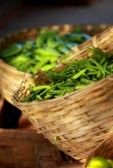
It is uncertain what the new policy will mean in terms of jobs. The jobs generated by the supermarkets would require a different skill set from those possessed by the small holder farmers and small traders who would be most vulnerable to the coming changes. And what about the little corner stores and produce stands that currently dot the landscape? Certainly, some small stores will go out of business, that is inevitable. However, in matters relating to food, emotions  are just as important as data. Many people enjoy chatting with their neighborhood store owner as they get their shopping done. They also enjoy little conveniences, like free home delivery even with small orders or some credit at the end of the month when finances are tight. For every middle class consumer who is looking forward to shopping at the supermarket, there is one whose income would not stretch that far. And going by the popularity of farmer’s markets in the US, for example, the small farmer will still have the option of setting up his wicker basket of vegetables  on the sidewalk.  And even the supermarkets might have to think about adapting to local customs: China’s indigenous grocery chain RT-Mart wins out in part because it lets customers come in and choose their fish live (it is then processed for purchase) as they have been used to doing at their neighborhood stores for centuries!

So, the outcome of this new policy is far from clear.We will be following how this change works out.

Of Looming Cliffs and Melting Ice

The last of the turkey leftovers are gone and we are now fully awake from the food coma to find, according to the incessant media coverage, that we are hanging off a cliff and in danger of plunging into catastrophe. Hopefully we can claw our way back. But while those involved in solving this do their best headless chicken act, another drama is unfolding in Doha where the climate change conference is being held. There, also, all is sound and fury and we watch in disbelief as no action emerges to tackle a challenge to the planet and the people who inhabit it. And while the debate rages on regarding the placement of the comma goes on the communique that communicates less and obfuscates more, everything that we put on the table to give thanks is threatened, yes,everything  including the wine. 

What, one wonders, would make the urgency on this matter obvious? Perhaps a video of  the melting Arctic ice that will allow ships to navigate through this area for the first time? Or perhaps they might need to consider the information in these handy charts?

Climate change is going to have a major impact on a food system that is already under pressure. How will we meet this challenge if we are going to pretend it does not even exist?

Turkey Time!!

It’s that time of the year when thoughts turn to turkeys, cranberries and travel arrangements. While you prepare to enjoy a day of feasting and fun with the family , please remember to give thanks for the farmers and workers who make it possible to load up our tables with such an abundant meal. Also, a thought for how we grow our food, and a heartfelt wish for those who are still stranded and without power from Hurricane Sandy.

It’s not all about the food, though. There are other traditions, like the recounting of past turkey day disasters, the nosy relative wanting to know about relationship updates, or the walk after gorging on the meal. Whether your Thanksgiving is an intimate one or a fancy gathering at a hotel,  have a wonderful, fulfilling Thanksgiving!

And in case  you were wondering, this is why your turkey is cheaper at this time than the rest of the year!

Getting Used to a Changing Climate

We may not agree on why the climate is so unstable, or who caused it , or even how to tackle it but the fact that it is happening can no longer be ignored. Yes, bad weather has been recorded in the past but all the events are now more unpredictable and destructive. Around the world, farmers are trying to deal with this new uncertainty in weather conditions. Food producers are opting to grow a different set of crops and consumers too will have to adapt their diets accordingly.

Now, considering that Congress just let the Farm Bill drop while they got on with the more important of election politics, there is a sense that putting in place policies to enable the food system to deal with climate change is going to be a difficult process. Those going in to vote next week might consider this as they choose the people who will be responsible for determining how we tackle this challenge.


Eating Smart

How did we humans get to be the ones to control the world? By being smarter than other species, yes, but how did we get smarter? The answer, according to a Brazilian study, is because we learned to cook our food. Food became easier to chew and digest and , in some cases, contributed more calories. So  ancient humans now needed to spend less time looking for food and could , instead, ponder other important questions like who made the universe, is the earth flat, could I work even less than now if  I conquered another country and made those people work for me etc.

Cooking our food instead of eating it raw brought a new ritual to human lives: the camaraderie in the kitchen of those who prepared the meal, the gathering around the table  to enjoy nourishment and appreciate the food and also those who prepared it were all special moments. Perhaps that is why sometimes our strongest memories relate to food: the smell of herbs fresh from the garden, the crunch of the apple just picked from the tree, the aroma of meals on festive days. The act of cooking gives a deeper meaning to what would otherwise be, merely, fuel.

Bonus Pumpkins!!

It often seems like all news is dreary news: unstable climate, drought, food price rise, presidential debates which do not even mention any of these issues, the list goes on. However, today there is a very bright, orange ray of hope. Apparently pumpkins love the dry weather so this year we are blessed with a bumper crop. What is really important, though,  is what we do with that crop. For one thing, it would be nice to enjoy the fun of carving one jack o lantern but be careful not to waste too many in this way while there are kids going to bed hungry every night.

This might also be a good point to embrace seasonal eating and try out delicious new recipes. After all, the pumpkin is versatile and can go into everything from soup to dessert, and the roasted seeds are awesome as well. It is also rich in fiber and Vitamin A and low in calories so, really good for us. If you are wondering if the kids will take to it, let me share my story: mine were quite young and they totally believed me when I told them that eating pumpkin would give them magical powers which would come in handy when all the spooky creatures were out on Halloween! That will not work for the tweens but there must be at least one out of the 41 described here,  that will please those picky palates.

Coffee By Any Other Name…

It feels like Fall; a little nip in the air in the mornings, wisps of mist, kids jumping in small piles of leaves, pumpkin displays at the grocery store. There is also another marker of Fall, a relatively new one: Starbucks starts offering the Pumpkin Spice Latte! And apparently, some people are so devoted to it that a shortage has created much misery and this news made it to the front page of  The Wall Street Journal.Some might wonder what all the fuss is about, it’s only a drink, just coffee with a different sounding name.

Also, the fact that this celebration of a seasonal flavor basically comes from a prepared syrup added to the drink in the store (there is also an instant version) made me think how complex is our relationship to food: we get all worked up about a flavor of syrup while many of us would most likely feel lost if faced with an actual pumpkin. Most of our dealings with that big orange vegetable are limited to carving out a monster face and, perhaps, toasting the seeds. Yet it comforts us to think that somewhere there is a patch of earth awash in very orange pumpkins glowing in the autumn sun….and we want to capture that feeling in our morning drink. So, no, a coffee by any other name would not be just as good!

How to Cook Vegetables

This seemed a particularly appropriate topic for  Meatless Monday but is actually relevant whenever we are cooking vegetables. This process always brings up two important issues: nutrient value and flavor. As this article shows, cooking at high heat, for a long time and with lots of water is associated with nutrient loss. Cooking in a microwave which takes less time (and less energy and is therefore more “green”) means less nutrient loss. I love roasting vegetables but I may have to rethink how long I expose them to heat.  Flavor is also crucial; “eat it because its good for you” is not always a winning strategy , as most parents will agree, food had to taste good too. Flavor can be introduced in a number of ways, salt and butter/cream should be used in moderation, a squeeze of lemon juice or herbs boosts the taste of the vegetables themselves instead of masking it. And, if you prefer a little heat, a light dusting of chilly flakes will brighten up any dish!  The main thing is to make vegetables an integral part of our meals and specially to inculcate this habit into our kids.

Why the Debate on Organic Food is Redundant

The debate on the organic food issue has recently intensified with a number of studies coming out, like the Stanford study which reported that there was not much gain in nutrition from eating organic foods, or the one from Oxford University on the environmental impact of growing produce with organic methods. With each new announcement the discussion gets shriller and, to the layperson, quite bewildering, so here is an attempt to sort out some of the issues involved.

Health Impact: Nutritionally, it is pointed out that there is not much difference between conventional and organic food. Proponents of organic food argue that the heavy use of pesticides in conventional farms is dangerous for health. While conventional farmers are required by law to maintain pesticide use within levels deemed acceptable for human consumption, organic farmers too use pesticides and anything that is used to kill pests cannot be totally benign. The organic pesticide rotenone has been associated with certain health risks as well. Consider the case, then, of crops that have been genetically modified to resist pests thereby lowering pesticide use by huge quantities. I understand that “genetic modification” often makes us imagine something from a sci-fi film gone bad. But over the millennia, farmers have tried to cross breed plants to get a hardier or tastier variety and doing so at the genetic level is actually more precise. After all, the non-invasive procedures used in major surgery today are preferred by patients to the past techniques of making a big incision for every procedure. And while there is consensus on the need to reduce antibiotic use in the meat and poultry industry, the organic standards actually require that sick animals not be treated with antibiotics which is of some concern.

One point that gets lost in the cacophony is the potential for biofortification that we can use to combat malnutrition and improve other health outcomes. Rice that is fortified with Vitamin A would help people who suffer from this deficiency (and this is widespread in many areas of the world). We all know about the benefits of eating bananas? So should we try out some techniques to protect it from being wiped out by blight and disease? We can try, with conventional breeding programs as well as with genetic modification.

Environmental Impact: Organic food has been presented as good for us and, also, good for the planet. While it is true that organic farming practices do benefit the area they are grown in, they have a larger carbon footprint than conventional methods. Since more land is required to grow organic crops than the same quantity of conventional crops, more forest cover and open land has to be cleared for farming instead.

If one were to stick to an all-organic diet throughout the year, it would mean that organic lettuce in December, for example, would have to be shipped from overseas to the northern parts of the world, and the environmental impact of this would be huge. Eating conventional crops grown locally and in season is the greener option.

Organic farms do protect biodiversity but GM crops are not the devastating force they are often made out to be. In fact, a study has shown that they can actually promote the growth of secondary pests (which would have been the prey of primary pests) and add to biodiversity.

The biggest crisis looming over us today is the one posed by climate change. Even for those who do not believe in that term, the weird weather and crippling drought this past summer must be of concern. As the weather becomes unstable, our ability to produce food to feed the entire population of the planet is going to be affected. The effort to mitigate this by developing crops that are drought and flood resistant can be pursued by organic methods and biotechnology and it is critical that both are employed or food scarcity and rising prices will be a reality in the coming years. Also, conventional farming is able to achieve higher yields for grains, which are a part of staple diets worldwide, and opting for organic would further exacerbate grain shortages.

Economic Issues: The first thing that strikes anyone comparing the prices of conventional and organic produce at the grocery store is the big jump in prices of organic produce. Working on a median income budget, one is forced to pick a few items that we can buy from the organic section while settling for the conventional option for others. For a family, organic milk may be bought for the children alone because buying it for the whole family makes a gaping hole in the weekly food budget. A study found that buying an all-organic diet involves paying a 49% premium and the food share of the budget rises from 11 to 18%. These are not trivial numbers and younger families on starting incomes with small children and potential mothers might be greatly impacted by this. If this cost differential means that we forego buying or eating fruits and vegetables because they are not labeled organic, this involves a serious nutritional cost in terms of health outcomes for children in their growing years and also in maternal nutritional standards.

I am surprised when people say they will not buy conventional or GM foods because of their opposition to “Big Ag”. If the concentration of market power is a concern, there are other, legal, ways of dealing with it than throwing out options that would enable us to feed more people. By opting for a method of cultivation that has lower yields we are impacting our ability to feed all the people on the planet. The cost of yield forgone is also a cost, even though we do not see it listed on our check out receipt. And if is big corporations that one objects to, perhaps it is important to know which companies actually own the organic brands we see on the shelves: Kashi is owned by Kellogg, Horizon by Dean Foods (the J.M. Smucker Company), Honest Tea by Coca Cola, Naked Juice by Pepsi, Cascadian farms by general Mills, the list goes on.

And then are those who say that the only solution is to grow your own food. If you were to grow everything needed to feed a family of four, including grains and raising livestock, then that is pretty much all you could do. Farming is hard work and we need to respect those who grow our food. It is not about tending a community garden or backyard alone because that will not meet all the needs of a family. It is also less efficient on a social level. Conceptually, if everyone does what they are best at, we have the best food from farmers who know their work, good instruction from teachers who are trained for that, can build the best rocket designed by people who are skilled in that area and so on. If instead, everyone spent their time growing their food, we would have to live at a subsistence level.

We need a food system that is efficient, green and fair to its workers. To achieve this in the context of a population heading towards 9 billion and changing climatic conditions we need to exercise all options: use good farm practices like crop rotation, reduced tillage, planting perennials with seasonal crops, reducing pesticide and antibiotic use and also exploring the potential of new technology wherever it is possible. Organizations like the WHO and the National Academy of Sciences endorse the view that GM foods are safe for consumption. In Europe, where labeling already exists and which has seen some of the strongest opposition to GM, a recent report based on a decade long research effort also concluded that there is no negative health impact from GM foods.

Too often, we get overwhelmed by competing messages in the media, by the variety of policy challenges that political leaders seem ready to ignore and retreat from the discussion. This is not the time to do so, both for our families and for our planet. Partisan battles on this or that technique are a waste of crucial time; we need to make use of all the tools and knowledge we have to the benefit of our families and our planet.