Tag Archives: Living

GMOs: The View From Italy

italy

Absorbed as we tend to be in our own food system battles: food safety, labeling, etc; we tend to forget that similar struggles are taking place elsewhere. I always tend to think of Europe as solidly anti-GM although, there is a lively debate on right now in the UK, for example, on the adoption of GM technology. So, this piece on the import of GM corn by Italy was illuminating. First, the elaborate dance around growing/importing GM corn even when the current corn crop has been devastated by pests is entertaining to read. Also, I learnt that several countries in the EU do grow or import GM crops, somehow working through loopholes in the regulations banning this technology. And, finally, a familiar picture: no one is listening to what the farmers have to say. The final scene in the drama played out thus: Italian pigs will be fed GM corn imported from the US (but what will this mean for future prosciutto?!), while Italian farmers are left to deal with the consequences of a failed harvest. Too bad they cannot blame it all on Monsanto!

Pumpkin Time is Here!!


pumpkins

Happy Fall! In the US this is the time when “pumpkin flavored everything” hits the stores. The first time I heard of Pumpkin Spice Latte I did wonder “pumpkin and coffee…???” The reality is that its more about the spices associated with pumpkin: cinnamon, nutmeg etc; rather than the pumpkin itself, which brings in the pumpkin factor at this time of the year. Check out this link to know which of your favorite treats actually contain pumpkins.

Golden Rice: Why We Need It

grice

When Golden Rice (rice enriched with Vitamin A) hit the news recently, it seemed like more of  the same: some are excited about its potential while others caution about its negative consequences. Lately, I have found myself too often reading and responding to the same arguments on this topic on Facebook and Twitter so I was intending to just watch from the sidelines the sidelines. What makes the debate on Golden Rice different, though, is that it was developed by scientists and the results of this research were handed over to the International Rice Research Institute (IRRI). There are no corporations involved so I wondered what  the  anti-GMO group would base their argument on this time; now that the all encompassing Monster Monsanto flag cannot be raised. Instead of  building up their case with evidence, however,  they decided to go the “shout louder” route and opted to destroy a field of trial golden rice being developed by IRRI in the Philippines.

Timely and accurate reporting ensured that we learnt that the farmers who were supposed to be protesting actually watched in dismay, while a crowd which was brought in for the purpose vandalized the field. This has provoked a strong reaction and protests from scientists the world over who came out in support of the freedom to conduct scientific research. This is, by no means, an isolated event. Incidents of vandalism of experimental work in GMOs is so rife that Switzerland recently found that about three quarters of the research budget for GMOs was actually being used for security. Those who demand the freedom to make their choices are, apparently, not too keen on freedom for others to make their own discoveries.

Then came this piece questioning the need for genetic modification of food and there were some points that really merit further discussion. First, the fortification of rice with Vitamin A  through genetic modification does work. There is a suggestion that eating more carrots or yams or distributing supplements might be just as effective in terms of health outcomes and less expensive than the money spent on GM research. Here, we need to open a little window into the world of those who would benefit most from this technology. The children suffering from Vitamin A deficiency often belong to the poorest sections of society, living in remote rural areas or urban slums. Distributing supplements to the would require the use of a public distribution system which can just as effectively used to distribute golden rice itself.

Next, why the focus on rice? In the lowest income groups, the largest portion of expenditure on food is on staples like cereal, even fruits and vegetables might be an occasional purchase. In India for example, the lower income group diet might consist of rice and lentils with chillies or onions as a side (hence the turmoil over the current rise in onion prices!). It makes sense to add the nutrient to the food group that is consumed at almost every meal and it is important to remind ourselves that in this world, far removed from our own comfortable one, there would be perhaps two meals a day (and certainly no snacks like those cute carrot sticks that are ubiquitous in schools and sand boxes here); so directing the nutrient in the most effective way is crucial. Carrots, yams or any other vegetable would be available only in season (unlike rice) and even then might not make the budget of many households; thus, they are not the best candidates for addressing the deficiency.

Of course, the best outcome would be for the diet to consist of golden rice and also carrots/yams. This brings us to another point of contention. Why frame this debate as an either/or question? There is a grave problem to be addressed here, let us bring the best combination of tools to the table to solve it. Let us celebrate Golden Rice as much as fortified pearl millet and let us do all we can to bring fresh produce to kitchens all over the world.

And then, of course, comes the question of safety. GMOs, we are cautioned, have not been proven safe for human consumption. So let us look at it one more time: the safety and benefits of genetic modification have been endorsed by many institutions so there is no credibility issue here. If one chooses to mistrust these institutions, then that is their personal choice and this should not be allowed to squander the chance to prevent blindness and death for millions of children. Again, we see the demand for freedom to choose for a certain section at odds with their acceptance of others’ right to the same.

No decision comes without a cost and opting for any course of action will involve a cost: do we allow children to to suffer now and try to find a different solution or alleviate suffering with the knowledge that we have today. (An excellent explanation of costs is here). Would we find a solution that satisfies the opponents of genetic modification? How long would this take if we started today? All this is uncertain. What is certain, however, is that we have a tool that can prevent blindness and death in children today and millions of children in need of it.

Starbucks Will Add Calorie Information to its Menu

iced cof

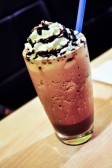
It was going to happen, sooner or later. How will it feel when the calorie count for a frappuccino is posted right there on the menu board?  Summer is here and many of us will be turning to blended coffee drinks. (Some of us, let us admit, will stick with them well into pumpkin latte season!). Posting calorie counts does not necessarily change consumer habits over night. The consumer still has to able to process the information and figure out what portion of the daily calorie intake is being taken up by a drink or a baked good. Some will ignore the posting, some might opt for lower calorie options.  If the consumer is on their daily visit, they might be more concerned with the calorie value than those on an occasional visit. For me and the other Moms, catching our breath with a chat in the middle of the week before scattering off to errands and volunteering duties, the calories are usually passed over in favor of fun. How many calories are there in that mocha frap, anyway? 200. Without the whipped cream. One cannot be too cavalier, after all!

New Day, New Diet Trend

garlic

The Mediterranean Diet, long known as the “ideal” diet to follow , is problematic for those who live in countries where some ingredients, olive oil for example, are not readily available. So, researchers in Norway, Sweden, Iceland, Denmark and Finland came up with a dietary regime based on local foods and tested the results on two groups of people: one of which was put on the local foods based diet with the added rule of no red meat  and no sugar; and another which consumed red meat and white bread as is normally done in these countries. Not surprisingly, the people in the first group showed an improved good cholesterol/bad cholesterol ratio and also changes in a marker for inflammation.

The benefits of a diet based on local food are not only financial and environmental but are also reflected in improved health outcomes as we eat the diet best suited for the conditions in which we are living. But pursuing the goal of local eating alone is not enough, even better is to eat in season. When we explore, as this chef did, what is actually growing around us, we will discover foods we did not even know existed. Case in point: I could not have identified the greens in the image above last month but have just discovered how delicious these garlic scapes can be! This is the top part of the plant, we normally use the bulb, and; here is the best part: by using every bit of the plant we reduce food waste and crucially, a waste of the water that went into growing that plant.


“I Have Measured Out My Life With Coffee Spoons”

15759463-scoop-of-coffee-beans

T.S.Elliot spoke for so many of us when he wrote that, but now, this warm indulgence so crucial in equipping us to fight the cruel world is under threat.  Coffee plants in Central America  face the possibility of being wiped out by a pathogen called Coffee Leaf Rust (Hemileia vastatrix).  This pathogen was earlier responsible for the devastation of coffee plantations in Ceylon.  Is there a way to avoid this? Yes, it can be dealt with by using a synthetic fungicide called Triazaline. The problem? Coffee drinkers in the US and other prosperous countries want their coffee to be organic. The organic fungicide that is used by farmers who grow organic coffee is copper based, much less effective and the run off from the plants poses environmental problems. Most of the organic coffee is grown by smallholder farmers who would lose their organic certification if they used the synthetic fungicide. However, if they had the option of using the synthetic fungicide  solely in order to deal with this crisis, they could save their crop (coffee is grown from seeds which could be saved from the current year’s crop) and be re-certified after 3 years. But faced with the consistent insistence on the organic label, these smallholder farmers may have to lose their livelihood.

How important is the “organic” label anyway? We already know the organic fungicide is not a good option. For farmers to receive certification, they have to pay stiff fees which puts a huge burden on them. Unless the coffee is shade grown, it means forest cover has been cut down to make way for farms (even organic ones) which is not environmentally optimal. Often, middlemen buy from the poor, smallholder farmers paying them a fraction of what this coffee will eventually earn in a market driven by the drinking tastes of consumers who remain unaware of the ground reality of those who produce the coffee.

Colombian coffee growers with the help of their government were able to eradicate leaf rust. Could these results be replicated elsewhere? I am still trying to research what methods were used there. Accessible and detailed information on the leaf rust issue is here at Applied Mythology. Solutions are available, the outcome is not inevitable. In this as in so many problems with the food system today, two things are essential: first, the voice of the farmer has to be heard on par with the consumer; second, a pragmatic perspective that brings us a good outcome for all and not just a few privileged people.  Otherwise those coffee spoons might just be left there, unused…

Book Review: “Gaining Ground”


book cover


When I first heard of “Gaining Ground” by Forrest Pritchard, I was intrigued because Smith Meadows is in my area and I had heard good things about it. But I approached the book with some reservation, wondering what a book about  farming, of which I have a limited understanding, would be like. While I try to learn and write about how our food is being grown, everyday life on a farm is unfamiliar to me. It is, however, precisely, this kind of reader that would be fascinated by this book. Forrest Pritchard, who came to farming after graduating in English and Geography from William and Mary, takes us on an absorbing journey  as he attempts to revive the family farm.

Smith Meadows farm is located in Virginia, in an area known as the Apple Capital of the world, lush with fruits and apple blossoms. Over the course of the book, the suburbs and farmers markets come in closer and city lights are not as distant as before. This change is also reflected in the way the farm works; in the efforts Mr. Pritchard has to make to find a butcher, a trade going extinct with the spread of large scale meat processing; and sometimes in the cluelessness of some city people about the way their food comes to the table. One of the really interesting aspects of the book is the authors’ experience with farmers’ markets: why markets in some shiny new suburbs (carved out from erstwhile farmland!) saw hardly any interest while some more urban spots actively sought out the grass fed beef and free range eggs (among other products) that the author offered, and thus opened the way to making the farm viable. Partly, the answer to that question lies in the value we put on our food, the understanding that cheap food has an invisible price attached that we do not pay at the checkout but  in other ways:  inadequate nutrition, poor health and environmental outcomes, and rising medical costs.

As we read about the beginner farmer’s  learning experiences raising hens, cows, pigs, sheep and cultivating pasture in an organic and sustainable way; we come to appreciate the effort and care that goes into raising our food. There are passages here that you might want to share with your kids: the goat who wandered off, the little pigs who wake up late, stretch lazily, and then go out to the specific area they have designated as their “bathroom”, and of course, the episode involving chicken poop, lots of it!

In the noisy debate over issues in the food system, we seldom hear first hand the voice of the farmer and this book brings us that experience. The choices for a farmer and the constraints faced by family farms become clear  as does their tenacity and love for their way of life. While he may not (yet) have written the Great American Novel that he describes himself as planning, he has given us an account of his attempt to grow food in a sustainable , thoughtful way that kept me  absorbed throughout.

“Gaining Ground” from Lyons Press comes to bookstores May 21st.

The Price of Fear

ram

An interesting piece on the price we pay for our fears, in The European Magazine. This question is central today in much of the issues being debated in the food world. There is distrust of biotechnology because there is no way to prove that they are “completely” safe. If its not food, then its public health which is vulnerable to fear and distrust.The irrational (and, as proven recently,) baseless fear of vaccination is being blamed for a measles epidemic in Wales and also a persistent Pertussis outbreak in the US. Why have we become so fearful?

If our ancestors had not been adventurous and ready to take a risk, we would be living in a very different world. One where we would never have been to the Moon because no one could show conclusively that it was safe to travel there or even tried a fruit like the rambutan which, looks somewhat scary but is actually delicious.

When new seeds and fertilizers were introduced to the Indian farmer in 1963, they too may have been fearful but they adopted this technology thereby bringing in the Green revolution that ultimately saved so many from hunger, malnutrition and untimely death. Instead of obsessing about what is on my plate and in my food, can we agree to try something that might provide solutions for those who have nothing on their plates? At this point in the discussion usually some one jumps up to say that production alone cannot solve the problems of the food system. I could not agree more but I would point out that by spending all our time and energy talking about GM food/organic cultivation/local or not, we have little left to spend on enormously important matters like consumption patterns, food waste, or malnutrition, among others. That is also part of the price we pay for being fearful , we are left with less than optimal solutions because we did not use our time and resources wisely.

And we can start with baby steps, perhaps move on produce item from the organic to regular column on our grocery list and try that or trace a news report to the actual study they are talking about and decide for oneself what to believe. And if you should choose conventional watermelon instead of organic this week,  you could  also try out this watermelon stroller, bringing you portable and chilled watermelons just in time for picnic season!

Why Should We Cook?

cooked

Michael Pollan’s “The Omnivore’s Dilemma”  was one of the first non-policy books on food that I found totally absorbing. It showed me food in a totally new light, never again would I look at corn the same way! So I look forward to reading his new book “Cooked” which is  being released today. While the reviews at the New York Times,  Washington Post or on NPR are generally warm, I am curious about some of the points that came up. I am a strong advocate for cooking at home. It is the healthier and cheaper option. But Mr. Pollan’s belief that people don’t cook because they are doing other things like surfing the Internet or watching TV  is not a view I share. The pre-dinner hour is usually the craziest in a household with homework, piano lessons, soccer practice all converging and squeezing out cooking time.  It is rarely a time to watch TV or surf the web, there are other factors at work here: lack of time, knowledge of basic cooking skills come to mind.

More concerning for me was his nostalgic call for a return to the “communal fire”. He posted this quote on Twitter: “The microwave is as anti-social as the cook fire is communal.”  Food prepared  in the microwave qualifies as “food” solely on technical points, I agree, but the communal fire is not the answer. There are many places in the world where even today, food is cooked over fire ( a real fire not the stove top familiar to us). This requires the women and young girls to walk miles in search of firewood, carry it back on their heads and then labor over starting and maintaining the fire to cook on, all the while inhaling huge amounts of smoke that is toxic for them and , indeed, for the entire household. So, for these women, an option to that fire is very welcome.

Mr. Pollan also makes the point that women left the kitchen to participate in the outer world but did not success in bringing men into the kitchen, other than in the form of the men who head the processed food companies. Well, if there is a movement on the part of men to occupy the kitchen, it has not hit my part of the world yet. The grim reality of home cooking is that it takes a whole lot of time: time to clean and prepare fresh produce/meat for cooking, the actual cooking time and then cleaning up afterwords and it is going to take more than one person to do all this so it requires a time commitment from everybody. And while watching amazing dishes come together on TV is mesmerizing, packing lunches and making dinner everyday is , to be honest, fairly tedious.Once we acknowledge this and also the fact that however boring and time consuming it may be, cooking at home is essential for a healthy society and for building family bonds we will be closer to working out a life pattern that works for everyone and still lets us eat home cooked food.

Why Do We Watch Cooking Shows

tv

My idea of a perfect spring break would have been to laze around at home working my way down the pillar of books at my bedside and , for a change, watching my favorite cooking shows. (Instead, I found myself taking a road trip, indulging in awesome food, and spending way too much on souvenirs without which, kids seem to think , no trip is complete).

There are shows that bring out our inner competitor. We watch “Chopped” and think, ‘Oh, I could do better than that in 20 minutes”. Top Chef is a peek into a world that we never usually get to see and we marvel at the skills on display. Do we ever try to learn anything from these shows or try out these foods at home? Well, Rachel Ray is a practical guide for some, Ina Garten of “Barefoot Contessa” does explain things well and now that she has okayed frozen asparagus, I actually pay attention instead of merely fantasizing about having a kitchen and herb garden like hers. But , by and large, TV shows are entertainment for me. If I want to learn how to make sushi or samosas or want to know how to fillet a fish correctly, I depend on all those helpful people who have posted their videos on YouTube! This post came on as I was reading this lovely piece by Emily Nussbaum in The New Yorker.