
Prof. Jonathon Jones of the John Innes Centre in England writes in the Guardian to defend the his group’s work on introducing blight resistant traits in potatoes.Blight causes huge losses for commercial potato growers every year and the work in question consists of experiments to introduce blight resistant traits found in wild potatoes into commercial potatoes without losing the desirable properties already present in them. What was intriguing about the article was not just the description of the work or the case made for biotechnology but the plea that Prof. Jones makes for better communication between the supporters and opponents of biotechnology. Like any other technology, genetic modification comes with advantages and concerns. All too often, opponents of GM seek to demonize it and following this path would mean we also lose out on the potential of this option to address issues like climate change, global hunger and public health. We need a sane dialogue on this issue , the time for fear mongering should be over now.
Tag Archives: food policy
The Debate on GM Potatoes
Posted in Climate Change, Food Policy, Food Security, Hunger, Living
Tagged climate change, food policy, food safety, food security, Hunger, Living
Wanted: Organic Seed
According to a 2010 nationwide survey conducted by the Organic Seed Alliance (OSA), organic farmers are faced with a seed market that neither possesses sufficient available quantities of certified organic seed to meet demand nor the specific varieties of organic seed that they desire. As a result, many organic farmers have had to compensate by using conventionally bred seed varieties selected for use in high-input chemical farming systems in lieu of those specifically adapted to organic farming systems.
via Wanted: Organic Seed.
Posted in Farm Technology, Food Policy, Green, Living
Tagged food policy, Green, Living, Technology
Food Fraud!
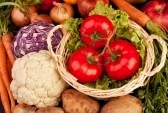 This is a pet peeve of mine: the theory that it is a smart idea to get kids to eat vegetables by “hiding”/”disguising” them. So you “sneak in” as the proponents like to say, a serving of vegetables into the mac and cheese or other dishes that kids love and they will eat it without objection. I always want to ask this question: what happens when the kid leaves for college or gets a job (assuming the economy improves!)? Will he/she gravitate to the salad bar at the cafeteria or buy a nice steamer with their first pay check? No, because they will not have learned to enjoy veggies and make them a part of their diet.
So,what do we do about the daily veggie war? I would remind you of the old rule of parenting: kids do what they see not what they are told. So if your kids see you enjoying vegetables at your meal they will follow as well. Also, kids will eat it if it is tasty. Vegetables cook fast and there are plenty of recipes out there to suit the needs of all cooks. Splashing on some olive oil, salt and pepper and putting a tray of broccoli heads in the oven does not take much longer than spinning it in the microwave but it tastes much better.
I wrote this after learning that Kraft is adding a portion of freeze dried cauliflower to its instant mac and cheese and marketing it as a “healthy” option. First, what nutritional value do you think the kids will get from freeze dried anything? Second, in the time it takes to reconstitute the mac and cheese from the box, you could roast up some cauliflower heads and get more taste and nutritional value. Third, it is up to us parents to decide what is healthy, do not rely on what the box says.
Instant mac and cheese is a great option for crazy days when we seem to be rushing from work to school to ballet to swimming without pausing to breathe, but pushing veggies is still something we need to do.
The Economics of Climate Change

So, by now, we have all heard or read about climate change and what we need to do to combat it. Assuming that most of us do not doubt the process of climate change, there is the debate on how to take care of it and most important how to pay for this efforts. The “how to take care” part depends on our evaluation of what the impact of climate change is going to be. On this, there are several schools of thought ( surprise!!), there are climate change models and also economic models which analyse this question. We need to inform ourselves about this debate if we are to contribute meaningfully. If , like many of us, you have been otherwise occupied recently, fear not, here is a piece from Grist.com that will introduce you to all of this in an easy way.
Posted in Climate Change, Food Policy, Uncategorized
Tagged climate change, food policy
What Budget Crunch?
 NPR reports that $20b is spent annually on air conditioning in Iraq and Afghanistan. Now consider the speculation that agricultural programs may face cuts of $ 2o b to $ 30 b in the 2012 Farm Bill. It makes you wonder when our priorities went so astray. Sure, the welfare of troops in combat is crucial but it is time now to bring them to comforts at home and free up the money spent on endless engagements to restore the economy to a robust state. When there are 15 m children hungry, the battle has to be fought at home. Right now, as we are surrounded by the bounty of summer, luscious tomatoes and gleaming blueberries, hunger is an acute problem for kids who depend on the school lunch program the rest of the year. The annual school lunch budget? $ 9b. It can be argued that there is much room for improvement here.
There is no denying that we are going through testing times. While we do have the financial resources and skills to overcome this challenge, we need to make tough decisions regarding our priorities. This is not the time to make safe choices and cling to the status quo or live in denial. 2012 is not only the year for the next Farm Bill to be passed, it is also election year. When your candidate comes to ask for your vote, make sure he/she knows that food security, food safety and a fair food system are priorities for all of us.
Posted in Food Policy, Food Security, Hunger
Tagged food policy, food security, Hunger
The Real Story of Food
 I am always encouraged by insights that view the food discussion in a pragmatic way. While we read and hear a lot about growing our own food and eating local, we often paint to ourselves a perfect and inaccurate picture of life on a farm. So when someone points out that it was mostly hard work, muddy and messy, that we are really glad to leave behind, I am in agreement. Many of the achievements of the past century have their root in the fact that food production and consumption became much easier and less time consuming than before. Having carried that process to the extreme, we surely need to rectify it and bring more balance into our sustenance and our work life. Lewis Lapham, writing in Mother Jones, also points out how, on the one hand, we are faced with a lack of access to food and , on the other, food has morphed into a sort of wealth, a commodity with with outrageous price tags. But the root of our problems lies in the fact that food is not a commodity like any other, cannot be traded or fit into a system or manipulated with ease. Because, to me, after all, food is about nurturing, comfort and love.
Food Safety and Nutrition Allocations Slashed
The House of Representatives passed a Republican-led bill to slash spending on food safety and nutrition programs. Details, here, also include the list of 19 Republican who voted against the Bill along with the Democrats.
Posted in Food Policy, Food Safety, Nutrition
Tagged food policy, food safety, nutrition
Stop! before you eat that tomato….
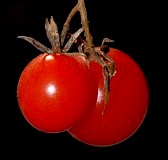 …read this book: “Tomatoland” by Barry Estabrook lifts the veil on the ugly truth behind the juicy tomatoes you may see around you. This is an industry based on the inhuman treatment of migrant workers or illegal immigrants. This situation is made possible by a system which demands that everything be available all the time so you can walk into your grocery store from a snowstorm and buy tomatoes and lettuce. This is not only unnecessary, it has also created a disconnect between people and the planet. Eating in season may be a new mantra but it is actually old wisdom. Our food system must be fair to the people who work in it and the planet that sustains us and we need to reëxamine what we demand from it.
Farms in Crisis
 So it has come to this: small farmers in the U.S. are finding it so difficult to make a living, they have to supplement their income with pick-your-own activities or offering the “farm experience” to clueless urban dwellers or giving it up altogether as in this story.
Our current model of big agri-business dominating the farm sector has been shown to be deeply flawed. Farm workers are poorly treated, crop diversity is decreasing and our diet is skewed. It is time to empower the small farmer, to ensure that we grow more fruits and vegetables and incorporate that in our diet instead of consuming huge amounts of corn-based products. So redirecting subsidies to where they are truly beneficial is essential, let us not continue to pay people to not grow corn or soy.
On a lighter note, I love the pick-your-own programs, its great for the kids to see where their food actually comes from and the berries and apples we had so much fun picking do, in fact, taste sweeter!
How the Subsidy Garden Grows
America’s Subsidy Garden – Politics – Utne Reader.
Fascinating infographic on how the White House kitchen garden would look if it reflected federal subsidies! The first thing that comes to mind is: why do we need so much corn? and then: hey, what happened to the fruits and vegetables?
We need to grow more fruits and vegetables to meet the minimum dietary requirements and we certainly do not need to be helping corn any more. All this money going to corn, soy and tobacco would be much better channeled to fruits and vegetables. Remember that this picture has a hidden layer: our current corn based diet is a factor in the rising rates of obesity, diabetes and high healthcare costs so we pay at the grocery store for bad food choices and then again we pay huge medical bills for consequent illness. Redirecting subsidy payments to fruit and vegetable crops will mean a varied, more healthy diet. So I can put a healthier dinner on the table, avoid visits to the doctor, not have to worry about medical bills and know that we have a more robust food system. It’s not rocket science, but will it become a reality in the 2012 Farm Bill? Maybe you can pose that question when someone comes to ask for your valuable vote.
 Thought + Food