Tag Archives: climate change

Are Nitrogen Fertilizers Used in Organic Farming?


fert

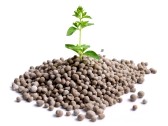
One of the benefits of organic farming is supposed to be the use of organic fertilizers, as opposed to the nitrogen based fertilizers used in conventional agriculture. This would imply that organic farming would not be contributing to the process of climate change. But this piece at Biofortified.org explains that the issue of how the manure (used as fertilizer in organic farming) was actually produced. If it came from conventionally raised animals then it is part of the same process as the nitrogen fertilizer used on conventional farms and very much a part of the climate change process. As always, these issues are not either/or ones and the need for nuance in discussions is essential. The whole issue is very well explained here.

How “Real” is the Hunger Games

cl2

The second movie in the Hunger Games series is out in theaters and is , as expected, doing extremely good business. The plot line of the series is fairly bleak but is it also a peek into a future that could happen to us. The story unfolds in a world ravaged by climate change and the conflicts that followed as people tried to grasp whatever resources they could. The heightened tension over sharing water, land grabs in countries far from home, the people killed or displaced by unstable weather that fill the headlines; all this is mere degrees away from the description of life in the Hunger Games books.

What is also striking is the contrast in living conditions in District 12 and the Capitol. It immediately calls to mind the classic descriptions of the colonial system taught in basic economics: resources extracted (often by coercion) from areas of the “periphery” to serve the needs of the rich and powerful “center”.  A more detailed analysis is here.

So ,while we eat more popcorn than is good for us and watch Katniss blaze on the big screen, it is a good time to reflect on the economic and historical paths we have walked and where we want to go in the future.


Drought, Hunger and Syria


syria

Looking at the news these days, it seems that the world is just coming apart and understanding all of this is impossible. But it is also difficult to turn away from, so I started reading this piece to learn about the situation in Syria. And when I came to point 6, I had to stop and read it again. How did I not know this already?

There was a severe drought in Syria from 2006 to 2011 which disrupted the rural economy. Lack of water meant that farmers lost their livelihoods and migrated to the cities to get whatever jobs they could, to keep their families from starving. The Syrian government, meanwhile, decided to sell off the grain reserves.  Already unsuccessful in dealing with the drought crisis, it now had no food to offer its citizens and had to import food. This, obviously, was not a viable solution and it is easy to see why violence, fed by this and other factors, has broken out.

Two things come to mind here: the issue of climate change and the breakdown of Syria’s food production system has largely remained invisible in the discussions on military action. How could a calamity that resulted in an estimated 2 to 3 million people being reduced to “extreme poverty”, have remained unnoticed?  And, for the future: as the impact of climate change on our food system becomes more intense;  this situation ,with minor changes in variables, could be repeated across the globe. What will we do then?

It is time to put the food system at the center of any debate on the future. If we talk of dealing with climate change, let us start by recognizing its crucial impact on how we grow food, if we want a more equal world, let us ensure that its roots lie in a just and fair food system, and if we want a secure world, food security needs to be the first step.

Bananas for Mother’s Day

mother

Flowers are traditional, yes, but this Mother’s Day I am thinking about bananas. Specifically, the plan to grow iron fortified bananas in India.This plan, predictably, is being met with resistance in some quarters. But, first, some background: India is the world’s largest producer of  bananas and almost all of it is consumed domestically. India also has a very high incidence of anemia. The India Human Development Report 2011 noted that approximately 55-35% of women in the age group 15-49 were anemic and this number had increased  by 3% from 1998-99.  Anemia in pregnant women increases the possibility of pre-term or low birth rate babies. It also implies less than optimal development in utero which means that the physical and mental development of  a new generation is impaired and the cycle of poor health outcomes continues. We also need to consider  a new variable in all of this: climate change.  It is predicted that climate change will have critical impact on maternal and new born health from adverse environmental consequences. It would make sense, therefore, to give special attention to improving maternal health before the worst of the crisis is here.

Given this scenario it makes sense that the Indian government has approved a project for the transfer of technology from Australia to grow iron and nutrient fortified bananas. Bananas, grown locally and easily available, would be an ideal way to meet the nutrient needs of women suffering from anemia. And  where a busy mom pressed for time may not have time to prepare an iron-rich dish separately, she can always grab a banana on the go.

It has, however, been met, with resistance from groups that claim that the “indigenous biodiversity” which is supposedly sufficient for India’s nutritional needs will be “destroyed” and suspect a plot by dark forces to take over the banana domain in the country which is the biggest producer of the fruit. Well, if the indigenous bounty of nature would have been sufficient, we would not be facing these alarming  health statistics. Clearly, women’s diets still remain nutrient deficient and this needs to be addressed. The indigenous variety does not have the same iron content as the fortified one, of course, and none of these critics seem to have suggested any options for either increasing access to indigenous bananas or meeting the nutrient needs in any other way.

To understand the threat to biodiversity, I started researching banana cultivation and found that this is done by planting stem cuttings, so the possibility of threat to the native species is hard to discern. The other fear that this will result in “monocultures” is not a significant one because the most widely eaten banana on the planet is already the Cavendish, the kind familiar to us from grocery stores. In addition , some local varieties are grown in several countries but one variety of banana seems to be dominant already. The technique to fortify bananas already exists and we can speculate that the time taken to bring the fruit to the market would not be that long, so that some improvement in health outcomes might be expected despite the expected adverse impact of climate change in the coming years.

Along with the adoption of fortified bananas,efforts should also be made to revive indigenous iron rich crops which have been overshadowed in recent years.This is not an either/or situation, we can and should take advantage of all the solutions available to us. Certainly we need to protect biodiversity but we cannot overlook the health of mothers and children which will determine how strong our next generation will be. An interesting example in this regard is that of Uganda: faced with banana wilt which was destroying crops and could have resulted in the abandoning of banana cultivation, scientists have developed a variety with a sweet pepper gene which stays can combat banana wilt. Better a GM banana than none at all in a country which prides itself on its banana tradition.

Just like biotechnology, the celebration of Mother’s Day in India in recent years is sometimes criticized  as a western import, alien to indigenous traditions. So it is fitting that my wish for all the moms on this Mother’s Day is that India does grow fortified bananas and we have healthier moms and babies in the future.

Is the “Rice Revolution” for Real?

rice

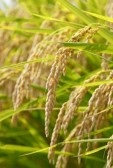
This week, the media was full of reports about a “rice revolution ” in India. The trail started from the article in the Guardian, which claimed that record yields of rice had been achieved in the state of Bihar, in India, without GM or herbicides. It reported how 5 farmers decided to use the SRI system( System of Rice Intensification) and came up with unprecedented yields of 22 tonnes per hectare. Nobel Prize winning economist Prof. Stiglitz is quoted as saying this type of inspiring organic farming should be studied and replicated elsewhere.

So, first I needed to understand what SRI involves: it is a set of techniques for managing soil , water, planting conditions to increase yield ,which was first noted in Madagascar by a priest and then tried out elsewhere as well. Improving agroecological practices is crucial for the food system but can this be replicated effectively to solve the system’s inherent problems? This question is best answered by looking at the report which gives details of this effort: the farmers start off with hybrid seeds from Bayer and Syngenta, and plants in the SRI as well as regular fields receive doses of inorganic fertilizer so this rice crop cannot actually be termed “organic”. The experiment provides pesticides to the regular crop but uses cono weeding to control pests in the SRI field. More labor is required in the SRI field for careful application of water but less water is actually required for the process, also fewer seedlings are planted in the SRI field and so less labor is required on that account. So what we have a is conventional seeds with good farming practices giving encouraging results. This is not unknown, to the contrary, many advocates have been recommending such a  mix of methods rather than depending for the sake of ideology on any one particular option.

Whether the results from Bihar can be replicated over time, countries and scale to have a real impact remains to be seen and one can hope that it will be useful specially for smallholder farmers. But long before that, the waters have been muddied by people pushing agendas. It seems strange that a year’s effort from five fields is touted as proof that biotechnology is useless but years of tests and safe consumption of biotech crops are dismissed as lies. For fixing a global food system breaking down under the strain of feeding a growing population and quite unprepared to withstand the shocks of climate change, we need the calm  of the middle not the chaos of the extreme and we owe it to the planet and to our children  to make that happen.

The Race to Grab Farmland

land

“But land is land, and it’s safer than the stocks and bonds of Wall Street swindlers.” —- Eugene O’Neill, “Long Day’s  Journey Into Night

Today, though, land is not safe anymore as the increasing population, volatility of food prices and leveling off of yield is leading to a global rush to grab farmland before it runs out. Investors, agribusinesses and governments  are buying up land mostly in less developed areas where the population can be easily displaced as land records are not easily available. Some of these may be communal lands , held in trust over centuries so when they are taken over, the community is displaced and scattered and deprived of a livelihood.

Recent reports show that approximately 203 million acres of land has been acquired and the top land grabbers include the UK, the USA, China and Saudi Arabia. In Cambodia, about 55% of  the arable land is now under the control of agribusiness and foreign investors.  The investors who make these deals often make promises about providing employment to local workers or introducing new technology but these are seldom fulfilled. And what  about the actual crop that is grown? Chances are it would not be the traditional crop but one that is destined solely for export. In one case, Saudi Arabia decided to grow sorghum in Sudan, not for the Sudanese market where it is a food item, but for consumption by camels in their own country. As the decisions regarding crop choices changes, this might take food choices out of the market and exacerbate the problem of hunger in already vulnerable populations.

Last year’s drought in the US brought home the importance of water, a fact that will only become more evident as we deal with the impact of climate change. Land grabs also put this resource out of the public domain and into the hands of private investors. This presents a daunting challenge for poor rural populations depending on farming for a living. In future, they might have to pay extra for drinking and irrigation water.

How did we get here? Perhaps the first step was the morphing of agriculture into big business, the disconnect between profit and the provision of food on the table, and the second was the sad collusion of corrupt governments and predatory investors.This trend toward land grabs poses a grave challenge to food and livelihood security in the countries and communities where it occurs and also impacts what people elsewhere can put on their plates and how much they have to pay for it.

Wishlist for a New Food System

gift

The din around the fiscal cliff grows louder every day, perhaps it is time to raise our voices to ask an important question: what happened to the  Farm Bill?  There has been some debate about the food stamp program or debate on genetic modification of crops but what if we resolved to start over, from a blank sheet and set up the food system that would benefit both producers and consumers and be prepared for dealing with climate change. Here are some of the things on my wish list for a better food system:

1. Better food choices at home:  while the awareness about eating “local” is  laudable , everything cannot be grown locally so if we find ourselves buying “local” tomatoes while stocking up on snow shovels, it means that we are buying produce that requires greater resources  because it is being produced out of season. Instead, let us try to eat in season, experiment with produce that actually grows in this season and expand our culinary abilities. Also, if a food producer has to sell only locally they might either not be able to meet demand (in which case  we would have to go without) or is left with a surplus which does not sell and he cannot ship it elsewhere because of the insistence on local food. Most of us in the food debate consider the consumer’s point of view. Let us also hear what the farmer thinks.

2. Change agricultural practices: adapting to climate change is not just about producing food under a different set of weather conditions, it should also be about using better farm practices like growing trees on farms to prevent soil erosion and sequester carbon, preserving biodiversity, green manure among an array of  possibilities.

3. A  fair food system: let us recognize the hard work that goes into producing our food;  long hours in all kinds of inclement weather often involving hazardous chemicals and equipment. The number of people ready to do this is small and yet we do little to bring in those who are ready to work in this area. We need to provide a decent life and dignity of work for immigrant workers on American farms.

And when we go to a restaurant and are happy to see that the food is “local” and “sustainable” and the chef has so many stars, let us also think about the restaurant worker. If you want to know if your server or cook is being paid a fair wage or get paid sick leave, there is now an app for that!   

4. Renew rural life: when it is openly stated that there is a disconnect between urban and rural communities with the latter being isolated and cut off from the mainstream, it is crucial to take action. Farmers today are older and fewer in number than before and as they become less able to farm the land, farms may be sold off to urban property developers or be purchased by large farms. To create a vibrant farm sector, it should be made easier for younger people to farm, offering financial aid or improving infrastructure where needed.

5. Plate and Planet:  every time we make a food choice let us think not just of how it will be on our plate but how it will impact the planet.  A recent study shows how yields of major crops are falling, and preparedness to deal with climate change is hardly robust so when we push a certain technology or practice, let us consider the global situation as well. Changing tastes in America might lead to positive change here but global hunger and access to food should also be considered.

And, finally, in this, as in other debates, let us be civil with those who disagree. Perhaps this wish list will remain just that: wishes, but can we at least resolve to stop name calling on Internet discussion forums because someone disagrees with us on a point of policy? We are all people,  no one is a “shill”.

Of Looming Cliffs and Melting Ice

The last of the turkey leftovers are gone and we are now fully awake from the food coma to find, according to the incessant media coverage, that we are hanging off a cliff and in danger of plunging into catastrophe. Hopefully we can claw our way back. But while those involved in solving this do their best headless chicken act, another drama is unfolding in Doha where the climate change conference is being held. There, also, all is sound and fury and we watch in disbelief as no action emerges to tackle a challenge to the planet and the people who inhabit it. And while the debate rages on regarding the placement of the comma goes on the communique that communicates less and obfuscates more, everything that we put on the table to give thanks is threatened, yes,everything  including the wine. 

What, one wonders, would make the urgency on this matter obvious? Perhaps a video of  the melting Arctic ice that will allow ships to navigate through this area for the first time? Or perhaps they might need to consider the information in these handy charts?

Climate change is going to have a major impact on a food system that is already under pressure. How will we meet this challenge if we are going to pretend it does not even exist?

Getting Used to a Changing Climate

We may not agree on why the climate is so unstable, or who caused it , or even how to tackle it but the fact that it is happening can no longer be ignored. Yes, bad weather has been recorded in the past but all the events are now more unpredictable and destructive. Around the world, farmers are trying to deal with this new uncertainty in weather conditions. Food producers are opting to grow a different set of crops and consumers too will have to adapt their diets accordingly.

Now, considering that Congress just let the Farm Bill drop while they got on with the more important of election politics, there is a sense that putting in place policies to enable the food system to deal with climate change is going to be a difficult process. Those going in to vote next week might consider this as they choose the people who will be responsible for determining how we tackle this challenge.


“Is there enough planet for all of us?”

That is the question posed at the beginning of the Global Hunger Report released today by the International Food Policy Research Institute (IFPRI). The report examines the issue of hunger  framed by conditions prevalent today; such as increasing pressure on resources like land, water and energy, demographic changes pushing the planet’s population towards 9 billion by 2050, climate change and institutions and policies that are falling short of their goals.

To make the food system more sustainable, the report recommends a more efficient and careful use of resources, end to subsidies, investment in education and meeting the challenge of climate change, among others. Most of this is frequently discussed but the political will to make it happen often falls short. Everyone needs to get involved in whatever way they can to push for these changes.

The report does conclude, that,  yes, there is enough planet for us all, we just have to make smart and thoughtful choices.