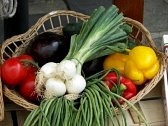
When Onion Prices make Headlines!

A fun title followed by a great analysis on the big fuss over runaway onion prices in India. Very interesting amid the reports of global commodity price rise, more on that to follow in later posts.

http://www.economist.com/blogs/freeexchange/2011/01/indian_inflation&fsrc=nwl.

More Biofortification News: Pearl Millet

New Technology to Speed Up Pearl Millet Breeding | HarvestPlus.

New School Lunch Guidelines

 The new guidelines for school lunches, intended  among other thing, to reduce the amount of salt and fat while increasing the intake of whole grains and vegetables is expected to be announced today.

We can expect the usual cries of  “big government” and “no resources” but it is a challenge that needs to be met and this is an encouraging start.

All You Ever Wanted to Know About Fish…

The joys and perils of “sustainable” seafood labeling.

Food Price Crisis

My journey here at Thought_Food was  prompted in part by the food price spike of 2008. Back then, we were assured that this was only temporary and the situation would improve. But recently in December 2010, the FAO  noted a sharp rise in commodity price spikes and there is no ignoring the fact that a crisis is , indeed, brewing. The factors  at work are explained in detail in Lester R. Brown’s article at Foreign Policy. One of the major constraint on growth in agricultural productivity that he identifies’ is the shrinking backlog of untapped technologies. So, if constraints on natural resources prove insurmountable, perhaps we have a case here to take a more reasonable look at the role of biotechnology in raising agricultural productivity? More on the possible benefits here.

No More Overfishing


It is being reported that for the first time in a century U.S. fishermen will not be fishing above the optimal levels, giving the oceans a chance to replenish and retain equilibrium. Something to celebrate amidst the usual barrage of gloom and doom!

Biofortifying Peruvian Potatoes

 In areas of Peru where meat is scarce and potatoes are a major part of the diet, the International Potato Center (CIP) is trying to cultivate potatoes that are fortified with iron, which will play a crucial role in combating anemia. More about the initiative here.

Healthy Food: for You and for the Planet


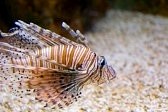
Two interesting ideas food ideas this week which offer possible solutions to health and environmental concerns. First. James Gorman proposes eating invasive species as a way of  tackling the problem. Apparently, there is an ongoing effort to rename the invading Asian carp as “Kentucky Tuna” and persuade people to eat it. It is ironic that many natives of Asian countries used to have to travel far and wide in the U.S. to purchase carp which can make a delicious meal. And the same idea can be extended to lionfish, pythons (exploding population in Florida), armadillos etc to name just a few. This could work well for the plant world too and rid us of weeds.

Mark Bittman presents an elegant solution  to our bad eating habits. Anybody can prepare healthy food at home , he argues, if they care to learn 3 basic techniques: making a salad (involves no cooking at all), rice and lentils combination  ( has the added merit of being easy on the budget) and a stir-fry  (works equally well for meats and vegetables). He tackles arguments about lack of access to produce, lack of time, lack of skill, lack of resources and has convincing answers to these problems.  My two cents: a little planning goes a long way to getting dinner on the table everyday. Just try it.

“No More Cheap Chicken”


That is Francis Lam’s new year’s resolution at Salon. Instead of taking an absolute stand, he analyses what is doable and recognises what challenges he will face. Many of us would like to join him, I know.The big problem: cheap chicken! It is much more expensive to feed a family without going the cheap chicken route and the grocery bills are not going to be pretty. One option may be to buy a sustainable whole chicken and use every bit of it: roast the first day, sandwich fillers the next, bones and bits for stock, then stock for soup and providing flavor to quinoa or couscous. It will be an interesting process!

Happy 2011!

Thanks for reading and sharing my journey into all things food last year! I look forward to learning and sharing more with you in 2011.