
 Mark Bittman celebrates good news from the food world. I particularly like the introduction of food into the national conversation and growing our own food. “A planter on every deck” seems to be the motto in my neighborhood this spring: not only does this make us feel connected to our food, it also draws us outside and gardening is a great activity for kids and parents to do together. Of course, closest to my heart is what he aptly calls “the edible school lunch”, chocolate milk is a thing of the past in our county and more vegetable options are coming up. The shoots of a better food world are peeking through. Spring is really here!
Food Trends to Celebrate!
Quinoa: trendy abroad, scarce at home
Recently, everyone seems to be talking about the wonders of quinoa. It is commonly but mistakenly thought to be a grain but is actually related to vegetables. It is still relatively expensive here, but can be found in many grocery stores. While we learn about its wonderful nutritional benefits and try to incorporate it in our diet, back in Bolivia where it was first grown, quinoa is a more complex story. Rising prices abroad have diverted more of the quinoa crop for export leaving less for domestic consumption. The domestic price has also gone up and consumers now turn to cheaper alternatives like white rice. Perhaps, the problem could be solved by expanding production but changing consumer preferences (soda instead of quinoa-based drinks) also contributes to limiting production. This story says a lot about the importance of a certain food is perceived. Quinoa is the latest trend so people will pay a premium for it but sodas are new and cool to someone else and they will change over to it from a healthier alternative. Even if we know what food choices we should make as people, as a country and as a planet, perceptions often drive the situation in a whole different direction.
The Return of Salmonella
 So, we might just be looking forward to another summer without the delights of tomatoes or spinach as efforts are on to cut FDA funding for food safety. This area was sadly under-funded to begin with, and now House Republicans want to slash that further. If these proposals go through, the FDA will have to furlough or lay off staff and that will mean fewer, or less intensive inspections of all the stuff that is going into your grocery cart.
Yes, we need to live and budget more sensibly as people and as a nation but how could the health of the citizens fall off the priority list? On the flat, not-warming planet where these proposals might have originated, has anyone given a thought to subsidies? or biofuels? Just saying!
Mapping Yemen’s Food Situation
Posted in Uncategorized
Two Banana Stories
 My day, like that of so many people across the world ,starts with the banana. I set out one each for the kids, they moan about how boring it is, I remind them how good it is for them, and then; ritual completed we munch together in the early morning calm. So when I heard about the banana crisis in Uganda, which is the world’s second largest producer of banana and where the banana is a staple food, I was concerned. It turns out that rather than give up and watch the banana plantations be laid to waste by disease, Ugandan scientists are testing a GM strain that would withstand the BXW bacteria. This new story though, has the same ending as many we have heard before: opposition to GM technology means there might be a very long wait before these developments can actually be brought to the fields. In the meantime, livelihoods are lost, and an entire way of living is in danger.
Closer to home, the introduction of individually plastic wrapped bananas by DelMonte brought howls of laughter as well as disbelief. Had no one noticed that the banana came in its own bio-degradable wrapper? Why did people try to interfere with Nature? So obvious, right? Consider this, as theAtlantic did: individual wrapping, intended to preserve freshness, will lower the number of perfectly good bananas thrown out each year. The article also makes the point that we should stop thinking of nature as sacred and man as a despoiler. We are part of the same world. Yes, we should be more thoughtful in the way we impact nature but let us not set some impossible Garden of Eden standard for this interaction.
Posted in Food Policy, Food Safety, Food Security, Nutrition
Tagged food policy, food safety, food security
Cheaper per pound than cheese and useful for far longer….
…. Chef Nathan Myhrvold’s (former chief technology officer at Microsoft, with Ph.Ds in mathematical economics and theoretical physics) new cookbook is here, reviewed by NPR. It focuses on a scientific approach to preparing food. $625. Buy?
Posted in Nutrition
Coffee Crisis

Climate change has made its impact on coffee production in Colombia. Higher temperatures and unseasonal rains are to blame for damage by insects and rust. A program is underway to develop and grow coffee strains that can resist the impacts of an unstable climate but these will take a few years to mature. In the meantime, that cup of comfort will cost more and coffee futures are rocketing up. Video from the New York Times.
Posted in Food Policy
In Honor of Women Farmers
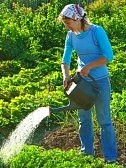 On International Women’s Day, insights into the women who feed the world:
women in Agriculture | International Food Policy Research Institute (IFPRI).
Posted in Uncategorized
Food Price Rise in Japan
For a long time, food prices have held steady (or even fallen in certain cases) in Japan. The agriculture sector is also protected by high tariff barriers so prices are less volatile. But the food sector is now going to feel the pressure of rising prices via the large volume of food imports. Since incomes have also been static, this rise will definitely make an impact on the consumers’ budget. What will it do to the long-awaited recovery? Insights from the Washington Post.
Good News on School Lunch Program
 How often do we hear that? Not often enough. But here is a story to make our rainy (where I am , anyway!) Sunday feel a lot better. On a shoestring budget, New York city schools are serving up healthy, cooked meals; changing the children’s perception of food and influencing the choices that become available from food suppliers. I would have liked to know how they worked the budget to change over from steamers and freezers to actual functioning kitchens. Perhaps that happened earlier, (the program is about 7 years old) in times when knives were for chopping salads and not for slashing school budgets. Here is the report from the New York Times.
 Thought + Food