India’s “Right to Food” Debate

food

My vacation mornings here, in India, are usually spent in a leisurely session of  sharing newspapers with my father. As I read, I am fascinated  by the lively debate around the Food Security Bill. which basically ensures the right to a certain amount of food for everyone. The discussion is quite sharply divided among those who feel that these would amount to hand-outs and create the Indian version of  “takers”, a term familiar to us from the recent US election. The other side argues that despite impressive growth in recent years, the benefits remain limited to a few sections while most Indians, specially in the rural areas; live in crippling poverty without access to basic amenities like clean drinking water, sanitation, electricity and education. Some effort, they argue, is required on the part of the state that everyone can partake of the growth pie.

This debate is front and centre right now because the political parties are using it in one way or other to substantiate their position in the upcoming elections; the ruling party is pushing for it and worked around the problem of passing it in Parliament by getting it passed as an executive order. This would be applicable for 6 months, close enough to the elections for those in power to claim it as their record. Others think this a bad idea for several reasons: difficulty in deciding eligibility, execution of the program through the existing, leaky public distribution system, cost to the taxpayer etc. But it is simply the more visible version of an underlying dilemma: should India pursue growth alone and let the results work out for themselves or should social goals like education, sanitation etc. be actively pursued by the state? And it is one that reflects the differing attitudes to economic development in India, presented in an excellent article here.

Despite the differences on the ground between India and the US there are ways in which they echo each other: a certain impatience/indifference to those who are struggling. The “if they were any good they would have pulled themselves out, instead they are holding us back” school of thought has supporters everywhere it seems; the ability to ignore increasing inequality is global and the willingness to exploit the issues for political points is robust on every continent.

A very good summary of the debate  can be found here.

Genetic engineering vs. natural breeding: What’s the difference?

Grist.com is running a new series exploring the truths and myths regarding GMOs:

Australian wheat has a new defence to a rusty old problem

Lettuce in a Bag: Green or Not?


An interesting piece  in The Atlantic magazine looks at the downside of buying bagged lettuce. First, is the fact that the between the time it was packed in the bag and the day  it is actually used, the lettuce would have lost a lot of its nutrient value. Secondly, enormous amounts of water are required to wash the lettuce before packing. It would seem that it is better to buy heads of lettuce and wash and cut it at home as needed. I am undecided about the water issue here: washing individual lettuce heads at home also means using a lot of water, perhaps more then washing a lot of lettuce at one time? But the nutrient question does bother me so I try to use the lettuce as soon as I can after I get it. My one attempt at lettuce growing was unsatisfactory because it requires a lot of lettuce plants (not the cute patch I had allocated it in my back yard) to provide salad for a family on a regular basis.  Where do you stand on the lettuce in a bag debate?

Home is Where the Fish Are

fish

As I try to meet the packing deadline for a month long trip back to see my family, two images float in my mind’s eye: one is the monsoon rains bursting down and the other is my mother’s plate of steaming rice and fish curry waiting at my place at the table. While most people today are familiar with Indian food, cuisine from the state of Bengal is less well known. Bengalis are obsessive about their food and there is a strict code to the cuisine: the order in which dishes are to served, what is cooked in which season, which vegetables with what fish; the list goes on. In the old days, young girls were grilled on their cooking skills as part of the arranged marriage interview! Above all, Bengalis adore their fish, abundant in the rivers and ponds of the lush delta the Ganges river forms before tipping into the sea. And of all the fish in the world, the most precious is the “ileesh”. This used to be  the fish of celebration, on festive days, weddings or if India won at cricket!

So reading about the beloved ileesh  vanishing from the earth is liable to stop the Bengali heart.But that is exactly what seems to be happening now, ileesh is growing scarce and Bangladesh (which became a separate country later, but was originally a part of India and shares the language and cuisine of Bengal) has banned ileesh exports. At the root of this is that all too familiar, tawdry tale: we abandoned the code of cuisine which treated the fish with reverence, ensuring that it was used sparingly, never eaten during the egg laying season. Now, we demand it all the time, in ever increasing quantities, even freezing it great chunks of ice to be sent to distant countries. There, it is defrosted, prepared as best as possible, and though completely devoid of flavor after it’s  arduous journey to the plate, still revives memories of home and family, far from the paddy fields.

On a more somber note, this year also marks the 70th anniversary of the Great Bengal Famine of 1943 which took about 3 million lives.  World War II was on, and the harvest was diverted by the British toward the war effort while the  people who worked to produce the food were ravaged by hunger. An outstanding film on this famine, “Ashani Sanket” seen through the eyes of  people in a village, was made by Satyajit Ray. It is often named as one of the best films ever made and I was a young girl when I saw it but still remember some scenes with much clarity: the lush green fields contrasting with the desperation  and degradation of the villagers, forced to sink to unthinkable levels in their search for food.

Posts might be a little infrequent during the next few weeks…..whatever I can manage in between bouts of food coma! Wishing you all a lovely summer!


Worm turns for cotton pest as Australia breeds in resistance

Interesting insight into the Australian effort to overcome pest resistance to Bt cotton by using precise farming methods.

a primer in genetically modified organisms

great way to learn more ….

Fair Food Conversation

eggp

If the conversation about the food system is going to have fairness as an objective, then everyone’s voice must be heard. But, try and think how many farmers’ opinions you have read/ heard recently? Women farmers? Even less, perhaps. What about farmers from countries other than your own? Or consumers from other parts of the world who do not have access to a gleaming grocery store filled with perfect produce?

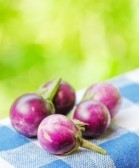
Here, then, is a peek into another world view. It comes from a farmer in the Philippines, a Mom who likes to cook “talong” or eggplant for her kids and laments the decision of the Supreme Court in her country to reject the adoption of Bt Brinjal (eggplant). She points out that GM corn  containing the same trait is already being grown, so it would seem illogical to now reject the Bt Brinjal. Both here and in the case of India, Greenpeace played an active role in spreading unfounded fears of biotechnology. As a result, the farmers have to continue using heavy doses of pesticides and still lose a portion of their crop to pests; and consumers are also deprived of choices at the market. Those who like to point fingers at Big Ag companies for destroying their “food sovereignty’ might like to take a second look at first world concerns taking away choices of poor farmers and consumers in other countries. If people have to go to bed hungry, then sovereignty does not have any meaning for them.

Starbucks Will Add Calorie Information to its Menu

iced cof

It was going to happen, sooner or later. How will it feel when the calorie count for a frappuccino is posted right there on the menu board?  Summer is here and many of us will be turning to blended coffee drinks. (Some of us, let us admit, will stick with them well into pumpkin latte season!). Posting calorie counts does not necessarily change consumer habits over night. The consumer still has to able to process the information and figure out what portion of the daily calorie intake is being taken up by a drink or a baked good. Some will ignore the posting, some might opt for lower calorie options.  If the consumer is on their daily visit, they might be more concerned with the calorie value than those on an occasional visit. For me and the other Moms, catching our breath with a chat in the middle of the week before scattering off to errands and volunteering duties, the calories are usually passed over in favor of fun. How many calories are there in that mocha frap, anyway? 200. Without the whipped cream. One cannot be too cavalier, after all!

Breaking the grass ceiling: On U.S. farms, women are taking the reins

The Changing Face of Farming