Category Archives: Uncategorized

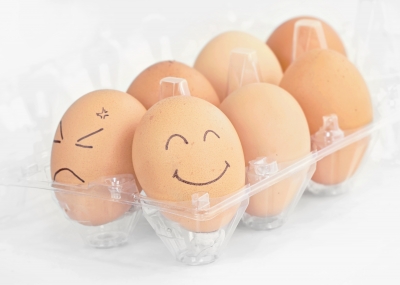
Do Consumers Prefer Happy Eggs? Scrambled Signals!

ID-100250484

A piece from the Modern Farmer analyzes the curious contradiction: consumers strongly support humane treatment of animals (cage free eggs, grass fed beef, larger spaces for livestock) but when they go shopping they still buy the conventional and, often, much cheaper variety.  California is an interesting example where consumers have voted in favor of bigger cages for hens but 85% of consumers continue to buy conventional eggs , often from out of state. The eggs from other states are cheaper and the egg industry in California is being undermined because of the law that sought to promote animal welfare.

So why does the voter behave differently from the shopper? Perhaps its because the idea is appealing and people want to do the right thing, but when faced with budget constraints the decision making process works in a different way. There are of course, many consumers who will pay more but that is a small proportion.

This story made me think about the labeling issue again: the consumer is reading the “cage free” or “organic” label but ultimately decides based on the resources available. So how important are labels anyway? From the producers’ perspective, being forced to make large investments to satisfy legal requirements which are then not valued at the market,  or even cause losses, seems unfair. Even for the supporters of animal welfare, the labels have little value: both “organic” and “cage free” eggs allow for “beak cutting and forced moulting”, that doesn’t sound all that great from the hen’s point of view, does it?

Still, the “happy eggs equal healthier you” idea has gained traction: Panera, Starbucks and McDonald’s are all moving to cage free eggs by 2020. Will this mean higher prices for the consumer? Will that determine where we eat? It will be interesting to see what happens.

(Image Courtesy: “Smiley and Angry Egg” by winnond; freedigitalphotos.net)

#Farming Friday 43:

ID-1006731

This story, with images that linger long after reading the piece, comes from Nepal. The story, however, is one that is common in farming communities all over the globe: those who  grow our food often do not own the land on which they work so hard. Land rights are crucial for food security and lifting farming families out of poverty.

(Image Courtesy: Misty Landscape by Dan, freedigitalphotos.net)

What Is the EU Policy on GMOs?

ID-10073666

In forums across social media, opponents of  agricultural biotechnology often argue: “Ask why would Europe ban it?” But has the EU really banned GMOs? And what impact does this have on Europe?  A recent piece in the New York Times laments the turning away from science that forms the basis of the EU policy on GMOs. In April, following a decision from the European Commission allowing member countries to ban the cultivation of  GMO foods, 19 countries have so far announced that they would implement the ban. Does this mean the end of the road for GMO crops in Europe? Actually, no! Some countries are still open to adopting and growing genetically modified crops.

Romania was a leading cultivator of GMO maize before it joined the EU in 2007 and, being aware of the potential of this technology is seeking to expand further. Portugal and Spain also continue to grow genetically modified maize.

So some countries are continuing to weigh the benefits and follow the science in their policy toward cultivation of GMO crops. But what about genetically modified feed for livestock? In 2013, the EU imported about 35 million tonnes of GMO soybean to feed its livestock.  Nothing has changed there and not much is said about the apparent contradiction in allowing GMO feed while opposing the cultivation of crops.The European Parliament has just rejected a proposal to allow member countries to take individual decisions in banning GMO food and feed, insisting that the EU take a decision as a whole so the validity of the individual country bans appears unclear.

The ramifications of EU policy go beyond its borders. It impacts the adoption of new technology in African countries which are hesitant to adopt policies that would put them at odds with their traditional trading partners in Europe. If there is no possibility of selling crops in a market with robust profits, there is less motivation to pursue new technologies. Some indications of change here are encouraging as Tanzania and Uganda move toward adopting a science based position.

Interesting fact sheet on EU GMO policy is here.

(Image Courtesy: “Soybean in Glass” by Teddy Bear (Picnic), freedigitalphotos.net)

How Birds Help Control Pests and Save Coffee

ID-100218730

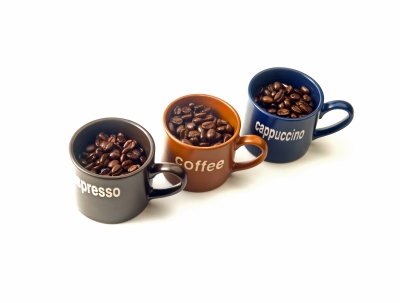
The coffee corn borer beetle is a threat to coffee crops in almost every country. A study from Costa Rica shows an interesting way to deal with it: by preserving areas of rain forest around coffee fields. The rain forests are home to several species of birds that feed on the beetles, thereby reducing crop damage. The species were identified by studying bird poop which had remains of the beetles. The researchers calculated that the birds provided increases in yield from $75 to $310 per hectare annually. So farmers have better incomes and there are improved environmental outcomes, and we continue to enjoy our coffee! You can read the study here.

The need to align agricultural and conservation goals is crucial as they are closely linked, a previous post lists encouraging examples from around the globe.

(Image Courtesy: “Coffee Cups With Coffee Beans, KEKO64, freedigitalphotos.net)

#Farming Friday 42: Pumpkin Lessons

ID-10022205

Fall is the one time in our area where everyone seems to be planning a trip to the farm, to pick apples or choose a pumpkin. One farmer realized that this was probably the only time that kids have a chance  to see how their food is produced and works to make it a fun and memorable time. It makes me hopeful that when children see the effort that goes into growing food, they will not be so quick to waste it. Maybe fewer apple slices of squishy berries will be tossed out with an “eww” at lunchtime in school!

(Image Courtesy: “Pumpkins” by Tina Phillips, freedigitalphotos.net)

Growing Potatoes on Mars

ID-100100607

 In the book (and just released movie), “The Martian” by Andy Weir , an astronaut is stranded on Mars and survives by successfully growing potatoes. The book is absorbing and the science appears convincing. Modern Farmer did some fact checking, and found that, yes, it was possible to grow potatoes on Mars as described in the book. Given the enthusiasm around the movie, I wonder what people will think about that. Here, survival is at stake, and an innovative solution is applied: if we can applaud this in a book/movie, why is there is such resistance to innovative science based solutions in agriculture in the real world?

Perhaps it is precisely through the world of the imagination that we can bring about an acceptance of the application of new technology in agriculture. I remember my daughter bursting into the kitchen to announce that in the book that her entire class was reading at that moment, “Divergent” by Veronica Roth, the main character says: “My mother told me once that, a long time ago, there were people who wouldn’t buy genetically engineered produce because they viewed it as unnatural. Now we have no other option.” For the first time, what I talked about was not merely background noise but actually validated!

Waiting to see if the movie is as good as people are saying….

(Image Courtesy: “Mars Surface” by Victor Habbik FreeDigitalPhotos.net)

# Farming Friday 41: Myths About Dairy Farms

ID-100355343

What is the difference between “organic” milk and “conventional ” milk? If you are standing in the dairy aisle, the obvious answer might seem to be “price”, as organic milk is usually higher priced and the premium is not small one. But what answer might we get from an organic dairy farmer? Why did they choose this method and how does it  actually work? Read about it here. 

Are cows in large farms treated in an inhumane way? Can they be best loved only in a small farm? To a consumer, a cow is an animal that is the source of the milk for their morning cereal. Dairy farmers tell us what their cows mean to them, no matter what the size of the farm.

(Image Courtesy: Cow by tuelekza at freedigitalphotos.net)

Why is Everyone Suddenly Talking About Food??

ID-100181122

It has been happening for a while now but suddenly it seemed to me that , everyone I met was talking about food: local, organic, GMO, humane, “ethnic” cuisine, paleo diet, juice cleanse, kale, quinoa, almond milk, free range, clean food (were we eating muck till now? I am confused!) , the list goes on and is familiar to most of us. But what I was wondering was how and when did food become the central part of most conversations, a focal point of life? I like food as much as the next person but does it have to come up as a focal point of discussion everywhere? Does it make us, in some way, different or special? Or  is it replacing other issues that used to occupy our minds?

Maybe food is the new music?  Today we discuss cuisines, restaurants and dining experiences the way we would, in the past, discuss music and certain choices signal exclusivity or being on trend.

Exploring different cuisines and ingredients is also a proxy for exploring other places. The line of jars of harissa on supermarket shelves evoke distant places, if we cannot go there we can at least bring a hint of that adventure into our kitchen. Food is the new travel.

Having brought home the pastes and spices and noodles, how do you know what to do with them? Cookbooks, of course! A list of cookbooks out this Fall highlights recipes from Ethiopia to Ukraine, from Nordic cuisine to a taco encyclopedia: the kitchen is a travel portal. But do people actually cook from these books or are these for pleasure and  recipes we actually follow come from Google? Food is the new reading….?

(Image Courtesy: Serge Bertasius Photography at freedigitalphotos.net)

“What Do Syrian Refugees Eat?”

At one of my favorite blogs, “Kitchen Counter Culture”, excellent read on what Syrian refugees eat and how food can reach them.

Kitchen-Counter-Culture's avatarKitchen Counter Culture

People fleeing the hideous violence in Syria are very much on our minds.

Looking at photos of what goes into luggage packed as people flee their homes, you see there’s really very little food going with them on their journeys. Refugees must be hungry indeed, and in such difficulty taking care of the needs– body and spirit– of their children and themselves.

View original post 428 more words

No, Carly Fiorina, the government has not “destroyed” California ag

Its still very early in the election 2016 process but I thought this was worth sharing here. More from other candidates to follow as we get closer to the actual day.

According to the GOP candidate, regulation is strangling the Golden State’s farmers. Yet somehow they are still earning record profits.

Source: No, Carly Fiorina, the government has not “destroyed” California ag