A balanced read from NPR on the organic/conventional/GMO debate.
Category Archives: Nutrition
Agricultural Subsidies
 Here is Mark Bittman’s proposal for subsidies for the Farm Bill 2012. He advocates reallocating instead of abolishing subsidies, we could not agree more! Let’s move resources from corn and soy and boost vegetables and fruits. An increased supply in these areas will hopefully lead to a fall in their prices and more people getting their five-a-day!
The Thing About Vegetables….

…..is that we have forgotten how to cook them! So says Francis Lam in this piece, and I have to agree. If I eat outside (not in an ethnic restaurant), my options with vegetables seem are usually limited to raw salads, boiled/steamed or at best a quick stir-fry. Even some vegetarian restaurants seem to be preoccupied with trying to make their diners comfortable with the no-meat situation rather than celebrating the vegetables themselves. And that is sad, because not only are vegetables (and black beans, kidney beans etc) good for us, they pack a real taste punch. So , lets make this year of the vegetables and also give the poor planet a break! For starters, I am going to try to grow some of my own vegetables this year. Planter+ soil+seed+water+sunlight how hard can it be, right? Will keep you posted on that! And once they ripen, break out the olive oil, dust off the spice jars and revel in a summer feast!!
Reasons for Food Price Rise

Paul Krugman on droughts, floods, speculation and their impact on food prices. Its heartening to see a focus on climate change and agriculture (and thereby food prices), a point not made often enough. On speculation: I feel that it will have a significant impact on the determination of food prices precisely because physical stocks will be impacted negatively by climate change.
A (Whole) Chicken in Every Pot
 Once in a while I read an article that is totally engrossing because it tells me so many new things about a subject that I thought I already knew about. Case in point: Nadia Aramugam’s article on the chicken industry’s problem with excess chicken legs. Breast meat being favored by consumers, there is a huge surplus of legs and thighs which need to be sold elsewhere. According to the article , there is virtually no difference, from the nutritional point of view, between white and dark meat. This perception was created by the poultry industry to make the breasts a “premium product”. It also explains the cultural preference for breast meat in America. This is often a mystery to consumers from other nations such as Asian countries where dark meat ,with a more intense flavor, is actually prefered over white. All this while, Americans have been choosing breast meat and the legs and thighs were welcomed in Russia. Not any more, as President Putin has warned against using them for health reasons (but more likely to implement his “self-sufficiency in chicken by 2012” policy). So where will all the legs and thighs go? The chicken industry which has demonstrated such resourcefulness thus far, will no doubt find a way out. “Legs! The Other White Meat” is a distinct possibility. Perhaps providing nutritious dark meat parts fresh for school lunches might be an option? Or we could go back to the days of using the whole chicken, for stock, soups and then move onto yummy grills and curries? Nose to tail for the poultry world….
When is a Centrist a Radical?

The answer, according to James E. Mcwilliams, is the moment when you enter the domain of food and take up position in the middle. In his book, “Just Food” he notes how polarizing the food wars can be: either you are a diehard supporter of organic farming or you are a “frankenfood” fan. “The dull but respectable place called the center” he finds, is a lonely place.
The subtitle of the book is “Where Locavores get it wrong and how we can truly eat responsibly” and this goes against the current push towards buying and eating locally. I started out with some scepticism but his essential arguement is convincing : eating locally may be a good plan on a personal level but we are not going to be able to solve the problems of the food system at the global level by eating and growing only local, organic food. The book is an easy read, the evidence is presented in an accessible way. So, pick it up if you can and see if you agree that “To be a centrist when it comes to food is, unfortunately, to be a radical.
Posted in Food Policy, Food Safety, Food Security, Nutrition
Tagged food policy, food safety, food security, nutrition
New School Lunch Guidelines
The new guidelines for school lunches, intended among other thing, to reduce the amount of salt and fat while increasing the intake of whole grains and vegetables is expected to be announced today.
We can expect the usual cries of “big government” and “no resources” but it is a challenge that needs to be met and this is an encouraging start.
Posted in Food Policy, Nutrition
Biofortifying Peruvian Potatoes
In areas of Peru where meat is scarce and potatoes are a major part of the diet, the International Potato Center (CIP) is trying to cultivate potatoes that are fortified with iron, which will play a crucial role in combating anemia. More about the initiative here.
Posted in Nutrition
Healthy Food: for You and for the Planet

Two interesting ideas food ideas this week which offer possible solutions to health and environmental concerns. First. James Gorman proposes eating invasive species as a way of tackling the problem. Apparently, there is an ongoing effort to rename the invading Asian carp as “Kentucky Tuna” and persuade people to eat it. It is ironic that many natives of Asian countries used to have to travel far and wide in the U.S. to purchase carp which can make a delicious meal. And the same idea can be extended to lionfish, pythons (exploding population in Florida), armadillos etc to name just a few. This could work well for the plant world too and rid us of weeds.
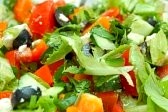
Mark Bittman presents an elegant solution to our bad eating habits. Anybody can prepare healthy food at home , he argues, if they care to learn 3 basic techniques: making a salad (involves no cooking at all), rice and lentils combination ( has the added merit of being easy on the budget) and a stir-fry (works equally well for meats and vegetables). He tackles arguments about lack of access to produce, lack of time, lack of skill, lack of resources and has convincing answers to these problems. My two cents: a little planning goes a long way to getting dinner on the table everyday. Just try it.
Posted in Nutrition
Fixing the Food System
Despite well-meant efforts, the food system is a long way from being fixed. Why is this so? In an insightful article at Grist.com, Tom Philpott concludes that it may be impossible to fix the food system without fixing the economic system first. The food system mirrors the distortions of the economic context and the existence of economic inequalities creates barriers to fixing the flaws of the food system. He describes the economic system as having three layers: a large low-income/poor class, a small class getting squeezed in the middle and a tiny group of the super rich. It is the latter which controls the economic system and their goal is to increase their wealth; environmental, nutritional or health outcomes are not a part of their calculus. As long as the masses are fed and working, that’s all the system needs. So cheap food, high in calories and low in nutrients is readily available and the food system provides unhealthy choices , which in their turn lead to poor health outcomes in terms of rising diabetes and obesity rates.
The discussion which followed the article was also enlightening. People pointed out the lack of access to fresh produce, lack of time, lack of money, lack of energy to cook one’s own dinner and the consequent capitulation to the allure of fast food outlets and convenience stores. To that, it may be argued that we succumb to that choice because it is available. Go to a poor area in a large city in any less developed nation. The people who work two or more jobs there, sometimes in horrible conditions, still come home and cook their food. Lack of transportation is certainly an issue as is lack of funds but there is something beyond all of this. As a society, we do not value nurturing. To make dinner at home everyday, we need to work less hours, have access to ingredients that are nutritious and above all, cherish this effort. All this involves a cost which we are not willing to pay and a state of mind that we cannot get to or at least have a struggle understanding.
Speaking to the issue of the economic system: the food system is a part of this larger system. If the big agri-businesses are the most active stakeholders in the economic system, we would logically expect them to resist efforts to reform the food system. So, is there nothing to be done? Not quite. One thing that gets the message across is money: withhold your purchases of empty calorie products or those produced by unsustainable methods and sooner or later the corporations will modify their behavior as well. Highlighting bad practices in the public domain is another tool as businesses try their best to avoid bad publicity.
Beyond these issues, there is an intangible variable as well. What we eat is not merely a commodity, it is a part of who we are. Immigrants in a foreign land will rush around trying to find familiar ingredients, cold days will bring up childhood memories of soup, the smell of coffee will lure us out in the fading hours of the afternoon. We are sentimental about what we eat, we do not like changing our habits and we resent being told we need to change.
So, yes, from all perspectives, this is likely to be a long and weary struggle but it is one that cannot be let go so let us gather up our strength to get on with it. The struggle to change the food system has to be waged at the personal level (of the consumer or producer), in the business arena ( to ensure nutritional standards are maintained and sustainable methods of production are followed) and in the domain of civil society ( reform efforts need to be backed by the necessary legislation).
 Thought + Food