Category Archives: Hunger

The Problem With Solutions to “Feed the World”

ID-10049128

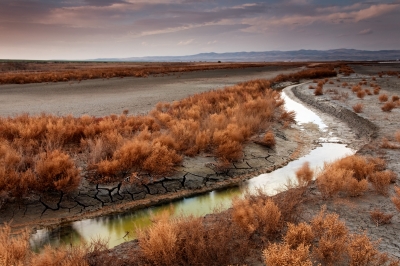
It seems like everywhere on social media there are pieces on meetings and  conferences to discuss the challenge of “feeding the world”. There are lots of lists of solutions, assertions that this innovative project from Country Y is the perfect answer, it just needs to be replicated across the globe and then objections that this would completely destroy the food heritage of Country Z and should be abandoned. At first, it appears to be just a muddle, but the debate is intense and sometimes severely combative: scientific research is targeted and destroyed and websites dedicated to scientific communication are hacked and prevented from functioning.

Perhaps it might be helpful to take a closer look at the question to begin with: at issue here is the intent to tackle global hunger and malnutrition, with population still rising and arable land in short supply, and all this in a time of probably the biggest challenge humans have faced: climate change. Often the aspects of the food system which get the most prominence in the media are those of individual consumers: so consumers in one part of the world might vote to ban GMO crops but how do we justify this to parents who are watching their children struggle and suffer from Vitamin A deficiency but have no access to Golden Rice. The food system debate touches everyone so solutions have to be evaluated in that context as well.

Sometimes we hear the argument that our ancestors did this/did not do that so we should continue to follow that path or return to it. Certainly we can carry forward the knowledge of the past but the future is not a replication of what we have lived through and needs different approaches. Small farms existed before the growth of agribusinesses but that should not preculde the idea that big farms as well as small ones can participate together in creating and being a part of a better food system. Faced with altered growing conditions, can we adopt ways to conserve water in rice farming as well a technique that can help plants process excess salt and flourish? There is no reason why we cannot do both, other than the desire to maintain entrenched positions.

Another source of controversy arises from viewing climate change as solely related to the environment, and the effort to nurture and conserve nature is in opposition to agriculture. Worsening air quality hurts our health but also impacts the productivity of our crops.  So cleaner air brings even more benefits than we might have considered earlier. Agriculture does not have to mean the end of habitats and indigenous plants. Conserving nature can work with the goal of sustaining people as these successful projects show.

That so many lists of solutions are available is great but we cannot stick to one or the other set of answers. The clock is running against us on climate change and we need to use the best tools possible.

(Image Courtesy: freedigitalphotos.net)
About Those Cows….

ID-10018523

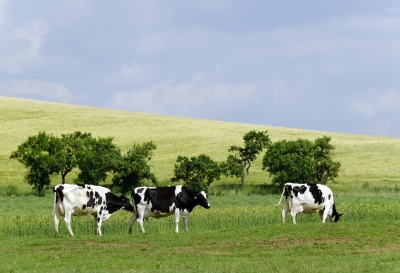
When work , laundry, dishes are all piling up and you want to run away from it all, the best place to go is Pinterest. I know because I have been there a lot. Scrolling down the crafts feed is bewildering:  it is simply bursting with ideas for rustic, barn weddings: lots of burlap, distressed wood, tables laid out on emerald green fields with a picturesque cow or a duck adding an idyllic note. This gorgeous visual has very little to do with an actual, working farm as one writer pointed out here, but neither is it true, as the piece describes, that in the real world cows are raised in “warehouses” and are a source of pollution. In the comments, those who actually raise cows contributed facts to the discussion, most of which would be new to that many among us, far removed as we are from the realities of food production.

It is common to read about cows contributing to global warming by releasing methane into the atmosphere. It is argued that if we stopped raising cows for food, this would be a greener choice. But if we just stopped eating beef what would happen to the cows? Well, they would live long and prosper, (check out the calculations in this excellent blog) leading to exploding cow populations which would be standing there chewing, polluting and watching barn weddings and wondering what this was all about. The only way to do away with the methane problem would be to actually kill all the cows.

The other great debate centers around the question : “what is an authentic cow?” What is the difference between a cow grown on GMO feed and one that is not? Surely, there must be a difference, the former cannot be the same as the cows our ancestors raised. But, in fact, they are exactly the same: the animals are the same,the milk and the meat are the same. This study looked at livestock productivity and health from public sources for 100 billion animals, starting at 1983 before the introduction of GMO feed in 1996,  through to 2011 which had high levels of GMO feed in use; and found no negative effects on livestock health or humans who consumed animal products.

And still, today, social media is bursting with people who are concerned because not enough tests have been done over a long enough period of time. “Facts do not cease to exist because they are ignored.” Neither, sadly, do dishes, no matter how beguiling the alternative!

(Image Courtesy: freedigitalphotos.net)


#Farming Friday 23: Urban Farming for Food Security

ID-100217989


First, Hurricane Katrina destroyed the local food supply system in New Orleans and then the BP oil spill wiped out the fishing industry. The fishermen were mostly from the Vietnamese community which had a history of urban farming to meet the local demand for vegetables for Vietnamese cooking.  In an interesting convergence, the Vietnamese fishermen drew on this practice of urban farming to offer locally grown vegetables to area residents still awaiting the return of grocery stores destroyed by Katrina; a solution which worked towards food and income security.

A Reason to Love Okra

okra

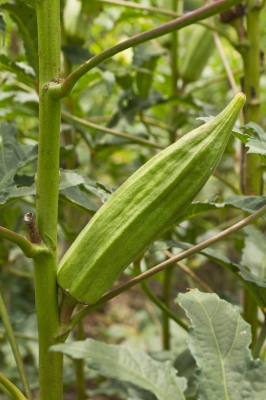
When I first moved to the US, I was surprised by the prevailing wariness toward okra that I saw on the cooking shows. I always loved okra, or ladyfingers as they are known in India (part of the British legacy). It was one of the delights of summer, cut fine and crisped up with sprinkle of turmeric and salt or in a variety of other recipes brimming with flavor. And then I realized that okra (I finally got used to calling it that) was mostly eaten in stew form and realized that the American and Indian okra experience were fundamentally different.

For me, okra cooked and served as almost a stir fry without any sauce (or gravy, as it is sometimes called in India) is the most alluring option. The main difficulty in cooking okra is the slime that suddenly oozes out during cooking , catching the novice cook by surprise and leaving them bogged down with a goopy mess instead of the crisp, green slices of flavor that was their goal. I found the easiest way to deal with this is to cook rapidly on fairly high heat. If the recipe calls for cooking slowly on medium or low heat, then I turn to the trick recommended by grandmothers; add some acid, slices of tomatoes will usually make the slime disappear.

And, why, you are thinking, do I need to learn slime slaying techniques anyway? Well, it turns out that a study in China found that okra may be helpful in treating Type 2 diabetes and cardiovascular diseases. Rats who received the okra supplement had lower glucose and insulin levels and their triglyceride levels were also lower than the rats which did not consume okra. More than enough reason to try out some new okra recipes!

Preparing the Food System for Climate Change

mg

Sometimes just looking at my Twitter feed can be overwhelming: people calling attention to melting glaciers, deforestation, endangered animals, submerging islands, and then some  people saying this is untrue; and then even more squabbles on what to do about it all. But take a step back and block out the noise and you might find that there is something that can be done, by all of us. That is the key actually. Each of us needs to take action. Governments have their responsibility but are often slow to move and cannot carry this through alone. There is much for us to do at our level.  I liked this article because it sets out concrete action options for agriculture.

First, we should not sit back and  “accept” climate change”. Taking steps to reduce emissions in agriculture, switching to climate resistant crops are among the possible solutions for growers to implement. However, there is a huge shortfall in the investment needed for research to come up with such solutions, that could be an area for governments as well as private individuals and corporations to make an impact. For consumers, we need to reduce food waste: buy according to a plan so nothing is thrown away unused, put smaller portions on the plate, work with restaurants to channel extra food to shelters or food banks. A big help would be to reduce meat consumption as well.

Even before we take these steps, a basic truth must be acknowledged: people, animals, crops and the environment they exist in succeed or fail in dealing with climate change as a unit. Conservation and  preservation activities have to be in tandem with ensuring that people are able to maintain a decent existence. Where the goals are unclear or weighed excessively in one direction, conflicts will inevitably erupt. So instead of bringing all our resources to bear on meeting the challenge of climate change, we might be stuck in the trap of dealing with escalating social unrest as the struggle to control and access  scarce resources becomes sharper and are thus, left vulnerable to climate shocks.

Ideological positions will have to be tempered with pragmatic solutions. All those wars on social media, passing judgement on the best/only way to grow/consume food, demonizing the other side, trying to score points, that is such an absurd waste of time and energy. It will take all options to walk through this storm; so technology and better farm practices, urban farming and ranches all will be part of the solution and throwing one or the other out is the equivalent of scoring an own goal.

The time to act is now, find a way to help and  try to make it happen. And yes, this means going out and actually putting an effort into a program or an initiative; putting up a cute profile picture or retweeting to make a hashtag trend is not enough. We know what we must do and there are no excuses for not doing it.


A Third Way To Describe How Food Is Grown?


vegg

When I first started reading about the food system and following discussions on social media, it took no time at all to realize that there was a sharp divide in this world: “organic” to this side, “conventional” to the other and judging by the shrillness of the debate, never the twain would meet. But I am now learning that each of these worlds has their own variations, differences of opinion and intense debate. In the organic community there is a debate over the use of  natural substances as opposed to synthetic ones. While some organic farmers see the utility of substances which may not have been used historically but are useful today, others remain firm on excluding synthetic substances.

There are no magical powers attached to one or the other set of substances: an organic pesticide like rotenone can be more hazardous that synthetic pesticides and arsenic or mercury which are poisonous occur in nature.  Part of this attachment to “natural” is fueled, I suspect by all those memes of scary syringes stuck in produce by people in lab coats.  While the Internet may helpfully suggest a mix of salt, vinegar and dish soap as gentler, more natural alternative to other synthetic weed killers, this study showed that both are as gentle and as effective, it all depends on how they are used.

A lot of misinformation floats around about both types of farming: while there have vocal demands for labeling foods containing GMOs , not many consumers realize that organic producers  are not overseen by the USDA and in fact, the organic certification comes from the National Organic Standards Board (how many of us had heard of this?). This Board is now protesting any involvement by the USDA.

And while we are all getting worked up about which system is better or “purer”, climate change is casting its shadow over our crops, even grape juice , it turns out, will not go untouched! Let us focus on the main thing here: the planet is at a point of crisis. It is time to focus on adopting all those tools and practices that can help us ensure that the growing population can be fed in a way that exerts the minimum pressure on the environment. Can we agree to stop arguing about just two systems and widen our approach to adopt practices that would keep production growing with demand in a way that is compatible with the new climate reality we are living?


Climate Change and Food Security for All: Is it Possible?

puffin

This week most of us felt hopeful as we heard President Obama announce new measures to respond to climate disruption. Although we have been hearing the discussion on climate change for a while, most people think of it as something that might unfold in the future. The fact is that climate change is here and is already altering the world as we know it.

Consider the case of the puffin: parents of baby puffins are bringing in food for them that they are not physically capable of ingesting. Why? Because the fish they usually feed on, hake and herring, are no longer found in the waters around them: the water is simply too warm for the fish to survive. So fewer baby puffins are surviving into adulthood. Their life patterns are also changing and the are coming in late this year to their summer habitats.

Meanwhile, humans too are faced with the challenge of feeding 9 billion people in a time of uncertain climatic conditions. The melting ice in the Antarctic could raise sea levels to an extent where China, India,Bangladesh, and Vietnam would lose millions of hectares of arable land and food production would fall. At the other extreme, higher temperatures threaten crop yield in the USA. A warmer climate also means an increase in disease and pests. The cloud of grasshoppers gathering in New Mexico is not from some movie set in the future, but happening right now.

The challenge is not just to create a more productive, climate resilient agriculture sector but also to ensure that all of our food is produced in a way that reduces pressure on a planet where everything is interlinked. If we look at discrete solutions we risk generating more problems: the effort to limit over fishing in the ocean by raising fish in farms, for example, has resulted in the destruction of mangroves and zones algae blooms that suck up oxygen and kill the fish.

The need is to consider the whole problem: whether we live in the Maldives or Mexico, on a farm or in the city, our lives are about to go in a direction different from what we known for centuries and the solutions we devise must take into account the needs of all the whole planet; humans, puffins and all.

And all this, without some coffee to help us along, because that too is likely to disappear as the climate changes.

(Image Courtest: Freedigitalphotos.net)

#Farming Friday 17: Wishlist From An Indian Farmer

baingan

Ask someone what comes to mind when they hear the words “Indian Farmer” and the reply, in most cases, sadly is “suicides”. A while back they might have said “Green Revolution”,  but the myth of the Indian farmer planting a GMO crop and then taking a desperate measure when it fails, has taken firm hold of the Internet. (It has been debunked, for example, here ). Confronted by this, I try to  explain the facts on chronic indebtedness which follows farmers through generations, this information  is mostly ignored. But, here is a piece that one cannot ignore:  an Indian farmer writes about his hopes from the new government. He says, of farmers growing Bt Cotton, “No one forced them to do it. They chose to adopt GM cotton because it makes sense.”  The food system needs to make sense to people at both ends of it. Most often, however,consumers’ voices, specially of those consumers who are unfamiliar with hunger or chronic malnutrition in their own experiences are the loudest.It is time to listen equally to those who actually grow our food.

(Image Courtesy: freedigitalphotos.net)
Revisiting the “eat local” Idea

market

I just came across this review of a book called “The Locavore’s Delusion”, and yes, it is a nod to that other book, in case you were wondering! The authors of the book tried to answer the question: why did we start eating a more global diet anyway? The article gives a summary of reasons that most people offer for opting to eat local: more tasty, nutritious, helps local economy etc , and the most often cited reason: it is good for the environment. This has been the subject of much discussion (some of which I wrote about here) and the point at issue is that the contribution to greenhouse gases comes more from the actual cultivation of crops rather than their transportation.

The answer the authors provide to the query, why did global food trade develop, is that it provides increased variety of foods, reduced prices and stability of supply. They also argue that efforts to counter this are really an effort to turn back the clock with negative consequences. If a region was hit by unexpected weather events or pest infestations and the crops failed, there would be no relief available if we functioned as closed off food islands. Indeed, they see the problem as being one of inadequate globalization where subsidies, trade barriers and other distortions are hindering an optimum situation of low prices and assured availability of food.

Some of the discussion here has been heard before but I liked the way the question was posed: why did we start expanding out of the local market? Perhaps we could ask the same question for the GMO question: why did we start developing them in the first place? Was it because some evil people were working up weird stuff in their labs and injecting it into food to try and rule the world like in some bad movie? No, it was because we need to tackle pests to stop crop loss. We will need it in the future to combat climate change. Imagine a flood event that submerges crops. Since genetically modified crops that could withstand the submersion were not planted, there is no food. But there is also no way to acquire it from anywhere else because food trade has given way to purely local markets. It could happen….


(Image Courtesy: freedigitalphotos.net)


#Farming Friday 11: Debt Main Cause of Indian Farmer Suicides

ff10

I have grown weary of reading the “Bt Cotton causes farmer suicides in India” story and attempting to refute it. However, refuting it is essential because it is not just untrue, but also used as a trump card in the anti-GMO narrative.  There are several studies which have examined this question and determined that there is no causal relationship between the use of biotechnology and farmer suicides. The adoption of Bt Cotton in India has actually resulted in gains. And the issue of farmer suicides is a growing concern in many parts of the world, including the USA.  

The Indian farmer has always had to deal with an overwhelming burden of debt because the debt passed on down the generations of farmer families. Long before biotechnology arrived on the field, this narrative could be found in academic texts and popular literature. Here is the study from the Lancet which again upholds the result that small holder farmers, faced with crushing debt sometimes can only see suicide as an option. When the next government takes over, will this change? We can only hope so.


Image Courtesy:freedigitalphotos.net