Category Archives: GMO

About Those Cows….

ID-10018523

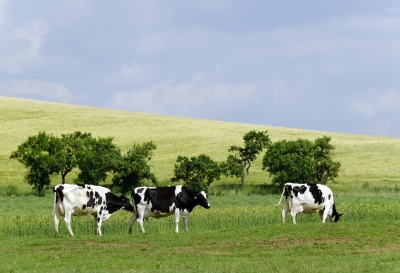
When work , laundry, dishes are all piling up and you want to run away from it all, the best place to go is Pinterest. I know because I have been there a lot. Scrolling down the crafts feed is bewildering:  it is simply bursting with ideas for rustic, barn weddings: lots of burlap, distressed wood, tables laid out on emerald green fields with a picturesque cow or a duck adding an idyllic note. This gorgeous visual has very little to do with an actual, working farm as one writer pointed out here, but neither is it true, as the piece describes, that in the real world cows are raised in “warehouses” and are a source of pollution. In the comments, those who actually raise cows contributed facts to the discussion, most of which would be new to that many among us, far removed as we are from the realities of food production.

It is common to read about cows contributing to global warming by releasing methane into the atmosphere. It is argued that if we stopped raising cows for food, this would be a greener choice. But if we just stopped eating beef what would happen to the cows? Well, they would live long and prosper, (check out the calculations in this excellent blog) leading to exploding cow populations which would be standing there chewing, polluting and watching barn weddings and wondering what this was all about. The only way to do away with the methane problem would be to actually kill all the cows.

The other great debate centers around the question : “what is an authentic cow?” What is the difference between a cow grown on GMO feed and one that is not? Surely, there must be a difference, the former cannot be the same as the cows our ancestors raised. But, in fact, they are exactly the same: the animals are the same,the milk and the meat are the same. This study looked at livestock productivity and health from public sources for 100 billion animals, starting at 1983 before the introduction of GMO feed in 1996,  through to 2011 which had high levels of GMO feed in use; and found no negative effects on livestock health or humans who consumed animal products.

And still, today, social media is bursting with people who are concerned because not enough tests have been done over a long enough period of time. “Facts do not cease to exist because they are ignored.” Neither, sadly, do dishes, no matter how beguiling the alternative!

(Image Courtesy: freedigitalphotos.net)
 

Preparing the Food System for Climate Change

mg

Sometimes just looking at my Twitter feed can be overwhelming: people calling attention to melting glaciers, deforestation, endangered animals, submerging islands, and then some  people saying this is untrue; and then even more squabbles on what to do about it all. But take a step back and block out the noise and you might find that there is something that can be done, by all of us. That is the key actually. Each of us needs to take action. Governments have their responsibility but are often slow to move and cannot carry this through alone. There is much for us to do at our level.  I liked this article because it sets out concrete action options for agriculture.

First, we should not sit back and  “accept” climate change”. Taking steps to reduce emissions in agriculture, switching to climate resistant crops are among the possible solutions for growers to implement. However, there is a huge shortfall in the investment needed for research to come up with such solutions, that could be an area for governments as well as private individuals and corporations to make an impact. For consumers, we need to reduce food waste: buy according to a plan so nothing is thrown away unused, put smaller portions on the plate, work with restaurants to channel extra food to shelters or food banks. A big help would be to reduce meat consumption as well.

Even before we take these steps, a basic truth must be acknowledged: people, animals, crops and the environment they exist in succeed or fail in dealing with climate change as a unit. Conservation and  preservation activities have to be in tandem with ensuring that people are able to maintain a decent existence. Where the goals are unclear or weighed excessively in one direction, conflicts will inevitably erupt. So instead of bringing all our resources to bear on meeting the challenge of climate change, we might be stuck in the trap of dealing with escalating social unrest as the struggle to control and access  scarce resources becomes sharper and are thus, left vulnerable to climate shocks.

Ideological positions will have to be tempered with pragmatic solutions. All those wars on social media, passing judgement on the best/only way to grow/consume food, demonizing the other side, trying to score points, that is such an absurd waste of time and energy. It will take all options to walk through this storm; so technology and better farm practices, urban farming and ranches all will be part of the solution and throwing one or the other out is the equivalent of scoring an own goal.

The time to act is now, find a way to help and  try to make it happen. And yes, this means going out and actually putting an effort into a program or an initiative; putting up a cute profile picture or retweeting to make a hashtag trend is not enough. We know what we must do and there are no excuses for not doing it.


A Third Way To Describe How Food Is Grown?


vegg

When I first started reading about the food system and following discussions on social media, it took no time at all to realize that there was a sharp divide in this world: “organic” to this side, “conventional” to the other and judging by the shrillness of the debate, never the twain would meet. But I am now learning that each of these worlds has their own variations, differences of opinion and intense debate. In the organic community there is a debate over the use of  natural substances as opposed to synthetic ones. While some organic farmers see the utility of substances which may not have been used historically but are useful today, others remain firm on excluding synthetic substances.

There are no magical powers attached to one or the other set of substances: an organic pesticide like rotenone can be more hazardous that synthetic pesticides and arsenic or mercury which are poisonous occur in nature.  Part of this attachment to “natural” is fueled, I suspect by all those memes of scary syringes stuck in produce by people in lab coats.  While the Internet may helpfully suggest a mix of salt, vinegar and dish soap as gentler, more natural alternative to other synthetic weed killers, this study showed that both are as gentle and as effective, it all depends on how they are used.

A lot of misinformation floats around about both types of farming: while there have vocal demands for labeling foods containing GMOs , not many consumers realize that organic producers  are not overseen by the USDA and in fact, the organic certification comes from the National Organic Standards Board (how many of us had heard of this?). This Board is now protesting any involvement by the USDA.

And while we are all getting worked up about which system is better or “purer”, climate change is casting its shadow over our crops, even grape juice , it turns out, will not go untouched! Let us focus on the main thing here: the planet is at a point of crisis. It is time to focus on adopting all those tools and practices that can help us ensure that the growing population can be fed in a way that exerts the minimum pressure on the environment. Can we agree to stop arguing about just two systems and widen our approach to adopt practices that would keep production growing with demand in a way that is compatible with the new climate reality we are living?


#Farming Friday 17: Wishlist From An Indian Farmer

baingan

Ask someone what comes to mind when they hear the words “Indian Farmer” and the reply, in most cases, sadly is “suicides”. A while back they might have said “Green Revolution”,  but the myth of the Indian farmer planting a GMO crop and then taking a desperate measure when it fails, has taken firm hold of the Internet. (It has been debunked, for example, here ). Confronted by this, I try to  explain the facts on chronic indebtedness which follows farmers through generations, this information  is mostly ignored. But, here is a piece that one cannot ignore:  an Indian farmer writes about his hopes from the new government. He says, of farmers growing Bt Cotton, “No one forced them to do it. They chose to adopt GM cotton because it makes sense.”  The food system needs to make sense to people at both ends of it. Most often, however,consumers’ voices, specially of those consumers who are unfamiliar with hunger or chronic malnutrition in their own experiences are the loudest.It is time to listen equally to those who actually grow our food.

(Image Courtesy: freedigitalphotos.net)

Revisiting the “eat local” Idea

market

I just came across this review of a book called “The Locavore’s Delusion”, and yes, it is a nod to that other book, in case you were wondering! The authors of the book tried to answer the question: why did we start eating a more global diet anyway? The article gives a summary of reasons that most people offer for opting to eat local: more tasty, nutritious, helps local economy etc , and the most often cited reason: it is good for the environment. This has been the subject of much discussion (some of which I wrote about here) and the point at issue is that the contribution to greenhouse gases comes more from the actual cultivation of crops rather than their transportation.

The answer the authors provide to the query, why did global food trade develop, is that it provides increased variety of foods, reduced prices and stability of supply. They also argue that efforts to counter this are really an effort to turn back the clock with negative consequences. If a region was hit by unexpected weather events or pest infestations and the crops failed, there would be no relief available if we functioned as closed off food islands. Indeed, they see the problem as being one of inadequate globalization where subsidies, trade barriers and other distortions are hindering an optimum situation of low prices and assured availability of food.

Some of the discussion here has been heard before but I liked the way the question was posed: why did we start expanding out of the local market? Perhaps we could ask the same question for the GMO question: why did we start developing them in the first place? Was it because some evil people were working up weird stuff in their labs and injecting it into food to try and rule the world like in some bad movie? No, it was because we need to tackle pests to stop crop loss. We will need it in the future to combat climate change. Imagine a flood event that submerges crops. Since genetically modified crops that could withstand the submersion were not planted, there is no food. But there is also no way to acquire it from anywhere else because food trade has given way to purely local markets. It could happen….


(Image Courtesy: freedigitalphotos.net)


Will There Be A Second Green Revolution?

paddy

Last week, The Economist published a piece on the possibility of a second Green Revolution on rice fields in Asia and Africa. The possibilities outlined in it make one hopeful for the future, at a time when stasis on climate change and polarization among the players in the food system usually make for a grim outlook.

The second revolution, if it comes, will be crucial in feeding the growing population as current yields are dropping off from previous levels. And what is remarkable is that the increase in yield required to meet demand can be obtained almost entirely from areas missed by the first Green Revolution. This is because, the green revolution took off in irrigated areas while passing by the rain dependent regions. These areas fall in the marginal category where harvests are often disrupted by drought or floods. Now, the International Rice Research Institute is  offering farmers a rice variety that stays dormant during long periods of flooding and then resumes growth. This would be an invaluable trait for dealing with the possibility of increased rainfall and  flooding due to climate disruption. And, because this offers the possibility of increased production on marginal lands, the impact in terms of greater income would go to the most vulnerable sections of the rural poor whose impoverishment is a result of their dependence on unproductive land.

But how was this new strain of rice developed? The scientists at IRRI had identified a rice strain from Odisha, in eastern India, as having a high flood tolerance. This was then crossed with other rice varieties but the experiments were not successful. Finally, the scientists identified the gene that enabled flood tolerance, and spliced into other rice varieties, to achieve more than a dozen varieties of rice , all flood tolerant and collectively known as “Sub 1”.This is what was so striking for me: decades of traditional breeding saw no success, yet once the genetic sequence of the rice from Odisha was marked, it took only four years for flood tolerant seeds to be produced!

This presents a promising option for making agriculture resilient to future climatic uncertainties in a short period of time, in addition to increasing production on marginal lands and providing income opportunities for the rural poor. This would be a revolution indeed! The article is here and an interesting account of the farmers growing Sub 1 rice in Odisha is here.

(Image Courtesy: freedigitalphotos.net)


Smallholder Farmers Most Vulnerable to Climate Change

cofcl For some time now, we have been aware that coffee farmers have been facing the challenges of climate change; either from too much rain or from drought. Coffee crops are also being attacked by coffee rust which thrives in the warmer temperatures we are experiencing today. Colombia was one of the countries worst affected by this issue but the Colombian Coffee federation has invested on a large scale in rust resistant varieties, thus providing a solution and some hope for the farmers. In Brazil, large coffee producers have moved operations to cooler areas to combat the rising temperatures. But lost in all this is the small holder coffee farmer, often the supplier of the fair trade coffee we prefer as a better option for the planet.

While our choice at the cafe makes us feel we did the right thing, the reality might be different, with the farmer often at the losing end of a deal with middle men and has limited access to resources to deal with the problems facing coffee cultivation. This is an important consideration in any discussion on climate change: the bigger economies/groups with greater resources will at least have the chance to adopt some measures to combat the impact of changing climate; but is is those with the least resources and access, whether it is nations or communities within a country that are most at risk.

Also, can we acknowledge that climate change is not like any other problem that we have faced in the past? It is a challenge to the way we have lived on this planet for so long and its impact will be colossal so it is only logical that we employ all options to deal with this crisis. Those small holder coffee farmers facing the prospect of losing their livelihoods could benefit from solutions offered by biotechnology. In a better world, we would  be open to options that science can offer and not be held back by unfounded fears. At this point, the future looks pretty grim, we are going to need some coffee to deal with that!


Image Courtesy: freedigitalphotos.net


Food Prices on the Rise

wheatseed


So food prices are on the rise …again! And it looks like they might continue on that path given the pessimistic outlook for wheat in the US given the dry growing conditions. In addition, the situation in Ukraine spells uncertainly for the world wheat market. As I read more about this I also discovered the interesting fact that farmers in Ukraine have apparently breached a ban on GMOs and are growing GM soy and corn in response to market demand!