Category Archives: Food Security

How “Real” is the Hunger Games

cl2

The second movie in the Hunger Games series is out in theaters and is , as expected, doing extremely good business. The plot line of the series is fairly bleak but is it also a peek into a future that could happen to us. The story unfolds in a world ravaged by climate change and the conflicts that followed as people tried to grasp whatever resources they could. The heightened tension over sharing water, land grabs in countries far from home, the people killed or displaced by unstable weather that fill the headlines; all this is mere degrees away from the description of life in the Hunger Games books.

What is also striking is the contrast in living conditions in District 12 and the Capitol. It immediately calls to mind the classic descriptions of the colonial system taught in basic economics: resources extracted (often by coercion) from areas of the “periphery” to serve the needs of the rich and powerful “center”.  A more detailed analysis is here.

So ,while we eat more popcorn than is good for us and watch Katniss blaze on the big screen, it is a good time to reflect on the economic and historical paths we have walked and where we want to go in the future.


GMOs: The View From Italy

italy

Absorbed as we tend to be in our own food system battles: food safety, labeling, etc; we tend to forget that similar struggles are taking place elsewhere. I always tend to think of Europe as solidly anti-GM although, there is a lively debate on right now in the UK, for example, on the adoption of GM technology. So, this piece on the import of GM corn by Italy was illuminating. First, the elaborate dance around growing/importing GM corn even when the current corn crop has been devastated by pests is entertaining to read. Also, I learnt that several countries in the EU do grow or import GM crops, somehow working through loopholes in the regulations banning this technology. And, finally, a familiar picture: no one is listening to what the farmers have to say. The final scene in the drama played out thus: Italian pigs will be fed GM corn imported from the US (but what will this mean for future prosciutto?!), while Italian farmers are left to deal with the consequences of a failed harvest. Too bad they cannot blame it all on Monsanto!

Drought, Hunger and Syria


syria

Looking at the news these days, it seems that the world is just coming apart and understanding all of this is impossible. But it is also difficult to turn away from, so I started reading this piece to learn about the situation in Syria. And when I came to point 6, I had to stop and read it again. How did I not know this already?

There was a severe drought in Syria from 2006 to 2011 which disrupted the rural economy. Lack of water meant that farmers lost their livelihoods and migrated to the cities to get whatever jobs they could, to keep their families from starving. The Syrian government, meanwhile, decided to sell off the grain reserves.  Already unsuccessful in dealing with the drought crisis, it now had no food to offer its citizens and had to import food. This, obviously, was not a viable solution and it is easy to see why violence, fed by this and other factors, has broken out.

Two things come to mind here: the issue of climate change and the breakdown of Syria’s food production system has largely remained invisible in the discussions on military action. How could a calamity that resulted in an estimated 2 to 3 million people being reduced to “extreme poverty”, have remained unnoticed?  And, for the future: as the impact of climate change on our food system becomes more intense;  this situation ,with minor changes in variables, could be repeated across the globe. What will we do then?

It is time to put the food system at the center of any debate on the future. If we talk of dealing with climate change, let us start by recognizing its crucial impact on how we grow food, if we want a more equal world, let us ensure that its roots lie in a just and fair food system, and if we want a secure world, food security needs to be the first step.

Golden Rice: Why We Need It

grice

When Golden Rice (rice enriched with Vitamin A) hit the news recently, it seemed like more of  the same: some are excited about its potential while others caution about its negative consequences. Lately, I have found myself too often reading and responding to the same arguments on this topic on Facebook and Twitter so I was intending to just watch from the sidelines the sidelines. What makes the debate on Golden Rice different, though, is that it was developed by scientists and the results of this research were handed over to the International Rice Research Institute (IRRI). There are no corporations involved so I wondered what  the  anti-GMO group would base their argument on this time; now that the all encompassing Monster Monsanto flag cannot be raised. Instead of  building up their case with evidence, however,  they decided to go the “shout louder” route and opted to destroy a field of trial golden rice being developed by IRRI in the Philippines.

Timely and accurate reporting ensured that we learnt that the farmers who were supposed to be protesting actually watched in dismay, while a crowd which was brought in for the purpose vandalized the field. This has provoked a strong reaction and protests from scientists the world over who came out in support of the freedom to conduct scientific research. This is, by no means, an isolated event. Incidents of vandalism of experimental work in GMOs is so rife that Switzerland recently found that about three quarters of the research budget for GMOs was actually being used for security. Those who demand the freedom to make their choices are, apparently, not too keen on freedom for others to make their own discoveries.

Then came this piece questioning the need for genetic modification of food and there were some points that really merit further discussion. First, the fortification of rice with Vitamin A  through genetic modification does work. There is a suggestion that eating more carrots or yams or distributing supplements might be just as effective in terms of health outcomes and less expensive than the money spent on GM research. Here, we need to open a little window into the world of those who would benefit most from this technology. The children suffering from Vitamin A deficiency often belong to the poorest sections of society, living in remote rural areas or urban slums. Distributing supplements to the would require the use of a public distribution system which can just as effectively used to distribute golden rice itself.

Next, why the focus on rice? In the lowest income groups, the largest portion of expenditure on food is on staples like cereal, even fruits and vegetables might be an occasional purchase. In India for example, the lower income group diet might consist of rice and lentils with chillies or onions as a side (hence the turmoil over the current rise in onion prices!). It makes sense to add the nutrient to the food group that is consumed at almost every meal and it is important to remind ourselves that in this world, far removed from our own comfortable one, there would be perhaps two meals a day (and certainly no snacks like those cute carrot sticks that are ubiquitous in schools and sand boxes here); so directing the nutrient in the most effective way is crucial. Carrots, yams or any other vegetable would be available only in season (unlike rice) and even then might not make the budget of many households; thus, they are not the best candidates for addressing the deficiency.

Of course, the best outcome would be for the diet to consist of golden rice and also carrots/yams. This brings us to another point of contention. Why frame this debate as an either/or question? There is a grave problem to be addressed here, let us bring the best combination of tools to the table to solve it. Let us celebrate Golden Rice as much as fortified pearl millet and let us do all we can to bring fresh produce to kitchens all over the world.

And then, of course, comes the question of safety. GMOs, we are cautioned, have not been proven safe for human consumption. So let us look at it one more time: the safety and benefits of genetic modification have been endorsed by many institutions so there is no credibility issue here. If one chooses to mistrust these institutions, then that is their personal choice and this should not be allowed to squander the chance to prevent blindness and death for millions of children. Again, we see the demand for freedom to choose for a certain section at odds with their acceptance of others’ right to the same.

No decision comes without a cost and opting for any course of action will involve a cost: do we allow children to to suffer now and try to find a different solution or alleviate suffering with the knowledge that we have today. (An excellent explanation of costs is here). Would we find a solution that satisfies the opponents of genetic modification? How long would this take if we started today? All this is uncertain. What is certain, however, is that we have a tool that can prevent blindness and death in children today and millions of children in need of it.

Another Green Revolution in India?

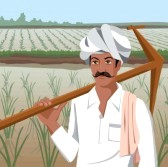
9688921-front-view-of-a-farmer-holding-plow

In the 1960s, India was facing  a severe food shortage. The Indian economy was decimated by 200 years of colonial rule and the 3 wars fought after gaining Independence in 1947. The country was struggling to grow enough food to feed its people and did not have the resources to import food either. Finally, it was food aid under the US PL480 program that enabled India to to stave off the threat of starvation for millions.  It was in this situation that India decided to adopt Dr. Norman Borlaug’s newly developed variety of medium wheat and what is known as the Green Revolution got its start. As productivity increased, so did rural incomes and many lives that might have been lost to famine were saved.

Despite the criticisms that have since been directed at this program, the enormous good that it did cannot be denied. This video captures the sense of what the adoption of this technology meant to India. While it highlights Dr. Borlaug’s efforts, what struck me most was the enthusiasm of the farmers for innovation, the openness to technology and the unsettling awareness that the path to adoption of technology today may be more difficult. Fifty years ago the decisions about farming were the domain of the farmer who had the knowledge to make those decisions, today the scenario is fraught with those who trust neither science nor those who have grown our food for years (in the case of Indian family farmers, this would mean over centuries!).

Bangladesh Gets Bt Brinjal

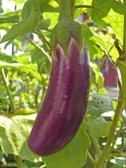
13515918-terung-panjang-brinjal-on-plant

It has been a recurring theme here at Thought+Food that the debates going on about the food system should not be overwhelmed by special interest groups. Instead, there must be room for the farmer to make her voice heard. This piece from a farmer in India who looks on in frustration as Bt Brinjal is being adopted in Bangaladesh while it has been blocked in India by the fear mongering of  anti biotech interests drives home this point. If anyone thinks we can solve our food problems by shutting out the very people who grow the food, then the road to reform and progress will be long one indeed.

The Mystery of the Suddenly Appearing GM Wheat

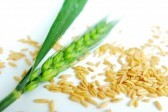
11312703-closeup-view-of-green-wheat-ears-on-a-white-background

You have been reading about the sudden appearance of GM wheat in a field in Oregon, the ongoing USDA investigation into how it appeared there, the possibility of a boycott of American wheat by countries worried about GM wheat in their food supply, and the possibility of stiff losses to farmers (90% of Oregon wheat is exported). However, being a member of that vast group,  Clueless Urban Consumers, you held back on giving your opinion on social media because you were discovering a whole new world which you knew very little about , and did not feel comfortable asking out to the world  the questions burning in your brain: for instance,” where do baby wheat come from anyway?”; and, “wait, what, there are different kinds of wheat?”

Here is something to start with: wheat is not pollinated by insects, it self pollinates inside the flower while the flower is closed. Why is this important? Because bees or insects flying around cannot carry pollen to other wheat plants and enable  cross pollination. The pollen is heavy and cannot be carried far, anyway. Extra pollen may fall to the ground but is not viable for long so the possibility of pollen in soil getting moved to the field planted with regular wheat is remote.

There are several varieties of wheat and the distinctions are important. The wheat grown in Oregon is soft white winter wheat, bought by Japan and Korea where it is used for noodles and crackers. There is also, “hard red winter wheat, “hard red spring” “hard white wheat’ and keeping all these varieties separate is a special concern of wheat growers and there are associations on every state to ensure that correct procedures are followed.

Now to the incident in question. A farmer in Oregon discovered that some wheat plants in his fields were resistant to glyphosphate and contacted researchers at Oregon state University where it was determined that this was indeed, genetically modified wheat. GM wheat was tested by Monsanto from 1998 to 2005 and last grown in Oregon in 2002. Monsanto then withdrew the application and closed the trial. After this, proper measures should have been taken to deal with the seeds and other materials from the trial. (It is important to note here that this GM wheat had been certified safe by the FDA, but before the deregulatory process could start, there were threats of international boycott, protests etc so GM wheat never came to the market). Also worth noting,   Monsanto is currently testing GM wheat in Hawaii and North Dakota.

So if I have understood all this correctly, some questions arise. The obvious one, how did the GM plants get to this field? No one, wheat growers, scientists, or even those opposed to GM technology else has a plausible explanation of how this wheat could come up, years after testing had stopped in a field  which has been cultivated regularly without any previous occurrence of GM wheat.  GM corn and soy are widely grown in the US so logically there would be a higher probability of these sprouting randomly than wheat.

And that brings us to some notable observations: if I wanted GM technology to vanish overnight or even scare the population enough to push through my agenda of labeling everything in sight, what crop would I pick to create a fuss over? One that had already been the object of controversy which lead to abandonment of the GM version, (and , double bonus, the GM version was being tested by the company that has been made virtually synonymous with biotechnology in agriculture by anti-GM groups), one which forms a huge share of exports and is essential to the livelihood of many people , one where the distinction between varieties is crucial, one that would stir international controversy: wheat is the perfect answer.  Is it possible that this is not a random occurrence?

While we wait for for the USDA to publish its findings, it is important to remember that even if this wheat entered the food chain it is perfectly safe for human and animal consumption. So there is no reason for panic. All this does is stir, once again, the pot of fake science and fear that some people cannot seem to let alone. Let us take a step back and understand this: every time fears are raised and technology is abandoned, farmers and consumers, specially in the developing world, lose options. There is so much noise about GM seeds being expensive, well, look at how expensive the process is: if GM wheat ever comes to market the whole process would have taken decades, and who has the resources to stay the course over that period of time? Not universities or governments or research institutions but, you guessed right, a corporation like Monsanto.

What do Farmers Really do?

9502380-family-of-farmers-sowing-seeds-mixed-with-fertilizer-on-their-land

One of the startling features of the ongoing debate on the food system is how skewed the conversation is in the direction of the consumer. We hear a lot about food safety concerns, the right to know what is in the food, how it should be grown so that health concerns are addressed; but how many times do we hear from the people who are actually growing the food and who can provide a reality check on demands that sometimes seem to originate in the realm of fantasy. ( This rant is prompted by a tweet I saw where a consumer demanding safe food reportedly said that all farmers wanted was to dump some Roundup Ready on their fields and put their feet up!!).

For all those marching and demonstrating to make the rules about what food should be grown how many have actually worked on a farm? It is not fun and it is nothing similar to raising tomatoes in the back yard or even working on an allotment. Consider this information from the Cherokee Gothic blog:

“In 2011, the unemployment rate in North Carolina was quite high at 10.51%, which meant that there were more than 489,000 American workers in the state actively looking for a job. Of that group, only 268 were asked to be referred to manual labor jobs with the  North Carolina Growers Association (NCGA).  And of those 268, only 163 showed up for work.  This gets us to striking finding #2.  Of the Americans that did start work, only 7 finished the season.”

So even when faced with no other means of making money, people were unwilling to do farm work or did not have the stamina to actually cope with it. Or, consider that crops were left to rot in the fields in the aftermath of anti-immigration measures passed in Georgia and Alabama because there was no labor available for the harvest.

The reality is farm work is  demanding and exhausting and that there is a scarcity of people who want to work in the farm sector and the challenge is to make this an attractive area for younger people to choose to make a livelihood. Let us take a moment to reflect on what goes into growing the carrot that we reject because it has a little bit sticking out; or the corn fields that are burnt instead of feeding desperately hungry people simply because they were GM corn.

Bananas for Mother’s Day

mother

Flowers are traditional, yes, but this Mother’s Day I am thinking about bananas. Specifically, the plan to grow iron fortified bananas in India.This plan, predictably, is being met with resistance in some quarters. But, first, some background: India is the world’s largest producer of  bananas and almost all of it is consumed domestically. India also has a very high incidence of anemia. The India Human Development Report 2011 noted that approximately 55-35% of women in the age group 15-49 were anemic and this number had increased  by 3% from 1998-99.  Anemia in pregnant women increases the possibility of pre-term or low birth rate babies. It also implies less than optimal development in utero which means that the physical and mental development of  a new generation is impaired and the cycle of poor health outcomes continues. We also need to consider  a new variable in all of this: climate change.  It is predicted that climate change will have critical impact on maternal and new born health from adverse environmental consequences. It would make sense, therefore, to give special attention to improving maternal health before the worst of the crisis is here.

Given this scenario it makes sense that the Indian government has approved a project for the transfer of technology from Australia to grow iron and nutrient fortified bananas. Bananas, grown locally and easily available, would be an ideal way to meet the nutrient needs of women suffering from anemia. And  where a busy mom pressed for time may not have time to prepare an iron-rich dish separately, she can always grab a banana on the go.

It has, however, been met, with resistance from groups that claim that the “indigenous biodiversity” which is supposedly sufficient for India’s nutritional needs will be “destroyed” and suspect a plot by dark forces to take over the banana domain in the country which is the biggest producer of the fruit. Well, if the indigenous bounty of nature would have been sufficient, we would not be facing these alarming  health statistics. Clearly, women’s diets still remain nutrient deficient and this needs to be addressed. The indigenous variety does not have the same iron content as the fortified one, of course, and none of these critics seem to have suggested any options for either increasing access to indigenous bananas or meeting the nutrient needs in any other way.

To understand the threat to biodiversity, I started researching banana cultivation and found that this is done by planting stem cuttings, so the possibility of threat to the native species is hard to discern. The other fear that this will result in “monocultures” is not a significant one because the most widely eaten banana on the planet is already the Cavendish, the kind familiar to us from grocery stores. In addition , some local varieties are grown in several countries but one variety of banana seems to be dominant already. The technique to fortify bananas already exists and we can speculate that the time taken to bring the fruit to the market would not be that long, so that some improvement in health outcomes might be expected despite the expected adverse impact of climate change in the coming years.

Along with the adoption of fortified bananas,efforts should also be made to revive indigenous iron rich crops which have been overshadowed in recent years.This is not an either/or situation, we can and should take advantage of all the solutions available to us. Certainly we need to protect biodiversity but we cannot overlook the health of mothers and children which will determine how strong our next generation will be. An interesting example in this regard is that of Uganda: faced with banana wilt which was destroying crops and could have resulted in the abandoning of banana cultivation, scientists have developed a variety with a sweet pepper gene which stays can combat banana wilt. Better a GM banana than none at all in a country which prides itself on its banana tradition.

Just like biotechnology, the celebration of Mother’s Day in India in recent years is sometimes criticized  as a western import, alien to indigenous traditions. So it is fitting that my wish for all the moms on this Mother’s Day is that India does grow fortified bananas and we have healthier moms and babies in the future.

The Price of Fear

ram

An interesting piece on the price we pay for our fears, in The European Magazine. This question is central today in much of the issues being debated in the food world. There is distrust of biotechnology because there is no way to prove that they are “completely” safe. If its not food, then its public health which is vulnerable to fear and distrust.The irrational (and, as proven recently,) baseless fear of vaccination is being blamed for a measles epidemic in Wales and also a persistent Pertussis outbreak in the US. Why have we become so fearful?

If our ancestors had not been adventurous and ready to take a risk, we would be living in a very different world. One where we would never have been to the Moon because no one could show conclusively that it was safe to travel there or even tried a fruit like the rambutan which, looks somewhat scary but is actually delicious.

When new seeds and fertilizers were introduced to the Indian farmer in 1963, they too may have been fearful but they adopted this technology thereby bringing in the Green revolution that ultimately saved so many from hunger, malnutrition and untimely death. Instead of obsessing about what is on my plate and in my food, can we agree to try something that might provide solutions for those who have nothing on their plates? At this point in the discussion usually some one jumps up to say that production alone cannot solve the problems of the food system. I could not agree more but I would point out that by spending all our time and energy talking about GM food/organic cultivation/local or not, we have little left to spend on enormously important matters like consumption patterns, food waste, or malnutrition, among others. That is also part of the price we pay for being fearful , we are left with less than optimal solutions because we did not use our time and resources wisely.

And we can start with baby steps, perhaps move on produce item from the organic to regular column on our grocery list and try that or trace a news report to the actual study they are talking about and decide for oneself what to believe. And if you should choose conventional watermelon instead of organic this week,  you could  also try out this watermelon stroller, bringing you portable and chilled watermelons just in time for picnic season!