Category Archives: Food Choices

Antibiotic Use in Organic Apple and Pear Cultivation

appear

Apple and pear trees are apparently susceptible to an infection called fire blight which is capable of devastating entire orchards. To combat this, organic farms received an exemption which allowed them to use antibiotics (Streptomycin and Oxytetracycline) to combat the disease. This issue is in the news now, because the exemption is set to expire in 2014. It was hoped that by now other methods would have become available to treat this problem so that antibiotics would no longer be needed. While some progress has been made, more work is required before the use of antibiotics can be completely discontinued.

So, given the controversy over labeling and the consumers’ “right to know” it is a little disconcerting to find that this organic produce has no label disclosing antibiotic use.  Even more interesting was the rationale offered for the use of antibiotics: they apparently leave little residue, not enough to be harmful to consumers, anyway. The same logic offered for conventional produce would be vilified as a conspiracy to “poison” consumers.

Does this mean we should support the continued use of antibiotics? Absolutely not. In fact, the article mentions that in addition to antibiotics better cultivation practices are being used to keep the healthy and this is the way to go:make use of all the knowledge and techniques that are available to achieve the common good.

Do Food Deserts Matter?


st

There is a new study out which questions the relationship between food deserts and obesity as a basis for formulating public health policy. It finds a weak correlation between obesity and the distance traveled to the nearest grocery store. The authors of this study used a variable of 1 mile as a variable. They note that the lack of a strong relation might arise from the way our cities are laid out. Few people shop at neighborhood stores and in many areas (small towns, exurbs) the stores (think Walmart or Target) would be on the outskirts of the residential areas because they are usually huge and need plenty of space. Consumers would have to drive or take a bus there which might explain the lack of strong relationship between food sources and obesity. The study did find  a much stronger relationship between health and the existence of fast food outlets.

This study caught my attention for two reasons: first, hearing so much about food deserts in the media, I had accepted the validity of the term without thinking much about it. But if we stop to think about  we do need to ask: why the big emphasis on distance? Its not like people walk to their grocery store everyday to buy fresh supplies. Most people reserve it as a weekend chore with occasional week day dashes in case the milk runs out. Even if grocery stores are close by, what matters is the shopping list. If people are pressed for time, they will rely on processed foods rather than on fresh produce, a situation familiar to most of us . As a parent, a couple of evenings a week may be spent shuttling between different classes/ practice venues and dinner is eaten on the road so groceries and cooking are not even factors here.

The second thing that struck me was how little of the discussion on food actually  focuses on the research. There is always a lot of discussion based on the reporting and interpretation of studies in the media, blogs but how many of us ever take the time to read the original work? It is important that we do so and be able to interpret it , otherwise we are merely relying on what someone else has understood from it. It would also bring an appreciation for facts and a distancing from judgments based on second hand information or emotions alone. So, here is the link to this study, and I first read about it here.

What We Expect From Fast Food

burger

A recent road trip brought up for me the fraught issue of the cost of food. Traveling with kids (who for some reason seem to be ravenous  on the road although they have to be coaxed to finish up at home!) means that at least some of the meals have to come from fast food outlets as the process isquicker, cheaper and gives rise to less controversy and negotiation. Still, when you get home and do the bills, the amount spent on food is a big part of the trip expenses.

So I was intrigued to read Mark Bittman’s take on the possibility of healthy and edible fast food and was mostly in agreement but for two points. The first is cost:   if we define a fast food meal (as the article does) at about $10 for a wrap/taco/sandwich and shake, that works out to an average of $40 per family for just one meal of the day (and ravenous kids eat frequently!). I fully support paying  fair wages to farm workers and a fair price for food grown with good farm practices but do look for good prices which won’t bust the budget. How do we reconcile these two variables?

The second issue is that of our expectations from fast food . What proportion of our meals do we actually eat at such places? If it is an occasional meal, on a journey or for a treat (“I cleaned my room, can we get donuts?”), or the house is getting a makeover and we can’t cook tonight, my expectations would be moderate. Yes, it should not be greasy and disgusting and tasteless but fresh-from-the-fields-the-way-Mom-made-it is not really essential.

Let us not delude ourselves: it is possible to maintain the highest quality levels only in our own kitchens when we source and handle the ingredients ourselves. So if the food meets basic health standards, the workers have been fairly treated and it comes out fast, the pricing should position it where it is an option available to all. Demanding the highest quality ingredients and standard of cooking will push prices too high and make it unaffordable and inconvenient. After all, when we opt for fast food, it is the “fast” rather than the “food” which is the key factor in our decision-making process.

Why Do We Watch Cooking Shows

tv

My idea of a perfect spring break would have been to laze around at home working my way down the pillar of books at my bedside and , for a change, watching my favorite cooking shows. (Instead, I found myself taking a road trip, indulging in awesome food, and spending way too much on souvenirs without which, kids seem to think , no trip is complete).

There are shows that bring out our inner competitor. We watch “Chopped” and think, ‘Oh, I could do better than that in 20 minutes”. Top Chef is a peek into a world that we never usually get to see and we marvel at the skills on display. Do we ever try to learn anything from these shows or try out these foods at home? Well, Rachel Ray is a practical guide for some, Ina Garten of “Barefoot Contessa” does explain things well and now that she has okayed frozen asparagus, I actually pay attention instead of merely fantasizing about having a kitchen and herb garden like hers. But , by and large, TV shows are entertainment for me. If I want to learn how to make sushi or samosas or want to know how to fillet a fish correctly, I depend on all those helpful people who have posted their videos on YouTube! This post came on as I was reading this lovely piece by Emily Nussbaum in The New Yorker.

The Tastiest Cookie….

cofcok

…is one that has been dunked in coffee or tea! Famous British chef Heston Blumenthal set up an experiment to see whether cookies taste better after dipping in a beverage and the answer is yes they do! The science behind it is here.

What’s in a Potato?

pso

Have you ever asked yourself that question? We see different kinds of potatoes at the store or farmers’ markets: brown, red, gold, fingerlings, purple but that is just a surface difference, right? Actually there is much more to it than that and I learnt about it from this delightful post  at The Botanist in the Kitchen, on  making potato and leek soup. I loved the way an everyday ingredient was explained in a scientific way so that we see it with fresh eyes…and can also choose the right potato for soup next time!

The Inconvenient Dinner

dinner

A fascinating study out today compares the dinner time habits of American and Italian families and finds that a lot depends on what  “dinner at home” actually means. Is everybody at the table or are one or more of the kids lounging on the couch watching TV and eating dinner there? Is everyone eating the same meal? This leads to an interesting discovery about grocery shopping. American homes, equipped with bigger (and sometimes multiple ) refrigerators are loaded with packaged food which often come in single serve packages. So a family can sit around the table, each with their own choice of microwaved meal; while Italians who, with smaller refrigerators will shop more frequently , prepare one meal to be shared by the family.

It has been argued that  the American dinner experience is a consequence of the pace of life. Packaged dinners are more convenient to prepare because they take less time. The study finds, however, that they reduce preparation time by only 10-12 minutes. Although I am no fan of packaged dinners (I was conferred the title of “meanest Mom ever” for refusing to buy something called “Kids Cuisine” from the freezer section, apparently all the rage in the kindergarten demographic), I have to add that this does not seem to take into account the cleaning time involved with preparing meals from scratch which would involve even more time in the kitchen.  But the real surprise here was that only 22% of dinners are actually prepared from fresh or raw ingredients without any processed or packaged ingredients.  I can understand using frozen or canned vegetables, or a base for sauces but seriously, how hard is it to use all of this to prepare a pasta dish while the chicken gets done in the oven?

How can we do this better?  Perhaps we could follow the rule that eating is an activity for a certain time and place, that means an end to never ending single serve snacks that ruin dinner, and it also means eating at the table with everyone or not at all. Everybody helps to prepare dinner, if the adult cuts the vegetables  the older kids get to clean them, early graders can lay and clear the table, and everyone tries to appreciate and value the effort put in by the  cook. It’s not that hard at all, we should give it a try.

The Race to Grab Farmland

land

“But land is land, and it’s safer than the stocks and bonds of Wall Street swindlers.” —- Eugene O’Neill, “Long Day’s  Journey Into Night

Today, though, land is not safe anymore as the increasing population, volatility of food prices and leveling off of yield is leading to a global rush to grab farmland before it runs out. Investors, agribusinesses and governments  are buying up land mostly in less developed areas where the population can be easily displaced as land records are not easily available. Some of these may be communal lands , held in trust over centuries so when they are taken over, the community is displaced and scattered and deprived of a livelihood.

Recent reports show that approximately 203 million acres of land has been acquired and the top land grabbers include the UK, the USA, China and Saudi Arabia. In Cambodia, about 55% of  the arable land is now under the control of agribusiness and foreign investors.  The investors who make these deals often make promises about providing employment to local workers or introducing new technology but these are seldom fulfilled. And what  about the actual crop that is grown? Chances are it would not be the traditional crop but one that is destined solely for export. In one case, Saudi Arabia decided to grow sorghum in Sudan, not for the Sudanese market where it is a food item, but for consumption by camels in their own country. As the decisions regarding crop choices changes, this might take food choices out of the market and exacerbate the problem of hunger in already vulnerable populations.

Last year’s drought in the US brought home the importance of water, a fact that will only become more evident as we deal with the impact of climate change. Land grabs also put this resource out of the public domain and into the hands of private investors. This presents a daunting challenge for poor rural populations depending on farming for a living. In future, they might have to pay extra for drinking and irrigation water.

How did we get here? Perhaps the first step was the morphing of agriculture into big business, the disconnect between profit and the provision of food on the table, and the second was the sad collusion of corrupt governments and predatory investors.This trend toward land grabs poses a grave challenge to food and livelihood security in the countries and communities where it occurs and also impacts what people elsewhere can put on their plates and how much they have to pay for it.

How Coke Makes Orange Juice

oj

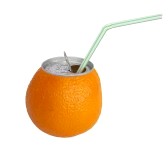
Is anyone surprised by the news that Coca Cola’s Simply Orange product is somewhat different from slicing an orange and squeezing it? It seems that Coca Cola uses an algorithm (apparently also used by Delta to balance its books!) to prepare the juice, blending different batches to ensure uniformity of taste. The whole process is described as efficient and of course, for the consumer, very convenient.

Why is this story deemed unusual? Was anyone really expecting that what comes out of the carton is not subject to any processing at all? That is only possible if we prepare the juice ourselves by simply slicing and squeezing. This is the lack of clarity on the consumption side that I find mystifying. If we want convenience from a carton and we want it to be at a low price, then we will get processed juice. It is not exactly the same that we would get at home where the fresh burst of citrus flavor hits you as lift the glass to drink, but that would take some planning to ensure we have oranges to hand and a few more seconds to prepare than it takes to open a carton. We make our choice: time or convenience, both together are not possible and demanding that is unrealistic.

This much I can say, once you start with freshly squeezes juice, you will not want to pick up that carton! For this who have never tried it, this is how easy it is:squeezer


A Time to Reflect

whg

This week something rare happened in the world. Something that is rare  not just in the world of food, but in our lives in general. Mark Lynas, best known for his environmental work, announced that his anti-GMO position has been a mistake. He said that once he had actually read the research and investigated for himself he concluded that food policy should include genetic modification of crops. This is really rare: reflection on a position and the recognition in public that the position was a mistake and changed.

Most of the coverage on GMOs is negative and is often presented in a way that stirs fear in the minds of consumers, the most recent example being the Seralini rat study. Most of us also do not have the time to read up on the scientific research ourselves, but it does not follow that a technology that is difficult to access is dangerous. There is overwhelming evidence to support the case that GMOs are safe to use. I present a link here and will be happy to provide more in case you wish to research further.

The debate on this issue will continue but, (as has been noted here, and also here, and here) at least it can be conducted in a framework of facts, logic and reason rather than fear.