Happy Harvests with a Second Green Revolution?

ID-10043559

Today is the Bengali New Year, so Happy New Year dear Readers! This calendar dates to a phase in our life when we we moved in tandem with harvesting and planting. Many of us have moved to towns, other states or even across the globe but the day is still marked for the diaspora with Facebook and Twitter wishes and much nostalgia for the sweets which are such an important part of the memories of past celebrations.

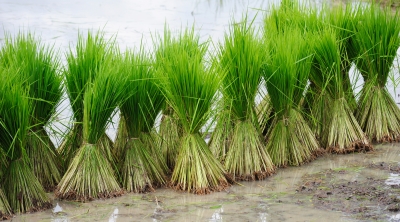
For the farmer of course, it is more than a matter of fun, the harvest determines his future and that of his family. The Green Revolution brought bumper harvests and cause for celebration to many and now there is the possibility of a second revolution bringing better times. And so this post is to celebrate a farmer who participated in both, was an active adopter and participant in research and is a strong believer in the benefits of science for agriculture. The International Rice Research Institute celebrates him with this story.

(Image Courtesy: Worakit Sirijinda at FreeDigitalPhotos.net)

#Farming Friday 33: The Vulnerabe Situation of the Indian Smallholder Farmer

ID-10059100

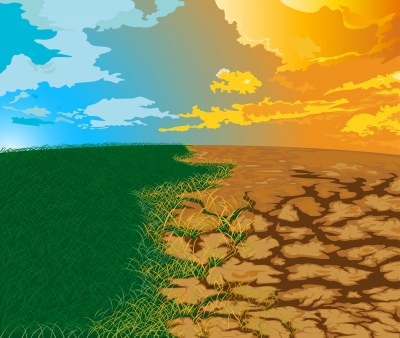
The growth and prosperity that has brought better times to so many  is not reflected in the condition of the smallholder  Indian farmer. Those earning larger  farms are making nearly 10 times as much as those with 1-2 hectares or even less.  The smaller plots of land they won mean that have less product to bring to the market, the fragmentation of holdings also makes it more expensive to utilize better seeds, fertilizers, have access to credit, and most of all, to get the water that they need. Of the total 141 million hectares of cultivated land in the country, only 65 million hectares is irrigated. The rest are dependent on paying for drawing groundwater  or waiting for the monsoons. Evidently, major changes are needed, prime among which should be public investment in irrigation, reducing post harvest losses and facilitating farmer access to finance and technology.

(Image Courtesy: cooldesign  at freedigitalophotos.net)

The Scent of Bitter Almonds

ID-10080595

“It was inevitable:  the scent of bitter almonds always reminded him of the fate of unrequited love.”- Gabriel Garcia Marquez.

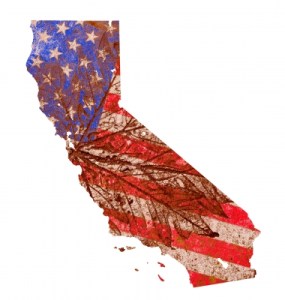
The drought in California is bringing to us a preview of what we could be facing regularly in the near future: water scarcity. The response to the water crisis aimed at cutting down water  use has been criticized for going easy on agriculture , which is the largest consumer of water in the state.  Some argue, though, that farmers have been receiving less water already and were forced to leave 400,000 acres unplanted last year as they would not have enough water to sustain the crops. And while the drought may be forcing the issue of water use to public regard for the first time, water scarcity has been a reality for farmers over the years, compensated by the largely ignored method of ground water pumping.

Well, who is to blame for this? It was suggested that the state should tell farmers to stop planting water guzzling crops (like almonds) and turn to less water intensive crops like tomato. And all of a sudden, almonds became the poster crop of bad water use. But why did this happen? Was it simply an  error of judgement on the part of the farmers? No, this almond rush was catalyzed by the information about the impressive health benefits of almonds that flows out in the media every day. Suddenly all of us are eating more almonds or drinking almond milk, and this is not just in the  U,S but also around the world (California provides about 80% of the world’s almond supply). This means huge profits to almonds growers and in turn, good revenues for California and the nation. And while everything was going well, no one complained about too many almonds, so allegations of “water abuse” by nut farmers do sound a little unfair. Faced with other crop failures due to lack of water, farmers may actually be motivated to turn to almond farming now because of the high value of the product in the market.

Or, they could turn to alfalfa, a crop which many of us may not have given much thought to in the past, but which, we now learn, is in high demand in countries like China and the UAE. It is grown for forage using the water resources already under pressure in Arizona and California and being shipped abroad. In 2012, 50 billion gallons of water were exported to China, virtual water embedded in the alfalfa that would feed animals in that country.  But we too have been consuming virtual water from elsewhere: embedded in the asparagus we demand in winter or the avocados that we need all year round.

So, what solutions are possible? As noted, it has been suggested that farmers grow crops that require less water, so that water use in agriculture is more efficient. Could the answer also lie in a sensible shift in our eating patterns? Yes, almonds are good for us, but we could also choose other healthy options, and asparagus are delicious but we can wait for spring instead of having them shipped over and contributing to the depletion of resources in another country. Every few years a new “superfood” is announced when , in reality, there is nothing of the sort. Choosing a plant rich diet with moderate portion size would be a useful tip for a healthy life. Eat kale, almonds, coconut oil, all the good stuff but in a reasonable way. Sometimes too much love can be as bitter as unrequited feelings. We will have to learn to love almonds a little less.


(Image courtesy koratmember at FreeDigitalPhotos.net)


#Farming Friday 32: Potlucks Bring Women Farmers Together

ID-100135126

A common feature of agriculture in most countries of the world, be they developed or developing, is the lack of voice for women farmers. Though their contribution on the farm matches that of their male counterparts, when it comes to making decisions regarding farming , receiving extension services or applying for credit, women are often overlooked or find themselves excluded. A network of women farmers in the US reached out to each other over potlucks and found  much needed support in farming and, even, their daily lives!

(Image Courtesy franky242, freedigitalphotos.net)

Scientists have engineered the food that will help save a starving, warming planet

The new bean that raises hopes for food production in the age of climate change.

Economic Benefits of GMO Crops for Non-GMO Growers

ID-10020033

 Most studies on the economic benefits of GMO crops are focused on farms that grow GMO crops. A new study from the University of Minnesota finds that there are economic benefits for those who choose to grow non-gmo crops as well. This is based on 45 years of data on pests in the corn growing areas of Illinois, Minnesota, Wisconsin, Iowa and Nebraska. The European corn borer which is the most common threat to crops here cannot distinguish between Bt corn and non Bt corn so it lays eggs in both types of crops: in the bt corn plants as well as the non-bt refuge plants.  Since the pests cannot survive in the fields growing bt corn, the threat to the non-bt fields is also diminished.

This process is reflected in remarkable numbers: over 14 years, the benefit from growing bt corn in Illinois, Minnesota and Wisconsin was $3.2 bn, but even the non-bt corn growers benefited from lower crop loss to the extent of $2.4 bn. There could possibly be gains for produce as well which benefits from suppression of the European corn borer but this is not documented yet. Here is the original paper.

#Farming Friday 31: Who is Growing your Food?

ID-10053484

If you live in the US, then the answer, according to agriculture census data is family farms! The data reflects that while family owned farms are diverse in nature, they do account for 97% of all farms in this country. So when the shouting starts about “Big Ag”, how farms are now faceless factories, what exactly could that mean? We need to make a distinction between farms and farmers that actually grow our food and the businesses that work in the food journey from farm to table via the grocery store.

Also changing, in small steps, are rural towns where inhabitants are returning with fresh ideas to transform the rural landscape:  some stories from Virginia.

(Image Courtesy dan from freedigitalphotos.net)

The Plate, the Pot and Climate Change

ID-100305519

At the IFAD (International Fund for Agricultural Development) website, there is an interesting series on the impact of climate change on staple foods around the world: recipes that were passed on over bubbling pots in the kitchen might have to adapt, memories of childhood meals might no longer be reflected on our children’s  plates.

In the eastern highlands of Morocco, truffles (Terfass) that were a major ingredient in the local diet, are threatened by overgrazing and changing climate making the already vulnerable inhabitants of this area (75 % of the farmers here live below the poverty line) more food insecure. Rising sea  levels push saltwater into the Mekong delta of Vietnam destroying rice fields and catfish, staples of the sweet and sour catfish soup , so beloved in the region. In Bolivia, the local favorite Chairo soup needs a key ingredient: freeze dried potatoes. The potatoes are frost resistant, so they are put out in freezing temperatures for 5 to 6 nights and exposed to the hot sun in the daytime for freeze drying. Once ready, they can be used up to years later! Now, potato harvests are pressured by  uncertain growing seasons.

But there is good news as new varieties of crops are being developed to withstand the impact of climate change such as flood tolerant rice, or the 30 new varieties of beans that can grow in higher temperatures. Beans are an affordable, lasting source of protein for millions of people in the developing world so this is a crucial achievement. One of the varieties was developed by cross breeding the popular pinto beans with the less common tepary bean to come up with the heat resistant strain.

So, yes, some things will change: the beans may look a little different, the rice may taste a little different but the important thing is that we can find solutions to the challenge of growing food in a climate uncertain world. There will be new memories and new stories to share!

(Image Courtesy Sira Anamwang from freedigitalphotos.net)

How genetic engineering creates food security: Pamela Ronald speaks at TED2015

#Farming Friday 30: Climate Smart Women Farmers

ID-10071545

When climate change is discussed, farming often does not feature in it as much as it should; but farmers the world over are already living and dealing with it. For International’s Women Day, here is an encouraging piece on women farmers in Kenya finding their voice, adopting and advocating climate smart farm practices.

And, as I write this, new research highlighting the threat, not just to food yield, but to food safety, emphasizes the need for climate resilient agriculture.

(Image Courtesy:freedigitalphotos.net)