#FarmingFriday 38: Women Farmers in Europe

ID-100198731

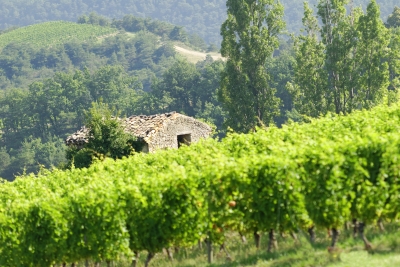
Absorbing piece in Modern Farmer about women farmers in Europe: raising goats in Iceland, a cheese maker advocating for family farms in Holland, an urban farmer in London, and a new farmer starting up a hydroponic greenhouse in the Midi-Pyrenees region of France.

(Image Courtesy: dan at FreeDigitalPhotos.net)

Will Humans Let Science Save the Banana?

ID-100109124

The answer, it seems, is at best a weak “maybe”. Still it was heartening to see an article in the media that was nuanced enough to acknowledge the public’s unfounded wariness of biotechnology with the pragmatic acknowledgement that in this instance, genetic modification is the strongest option in the tool box.  The piece also explores the reasons why relying on banana biodiversity alone cannot suffice. This is really the middle ground that we should be focusing on, instead of the yelling-across-lines-in-sand  type of communication which characterizes most food debates. The problems are real and the solutions will be a combination of various options and  rejecting some options out of baseless fear is not an optimum step. Some solutions and even, improvements, have been suggested, the hope is that they will not be blocked.

(Image Courtesy: bplanet at FreeDigitalPhotos.net)

#Farming Friday 37: Mizoram, India, Farmer’s Markets Built on Trust

ID-100116158

From Mizoram, in north east India , a unique marketing technique. Along the hillsides of this beautiful state, farmers display their produce: fruits, vegetables, dried fish, fresh snails, mark the prices and then, leave. Yes, leave! Customers come by and take what they want and put down the payment. None of the farmers mentioned in the piece have ever had a loss. Great story of trust and community!

(Image Courtesy: marin at freedigitalphotos.net)

The Unbearable Sadness of Cooking Without Chillies

ID-100219638

Finally, the silent crisis has been brought to light. Indian kitchens in the US have been battling this crisis for a while now. It is the sudden disappearance of green chillies from the market. At first, I thought it was a temporary glitch  and  asked about it on Facebook, back came the flood of answers. No, the problem was grave, green chillies were nowhere to be found. Friends from Texas offered to send us some, they were growing them in backyards. But it was not just the solution to my cooking problems I was looking for, I wanted to know what had caused the crisis. At my local Indian store the answer was surprising: the green chillies we prized so much came from the Dominican Republic and had been banned by the US after a invasion of Mediterranean fruit flies in that country.

So, some readers may wonder, why is this such a crisis? The aisles of grocery stores have plenty of peppers and chillies on offer. And yes, we are making do with jalapenos and other substitutes for the time being. But green chillies have a very special place  in the Indian kitchen: on a frozen Pennsylvania morning, the bite of  chillies in my scrambled eggs would bring a little fire into the grey morning.  Even if I was cooking for kids, adding in a chilli for a last simmer would bring in a swirl of flavor that no other spice can replicate. And once in a while I have a craving for a “chilli moment”, where it is the star of the dish and the ensuing tears are markers of delight! Without  them, every cooking session seems drab and incomplete.

This attachment we have to our food, the meaning it holds for us, beyond simply being a source of sustenance, is what makes our food debates so fraught. A practical response to existing conditions is often complicated by our emotions, memories, and habits associated with that food. So, climate change impacting Assam tea is not merely a problem that can be resolved by growing a different variety, it is the sinking feeling that that certain cup of tea shared at breakfast will cease to exist.

Hopefully, the green chilli will continue to exist. For now, we wait in hope that somewhere small emerald green slivers are ripening and will one day come to us to brighten our food and our lives.

(Image Courtesy: freedigitalphotos.net)

#Farming Friday 36: Synergistic Farming

ID-10043460

A farmer writes about the choices she makes in her work, picking what is effective from different farming systems. It is simplistic, she says, to try and categorize farms in discrete boxes, pulling practices from various systems can help achieve better solutions.

(Image “Harvesting” by Dan from freedigitalphotos.net)

Climate change impacts on livestock: ‘This information does not exist’

I have shared here issues around climate change and farming but as this piece reflects, not as much is known or discussed about the impact of climate change on livestock. More to learn…..

Susan MacMillan's avatarILRI news

CoulsonCryingCows

Rock engravings depicting long-horned cattle with their heads bowed, from the Early Hunter Period and found at the base of an inselberg at Tegharghart, south of Djanet,Tassili n’Ajjer, Algeria, a site known as ‘Crying Cows’ because of the way teardrops appear to roll down the faces of the animals (via David Coulson/©Trust for African Rock Art [TARA]).

A new working paper from the CGIAR Research Program on Climate Change, Agriculture and Food Security (CCAFS) has been published on the impacts of climate change on livestock across Africa. Lead author of the new paper, Philip Thornton, is a scientist with the International Livestock Research Institute (ILRI) and CCAFS.

The good news is that there are interventions that can help livestock keepers and their stock adapt to climate change. The bad news is that every widely applicable option available has its downsides when it comes…

View original post 678 more words

#Farming Friday 35: Farmers Talk About Climate Change

ID-10083401

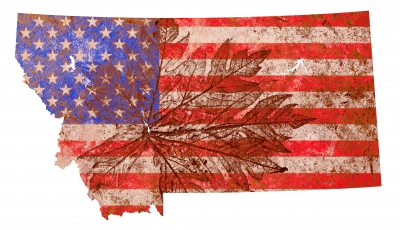
One would think that if there was a group of people most involved in discussing the impact of uncertain climate , it would be farmers, as it is such an integral factor in their work. Politics, however, colored the debate and climate silence became the norm in Montana. Now, farmers are publishing reports on the impact of climate change as they experience it on their harvests with earlier harvests and seeding seasons and starting up the climate conversation again.

(Image Courtesy: koratmember at freedigitalphotos.net)

Should We Hate Wheat?

ID-100275351

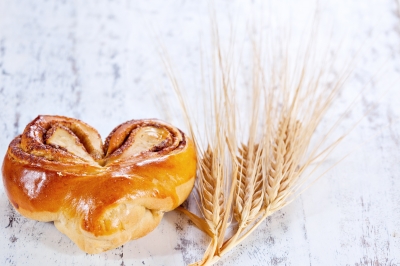
These days it is impossible to step into a grocery store without seeing the words “gluten free” plastered everywhere and equally difficult to meet a group of friends and not hear that at least some of them are gluten intolerant.  So I had to find out, where is this coming from? After all humans have been growing and eating for centuries, how is intolerance showing up now? Maybe something changed along the way…

To start at the very beginning, wheat, according to the FAO , was one of the first crops to be domesticated, has been a part of the diet in many parts of the world for 8,000 years and is more widely grown today than any other crop including rice, potatoes and corn. In fact, it provides 20 per cent of all calories consumed by humans which leads to some worry about how to increase wheat yields to keep up with the growing population. This study, for instance, shows that wheat yields worldwide are leveling off in most of the developed nations.

Researchers are working on this , using the best tools we have, and hopefully solutions will be found. The crucial place of wheat at meals all over the globe was thrown into sharp focus by the events of 2007-08 when sharp spikes in wheat prices brought protesting people to the street.

So where does the impetus for a gluten free diet with no wheat come from? Why are so many people convinced that wheat is at the root of all their health problems? The answer came in this documentary  “The War on Wheat”, which profiled an influential book that many people are reading: “Wheat Belly” and its author Dr. William Davis. It is not long and well worth the time involved, here are my notes from viewing:

1. There is no scientific evidence to prove the assertion that wheat is damaging to health, the author simply recounts anecdotes: people stop eating wheat, they lose weight so wheat must be a bad thing.

2. He rattles of a long list of diseases and medical conditions which sounds really scary ,  but none of these have been proven to be caused by wheat, it is simply his assertion.

3. The basis of these assertions is  that modern wheat is genetically modified , “Frankenfood” as Dr Davis calls i;t which is strange because there is no GMO wheat grown commercially anywhere in the world. Certainly, there have been improvements made to wheat by regular breeding which , as part of the Green Revolution, saved people from starvation. To hear that referred to as “garbage” is really offensive.

4. This belief is disproved by the peer reviewed work of Dr. Chibber and others, included in the program, showed that there is no difference between the wheat grown in 1861 and today.

5. People do not trust trained professionals but they are lured by hope of magical cures and claims made by celebrities. This move to cut out wheat is not supported by any scientific or medical bodies but people have greater trust in the celebrities who advocate it.

I support people making their own food choices but what we have here is a blind belief not based on facts. And while the lady in this video can enrich her wheat free diet with organic chicken and heaps of vegetables, what about those who do not have those options? Because the real worry is that this fear spread quickly: a few years ago “gluten intolerant” was not a common phrase in India, today people are writing cookbooks devoted to just this subject. If wheat is shut out from the food system, what will happen to the poorest sections of society who need the calories it provides to survive? The world is home both to people whose main preoccupation is weight loss, and also those for whom hunger is a constant factor and an effective food system must incorporate both needs. So, if wheat is not suitable for you, do not eat it. Spreading baseless fears which will impact other’s choices, specially those whose voices are often not heard, is irresponsible in the extreme.

(Image Courtesy: Serge Bertiasus Photography at freedigitalphotos.net)

Last Week I Went to a March

11146539_1425982684376040_5077032777678769755_n

One week ago today, I joined the March Against Myths About Modification. This was the counter initiative to the March Against Monsanto. I had been studying and writing about GMOs for a while and this seemed like a good opportunity to meet people on both sides of the debate and to  steer the conversation to agricultural biotechnology as a whole rather than focus simply on  one company.

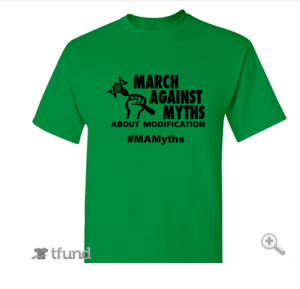
Since I became aware of the event in DC only the day before I did not have much time to prepare myself. For one thing, I did not have the green MAMyth shirt but planned to paint my nails green instead. On the day , I was late making my sign so even that touch of green had to be, sadly, foregone. It started off well. Just as I arrived I met the only other person I knew before the event, a scientist and mom who had brought her baby along, then I met in person some one I had long followed on Twitter which was great. The group that had gathered at the Monsanto office was small, there were scientists, writers, students, and a few children with their parents.

Every year I would see reports of “tens of thousands” of people at this March so I had the somewhat confused idea of a sea of people just marching by us, perhaps one or two would stop by to talk and we could present some facts and have a fruitful discussion. Maybe they would ignore us altogether which would be boring , but at least I had new friends to chat with. When the marchers came into view, their numbers were decidedly less than the media reports of past years. They stopped in front of us, slogans baring over a loud sound system, and suddenly a few of them rushed out wearing masks, yelling in our faces, screaming at the children in the group and cordoning us off with biohazard tape. The only check to their aggression seemed to be the police woman on a very large but quiet horse, who was watching the proceedings.

The core group at the front of the marchers was loud and combative. One guy shouted at me saying I was paid by Monsanto and did I know that Golden Rice had failed. I replied the best as I could in all the noise but he was not interested in my facts on Golden Rice, he then shifted to “what is your heritage?” There was another young man that I and another member of our group spoke to briefly who seemed able to discuss food waste but then had no idea about the Green Revolution. I saw a lot of hate, fear, ignorance, confusion (“Monsanto wants to kill us, they want us to keep buying seeds”,um.. dead people can’t buy anything, the government is out to get us, chemtrails, hemp, all sorts of stuff came up) but no interest in an actual conversation. They knew what they knew and that was it. I can recognize that but the accompanying vitriol was scary. One of the main speakers later went on Twitter threatening  our group and asking help in identifying us from photos of the event. Not pleasant at all. All the studies I knew of, the facts on the ground in less fortunate economies, the potential applications for malnutrition, climate resilience that I wanted to share were drowned out in accusations of “shill” and references to youtube videos that supported the narrative of fear.

All through this week, I have been reflecting on the lessons from the event. Clearly, a strategy is needed: to those who are marching against every conspiracy they can think of, there is no engagement possible. There were some on the margins, though, who did not seem as dogmatic and next time we could focus on speaking to them. Our presence , though small, was significant as the Marchers realized there are people who believe deeply in the evidence supporting GMOs and are prepared to stand up for it. But to really change perceptions, our efforts needed to be directed elsewhere: at those who are paying extra at the grocery store everyday in the belief that the premium for “organic” or “non-gmo” is worth paying for although the evidence does not support that. The anti -GMO group exhorted their supporters to “vote with their wallet” , our goal would be to follow the money and provide facts to those who spend more from fear.

This was not my first march but it was very different from students protesting delayed exam dates! I made new connections and enjoyed learning more from them, but the experience itself was overwhelming and I had to take  sometime  to reflect. But as I read about other experiences and see the renewed energy among those who are committed to the goal of sustaining a conversation , I am looking forward to participating next year, hopefully with many of my new friends, with an effective strategy, prepared to look past the hate clouds at those who might be open to looking at things differently, and yes, with coordinating nail polish!

For great insights, please do read posts from others at the event:

That Time We Flew  4,765 Miles to be told F-you

Mamyths Goes to Washington DC

Standing Up to Pseud0Science

Into the Depths of Anti Science Hell

Will a Neonic Ban Save the Bees?

#Farming Friday 35: Hear from an organic farmer who argues for a rational and balanced response to neonicotinoid pesticides. An approach that could be effective in all aspects of food discussions!

rob's avatarThe Fanning Mill

The environmental impact of neonicotinoid insecticides, their effect on bees and other pollinators and the appropriate response continues to be a topic of hot debate. I’ve addressed this topic on my blog before; below is an article I authored for the Genetic Literacy Project – see the original and the discussion here.

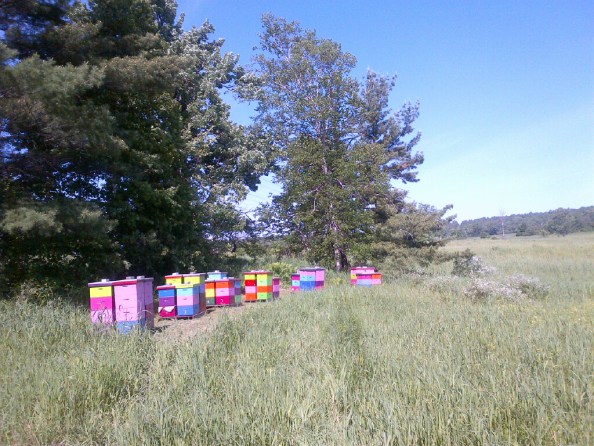
Bee Hives on Songberry Organic Farm

As an organic farmer, I get lots of invitations to sign petitions to ban things like insecticides herbicides or GMOs. When I was younger, I used to sign these petitions and even share them with others, often accompanied with white-hot exhortations that others should sign them too.

More often than not these days, I find myself cringing a little when these passionate pleas cross my screen. The hot topic recently has been neonicotinoid insecticides (neonics), which are blamed by some scientists and activists but not others as a key driver of spike bee deaths. Predictably the views…

View original post 767 more words