
Wishlist for a New Food System

gift

The din around the fiscal cliff grows louder every day, perhaps it is time to raise our voices to ask an important question: what happened to the  Farm Bill?  There has been some debate about the food stamp program or debate on genetic modification of crops but what if we resolved to start over, from a blank sheet and set up the food system that would benefit both producers and consumers and be prepared for dealing with climate change. Here are some of the things on my wish list for a better food system:

1. Better food choices at home:  while the awareness about eating “local” is  laudable , everything cannot be grown locally so if we find ourselves buying “local” tomatoes while stocking up on snow shovels, it means that we are buying produce that requires greater resources  because it is being produced out of season. Instead, let us try to eat in season, experiment with produce that actually grows in this season and expand our culinary abilities. Also, if a food producer has to sell only locally they might either not be able to meet demand (in which case  we would have to go without) or is left with a surplus which does not sell and he cannot ship it elsewhere because of the insistence on local food. Most of us in the food debate consider the consumer’s point of view. Let us also hear what the farmer thinks.

2. Change agricultural practices: adapting to climate change is not just about producing food under a different set of weather conditions, it should also be about using better farm practices like growing trees on farms to prevent soil erosion and sequester carbon, preserving biodiversity, green manure among an array of  possibilities.

3. A  fair food system: let us recognize the hard work that goes into producing our food;  long hours in all kinds of inclement weather often involving hazardous chemicals and equipment. The number of people ready to do this is small and yet we do little to bring in those who are ready to work in this area. We need to provide a decent life and dignity of work for immigrant workers on American farms.

And when we go to a restaurant and are happy to see that the food is “local” and “sustainable” and the chef has so many stars, let us also think about the restaurant worker. If you want to know if your server or cook is being paid a fair wage or get paid sick leave, there is now an app for that!   

4. Renew rural life: when it is openly stated that there is a disconnect between urban and rural communities with the latter being isolated and cut off from the mainstream, it is crucial to take action. Farmers today are older and fewer in number than before and as they become less able to farm the land, farms may be sold off to urban property developers or be purchased by large farms. To create a vibrant farm sector, it should be made easier for younger people to farm, offering financial aid or improving infrastructure where needed.

5. Plate and Planet:  every time we make a food choice let us think not just of how it will be on our plate but how it will impact the planet.  A recent study shows how yields of major crops are falling, and preparedness to deal with climate change is hardly robust so when we push a certain technology or practice, let us consider the global situation as well. Changing tastes in America might lead to positive change here but global hunger and access to food should also be considered.

And, finally, in this, as in other debates, let us be civil with those who disagree. Perhaps this wish list will remain just that: wishes, but can we at least resolve to stop name calling on Internet discussion forums because someone disagrees with us on a point of policy? We are all people,  no one is a “shill”.
Wal Mart is Coming to India

veg market

Recently the Indian government announced that foreign investment would be allowed in the retail sector, and, after some debate, the relevant legislation was passed by the Parliament and is now the law of the land. This means that  stores like Wal Mart , IKEA and other supermarket chains will start operations in India. What does this mean for Indians particularly with regard to food? There is reason to believe that farmers would benefit as stores now start competing for their produce;  productivity gains are expected as less food is wasted due to improved refrigeration and storage and the consumer is also expected to have a more enjoyable shopping experience at, hopefully, affordable prices.

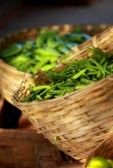
It is uncertain what the new policy will mean in terms of jobs. The jobs generated by the supermarkets would require a different skill set from those possessed by the small holder farmers and small traders who would be most vulnerable to the coming changes. And what about the little corner stores and produce stands that currently dot the landscape? Certainly, some small stores will go out of business, that is inevitable. However, in matters relating to food, emotions  are just as important as data. Many people enjoy chatting with their neighborhood store owner as they get their shopping done. They also enjoy little conveniences, like free home delivery even with small orders or some credit at the end of the month when finances are tight. For every middle class consumer who is looking forward to shopping at the supermarket, there is one whose income would not stretch that far. And going by the popularity of farmer’s markets in the US, for example, the small farmer will still have the option of setting up his wicker basket of vegetables  on the sidewalk.  And even the supermarkets might have to think about adapting to local customs: China’s indigenous grocery chain RT-Mart wins out in part because it lets customers come in and choose their fish live (it is then processed for purchase) as they have been used to doing at their neighborhood stores for centuries!

So, the outcome of this new policy is far from clear.We will be following how this change works out.

Of Looming Cliffs and Melting Ice

The last of the turkey leftovers are gone and we are now fully awake from the food coma to find, according to the incessant media coverage, that we are hanging off a cliff and in danger of plunging into catastrophe. Hopefully we can claw our way back. But while those involved in solving this do their best headless chicken act, another drama is unfolding in Doha where the climate change conference is being held. There, also, all is sound and fury and we watch in disbelief as no action emerges to tackle a challenge to the planet and the people who inhabit it. And while the debate rages on regarding the placement of the comma goes on the communique that communicates less and obfuscates more, everything that we put on the table to give thanks is threatened, yes,everything  including the wine. 

What, one wonders, would make the urgency on this matter obvious? Perhaps a video of  the melting Arctic ice that will allow ships to navigate through this area for the first time? Or perhaps they might need to consider the information in these handy charts?

Climate change is going to have a major impact on a food system that is already under pressure. How will we meet this challenge if we are going to pretend it does not even exist?

“Big Doors..”

This is the third anniversary of blogging at Thought+Food for me and  I am deeply thankful to all of you who check in, read, and share your views.  It is a small effort  and  the problems of our food system, may in contrast,  appear monumental but things have got to start somewhere. Every time we share information or make informed decisions as consumers it gives a little nudge to the status quo. As the saying goes, “Big doors swing on little hinges”. Let us make that door swing!

Turkey Time!!

It’s that time of the year when thoughts turn to turkeys, cranberries and travel arrangements. While you prepare to enjoy a day of feasting and fun with the family , please remember to give thanks for the farmers and workers who make it possible to load up our tables with such an abundant meal. Also, a thought for how we grow our food, and a heartfelt wish for those who are still stranded and without power from Hurricane Sandy.

It’s not all about the food, though. There are other traditions, like the recounting of past turkey day disasters, the nosy relative wanting to know about relationship updates, or the walk after gorging on the meal. Whether your Thanksgiving is an intimate one or a fancy gathering at a hotel,  have a wonderful, fulfilling Thanksgiving!

And in case  you were wondering, this is why your turkey is cheaper at this time than the rest of the year!

What Is Next?

Now that the elections are over, we can turn our attention back to all the unfinished business that never got done: food safety issues, hunger, the Farm Bill, re-calibrating the entire food system so it can deal with the impact of climate change. These are complex matters but not intractable, what is crucial is the will to find and enact the right solutions. Let us hope that everyone can find in them the ability to work together for better outcomes  for the food system.

The “Red Sorghum Experience”

When Mr. Mo Yan was awarded the Nobel Prize for Literature this year, I felt  bad I had never read his books. To make up for that I started trying to read up about his work and came across this fun read from The Telegraph, which reports that the Chinese government is planning to set up a “Mo Yan  Culture Experience Zone” in the author’s village. The irony of doing this to celebrate a book which depicts the horrors of war and violence against the backdrop of a beautiful landscape is lost on the planners, it is safe to say.

What is more interesting is that Mr. Mo Yan continues to live and work on his family farm, though neither he nor anyone else in the  village grows sorghum which was such a vital part of life in the past. Apparently, even in the novel, by the 1970s , the red sorghum had been replaced a by a green hybrid variety. The new “culture zone” plans to grow sorghum to maintain authenticity.

I liked the fact that Mr. Mo Yan is unmoved by all the plans unfolding around him, so unusual in these days of frenetic publicity tours and tie-ins. Now, I must read the book!

Getting Used to a Changing Climate

We may not agree on why the climate is so unstable, or who caused it , or even how to tackle it but the fact that it is happening can no longer be ignored. Yes, bad weather has been recorded in the past but all the events are now more unpredictable and destructive. Around the world, farmers are trying to deal with this new uncertainty in weather conditions. Food producers are opting to grow a different set of crops and consumers too will have to adapt their diets accordingly.

Now, considering that Congress just let the Farm Bill drop while they got on with the more important of election politics, there is a sense that putting in place policies to enable the food system to deal with climate change is going to be a difficult process. Those going in to vote next week might consider this as they choose the people who will be responsible for determining how we tackle this challenge.


Eating Smart

How did we humans get to be the ones to control the world? By being smarter than other species, yes, but how did we get smarter? The answer, according to a Brazilian study, is because we learned to cook our food. Food became easier to chew and digest and , in some cases, contributed more calories. So  ancient humans now needed to spend less time looking for food and could , instead, ponder other important questions like who made the universe, is the earth flat, could I work even less than now if  I conquered another country and made those people work for me etc.

Cooking our food instead of eating it raw brought a new ritual to human lives: the camaraderie in the kitchen of those who prepared the meal, the gathering around the table  to enjoy nourishment and appreciate the food and also those who prepared it were all special moments. Perhaps that is why sometimes our strongest memories relate to food: the smell of herbs fresh from the garden, the crunch of the apple just picked from the tree, the aroma of meals on festive days. The act of cooking gives a deeper meaning to what would otherwise be, merely, fuel.

“Is there enough planet for all of us?”

That is the question posed at the beginning of the Global Hunger Report released today by the International Food Policy Research Institute (IFPRI). The report examines the issue of hunger  framed by conditions prevalent today; such as increasing pressure on resources like land, water and energy, demographic changes pushing the planet’s population towards 9 billion by 2050, climate change and institutions and policies that are falling short of their goals.

To make the food system more sustainable, the report recommends a more efficient and careful use of resources, end to subsidies, investment in education and meeting the challenge of climate change, among others. Most of this is frequently discussed but the political will to make it happen often falls short. Everyone needs to get involved in whatever way they can to push for these changes.

The report does conclude, that,  yes, there is enough planet for us all, we just have to make smart and thoughtful choices.