Seeding Draws to a Close for Leguee Farms

#Farming Friday 18: How has your summer been so far? Here is how it was for this farmer:

Jake's avatarA Year in the Life of a Farmer

It is often said that the hardest things in life are the most rewarding. That nothing good comes easy.

I hope they’re right, because 2014’s planting season was anything but easy.

The long, drawn out affair that was #plant14 has finally drawn to a close for Leguee Farms. It was a season full of challenges; from the frustrations of setting up a new drill, to the apprehension and anger over rain that just wouldn’t quit, this year’s seeding operation was difficult, discouraging and nerve-wracking, to say the least.

Finally, after what seemed like an eternity, the wet weather cycle we were in started to fade, giving us the window we needed to finish seeding. A severe storm on the 26th of May stopped us for quite some time, and even when we did get back to the field, we were shocked at just how wet it was. While…

View original post 740 more words

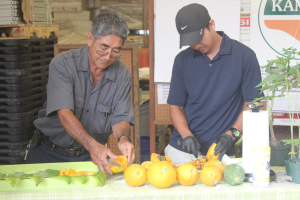
It’s Not the Right to Know but Big Organic vs. The Small Papaya Grower

Important point here about respecting the farmer’s expertise and knowledge. Food policy shouldnot revolve solely around consumer concerns which are often manipulated by industry interests.

hawaiifarmersdaughter's avatarHawaiiFarmersDaughter

img_1358

My thoughts on the whole biotech issue here in Hawaii… When you’re a doctor, your authority is respected. You can decide the treatment for your patients and the kind of medicines that you will prescribe. When you’re a dentist, you are also allowed to decide your plan of care for that resident. These professionals have gone to school and training to get the expertise that they do to work in their respected fields.  They hold the expertise to do what they do.

The general public and politicians are not allowed to dictate to these professionals what their clinical decisions will be. It is just not in their scope or expertise to take up such roles and is unethical for them to decide that.

Given that, why the heck are we allowing the general public and politicians to be given full authority to decide for farmers what they can and can’t…

View original post 603 more words

Climate Change Will Forever Alter Our Food System

river1


Lately I have learning a lot and also thinking about climate change and it’s impact on the food system. This will happen in two ways: agriculture is a major contributor of emissions and this needs to be lowered;  also, frequent, unpredictable extreme weather events like droughts and flood will destabilize food production. In the show “Years of Living Dangerously” the various threads of the climate change discussion are very effectively presented. But , the critical link between the food system and climate change did not come through as sharply. In the opening episode, we see how the drought in Syria was the crucial catalyst in the subsequent political events. Another clip talks about the escalating food prices in Egypt sparking off unrest in that country . The story presents  the intriguing insight that Egypt imports about half its wheat from the USA, where also drought is changing the way the land is farmed.

Climate skeptics often say they do not see the crisis scenario that others are describing. That is because the have not yet felt the really brutal impact of this change. Consider the case of rice for example: it is mostly grown in Asia and has the largest number of consumers there as well. What if there was a drought and from India to Vietnam, the rice harvest failed? And this is not merely hypothetical, the prospect of a failed monsoon is nerve wracking, my twitter friends from India, farmers and others,  have all been updating anxiously for the past few days, waiting for the monsoons to make landfall and hoping they will we plentiful. There would be millions of people desperate to feed themselves and their families. At first, violence and unrest would break out in the region. Then, if no solutions were on offer, large groups would start migrating elsewhere in the search for food. This “elsewhere” might very well be the countries where people still do not see the facts in support of climate change. Only now, the climate is also unstable here, as well, and they can no longer ignore the evidence. There would begin a global struggle for food and water which is quite frightening  to contemplate.

Climate change is discussed mostly in the context of the environment but we need to give attention to the food system as well. Some of there solutions are being worked on already, like this amazingly simple way to reduce methane production in rice paddies.  Or the project to create a  new variety of rice which can withstand the long periods of flooding which are predicted to occur in the rice growing  regions of Asia in the future. But this is still an issue on the periphery of the main debate and often it is boxed off on its own when it should be a focus of  climate policy and action. “Years of Living Dangerously” is a brilliant show that everybody should be watching. ( Previous reviews are here and here).  If there is a second season I hope the producers would consider giving more time to the food system.

(Image Courtesy: Freedigitalphotos.net)

Farewell To Our Favorite Fish?

spin

For a Bengali, fish is not just food, it is connected to everything in life. We celebrate our cricket and soccer team wins with fresh fish curry; and send out gorgeously decorated fish to the bride’s house as part of our wedding rituals. Our culture grew in the low islands and mangroves of the Bay of Bengal, awash in tales of the delta and the fearsome legends of the Bengal tiger. With climate change, some of these strands of our heritage will disappear forever. The tiger is in danger of extinction, the mangroves are shrinking and the lowest islands of Bangladesh are being reclaimed by the rising waters.

Still, we thought, we had our favorite fish, “ilish”( Tenualosa Ilisha). It was a momentous treat when I was a child: the first elish of the season which would be prepared in a golden mustard gravy with a bright green chilli pepper, served up with steaming rice. It was an expensive fish, not to be eaten everyday and certainly not during the breeding season. But somewhere along the way, all this changed. With prosperity came an insatiable demand, ilish was being eaten around the year and exported all over the world. Now, we may have to live in a world with only our memories of the delight it brought to our lives.

Efforts are on to conserve ilish by several organisations and the Bangladesh government.  Bengalis all over the world are praying this will work (watching our own ilish consumption would also help!). Perhaps we can look to a conservation success like the blue crabs  in the Chesapeake Bay or the mix of restrictions and incentives that Brazil has used to successfully reduce degradation in the Amazon rainforest to ensure that the ilish continue to thrive.

For a look at the life of people living in the ecosystem of the Bay of Bengal,   “The Hungry Tide” by Amitav Ghosh is an absorbing read.

(Image Courtesy: freedigitalphotos.net)

#Farming Friday 16: The Reason for Big Farms

farm1

How often have we heard the lament that smaller farms are being swallowed by bigger ones and family farmers are being pushed out? It sounds really familiar, right? But the reality is that 98% of US farms are owned by families, says this farmer. And the reality also is that farming is hard work, and increasing the size of operations brings much needed benefits to the farmer. Does the farmer ever get to go on a vacation, for example? It is difficult : “Cows, chickens and pigs aren’t like a house cat, you can’t just fill up their food bowl and tell them you’ll see them tomorrow.” But bigger operations which would enable farmers to hire help might give them a much needed break. The idea of a small, idyllic farm with adorable little chickens  and piglets running around is lovely but the real world may require other solutions.

Tastier Tomatoes?

tama

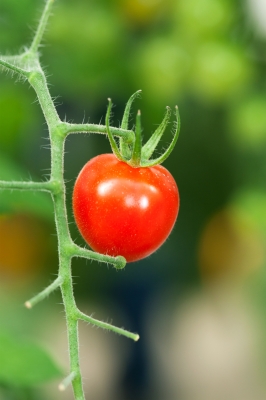
This is a quick post. I just saw this piece on hydroponic tomatoes   that are reported to be as flavorful as heirloom varieties. What is the environmental impact of large scale greenhouses used for growing crops that would otherwise not be grown in that area, one wonders?  Time to plug in my favorite food rule: Eat in Season. In summer, enjoy the tomatoes, can them if you like for winter but when the snow comes in do think about all the root vegetables you could savor. The comments are also worth a read and it took only a quick glance to note that, yes, Monsanto had been mentioned, never mind that it has nothing to do with the story!

(Image Courtesy: freedigitalphotos.net)

Climate Change and Food Security for All: Is it Possible?

puffin

This week most of us felt hopeful as we heard President Obama announce new measures to respond to climate disruption. Although we have been hearing the discussion on climate change for a while, most people think of it as something that might unfold in the future. The fact is that climate change is here and is already altering the world as we know it.

Consider the case of the puffin: parents of baby puffins are bringing in food for them that they are not physically capable of ingesting. Why? Because the fish they usually feed on, hake and herring, are no longer found in the waters around them: the water is simply too warm for the fish to survive. So fewer baby puffins are surviving into adulthood. Their life patterns are also changing and the are coming in late this year to their summer habitats.

Meanwhile, humans too are faced with the challenge of feeding 9 billion people in a time of uncertain climatic conditions. The melting ice in the Antarctic could raise sea levels to an extent where China, India,Bangladesh, and Vietnam would lose millions of hectares of arable land and food production would fall. At the other extreme, higher temperatures threaten crop yield in the USA. A warmer climate also means an increase in disease and pests. The cloud of grasshoppers gathering in New Mexico is not from some movie set in the future, but happening right now.

The challenge is not just to create a more productive, climate resilient agriculture sector but also to ensure that all of our food is produced in a way that reduces pressure on a planet where everything is interlinked. If we look at discrete solutions we risk generating more problems: the effort to limit over fishing in the ocean by raising fish in farms, for example, has resulted in the destruction of mangroves and zones algae blooms that suck up oxygen and kill the fish.

The need is to consider the whole problem: whether we live in the Maldives or Mexico, on a farm or in the city, our lives are about to go in a direction different from what we known for centuries and the solutions we devise must take into account the needs of all the whole planet; humans, puffins and all.

And all this, without some coffee to help us along, because that too is likely to disappear as the climate changes.

(Image Courtest: Freedigitalphotos.net)

#Farming Friday 17: Wishlist From An Indian Farmer

baingan

Ask someone what comes to mind when they hear the words “Indian Farmer” and the reply, in most cases, sadly is “suicides”. A while back they might have said “Green Revolution”,  but the myth of the Indian farmer planting a GMO crop and then taking a desperate measure when it fails, has taken firm hold of the Internet. (It has been debunked, for example, here ). Confronted by this, I try to  explain the facts on chronic indebtedness which follows farmers through generations, this information  is mostly ignored. But, here is a piece that one cannot ignore:  an Indian farmer writes about his hopes from the new government. He says, of farmers growing Bt Cotton, “No one forced them to do it. They chose to adopt GM cotton because it makes sense.”  The food system needs to make sense to people at both ends of it. Most often, however,consumers’ voices, specially of those consumers who are unfamiliar with hunger or chronic malnutrition in their own experiences are the loudest.It is time to listen equally to those who actually grow our food.

(Image Courtesy: freedigitalphotos.net)

Why sprouts can make you sick

What’s in your sprouts? Make sure that they are safe to eat…

#Farming Friday 15: Land Grabs in Laos

laos

This post in the Farming Friday series is delayed but the issue it highlights is crucial today as farmers are being displaced in many parts of the world as they lose their land to outside forces, sometimes government projects or corporate interests or urban expansion. This is the experience of specially of farmers from minority ethnic groups in Laos who are being deprived of their lands. While the framework to protect their rights does exist, it is not being put to use.

(Image Courtesy: freedigitalphotos.net)