
Preparing the Food System for Climate Change

Sometimes just looking at my Twitter feed can be overwhelming: people calling attention to melting glaciers, deforestation, endangered animals, submerging islands, and then some people saying this is untrue; and then even more squabbles on what to do about it all. But take a step back and block out the noise and you might find that there is something that can be done, by all of us. That is the key actually. Each of us needs to take action. Governments have their responsibility but are often slow to move and cannot carry this through alone. There is much for us to do at our level. I liked this article because it sets out concrete action options for agriculture.
First, we should not sit back and “accept” climate change”. Taking steps to reduce emissions in agriculture, switching to climate resistant crops are among the possible solutions for growers to implement. However, there is a huge shortfall in the investment needed for research to come up with such solutions, that could be an area for governments as well as private individuals and corporations to make an impact. For consumers, we need to reduce food waste: buy according to a plan so nothing is thrown away unused, put smaller portions on the plate, work with restaurants to channel extra food to shelters or food banks. A big help would be to reduce meat consumption as well.
Even before we take these steps, a basic truth must be acknowledged: people, animals, crops and the environment they exist in succeed or fail in dealing with climate change as a unit. Conservation and preservation activities have to be in tandem with ensuring that people are able to maintain a decent existence. Where the goals are unclear or weighed excessively in one direction, conflicts will inevitably erupt. So instead of bringing all our resources to bear on meeting the challenge of climate change, we might be stuck in the trap of dealing with escalating social unrest as the struggle to control and access scarce resources becomes sharper and are thus, left vulnerable to climate shocks.
Ideological positions will have to be tempered with pragmatic solutions. All those wars on social media, passing judgement on the best/only way to grow/consume food, demonizing the other side, trying to score points, that is such an absurd waste of time and energy. It will take all options to walk through this storm; so technology and better farm practices, urban farming and ranches all will be part of the solution and throwing one or the other out is the equivalent of scoring an own goal.
The time to act is now, find a way to help and try to make it happen. And yes, this means going out and actually putting an effort into a program or an initiative; putting up a cute profile picture or retweeting to make a hashtag trend is not enough. We know what we must do and there are no excuses for not doing it.
Posted in Climate Change, Farm Technology, Food Security, GMO, Green, Hunger
Tagged biotechnology, climate change, Farming Technology, food security, Green, Hunger
#Farming Friday 19: Farming 238 Years Ago

Modern Farmer has a nice piece on the Founding Fathers’ agrarian interests. The image (above) is a recreation of a farm in colonial times in Williamsburg, VA.
Happy 4th everyone!
Posted in Uncategorized
The solution to India’s onion price inflation is an obvious one. Hint: it’s not the hoarders
Every year tears are shed over rocketing onion prices in India. Here is why it happens and an idea of how it can be avoided. Can the new government exert its will and make these changes?
Posted in Uncategorized
Summer Food Reads

Summer is finally here!Time to head to the beach or, perhaps Paris(always my dream!)? Wherever we go, along with the flip flops and passports come the books. So, here are some interesting food related books that I came across:
“Good and Cheap” by Leanne Brown offers recipes and cooking ideas for $4 a day, or what could be spent on food based on a SNAP allowance. The recipes are mostly vegetarian, many are grain based and would be of interest to many of us trying to put healthy food on the table but also trying to vary the diet. Is it a good resource for those actually living on assistance? Would this work for a family? Read the book to decide!
“Blue Plate Special” by Kate Christensen is described as a personal account of the power of food to transform a person’s life. One of the interesting things about the food world is precisely the intensity of people’s relationship with food one reason why making changes in diet or in policy is often so fraught with difficulty. The story of a life in relation to food sounds intriguing.
“American Catch: The Fight For Our Local Seafood” by Paul Greenberg journeys from the local to the global: the disappearance of oysters from New York, the startling statistic that reveals how most of the nutrient rich salmon caught in the US is actually shipped over to Asia and the battle for the market between local and imported farm raised shrimp form the subject matter. But it is the exploration of people coming together to bring changes to these situations that I am waiting to discover.
I would love to hear your thoughts if you read/ have read any of these books so please do share!
(Image Courtesy:freedigitalphotos.net)

#Farming Friday 18: Is Farming Fun?

Every weekend, the buzzing suburbs of Washington DC take a pause, and people stroll slowly through the farmers’ markets that pop up in many of the neighborhoods. For a few sunny moments, we nurture the gentle delusion of being near a ‘real farm’, around ‘real food’. For most of us, the only other times that we have this feeling is the annual day trip to pick apples or strawberries. Living in this bubble, it is easy to imagine farming as fun days in the sun rather than the demanding work it is in reality.
So, what happens to all those young kids who cherish these memories of days at the orchard picking out a little basket of fruit and then decide to go and work on a farm when they grow up? For some of them, it becomes their life. This is the life that is recounted in the memoir, “A Farm Dies Once A Year”. While the young man stays on as a farmer, however, his son chooses to leave and pursue a different life. Perhaps this will be the farming of the future: people who are drawn to the life will make it their own but different generations will make different choices? An interesting piece on the book can also be found here.
And to celebrate the start of summer, a Farming Friday bonus: a symphony at a cattle ranch in Kansas! Amazing!
(Image Courtesy: freedigitalphotos.net)
Posted in Book Review
A Third Way To Describe How Food Is Grown?

When I first started reading about the food system and following discussions on social media, it took no time at all to realize that there was a sharp divide in this world: “organic” to this side, “conventional” to the other and judging by the shrillness of the debate, never the twain would meet. But I am now learning that each of these worlds has their own variations, differences of opinion and intense debate. In the organic community there is a debate over the use of natural substances as opposed to synthetic ones. While some organic farmers see the utility of substances which may not have been used historically but are useful today, others remain firm on excluding synthetic substances.
There are no magical powers attached to one or the other set of substances: an organic pesticide like rotenone can be more hazardous that synthetic pesticides and arsenic or mercury which are poisonous occur in nature. Part of this attachment to “natural” is fueled, I suspect by all those memes of scary syringes stuck in produce by people in lab coats. While the Internet may helpfully suggest a mix of salt, vinegar and dish soap as gentler, more natural alternative to other synthetic weed killers, this study showed that both are as gentle and as effective, it all depends on how they are used.
A lot of misinformation floats around about both types of farming: while there have vocal demands for labeling foods containing GMOs , not many consumers realize that organic producers are not overseen by the USDA and in fact, the organic certification comes from the National Organic Standards Board (how many of us had heard of this?). This Board is now protesting any involvement by the USDA.
And while we are all getting worked up about which system is better or “purer”, climate change is casting its shadow over our crops, even grape juice , it turns out, will not go untouched! Let us focus on the main thing here: the planet is at a point of crisis. It is time to focus on adopting all those tools and practices that can help us ensure that the growing population can be fed in a way that exerts the minimum pressure on the environment. Can we agree to stop arguing about just two systems and widen our approach to adopt practices that would keep production growing with demand in a way that is compatible with the new climate reality we are living?
#Farming Friday 17: First Time Farmers
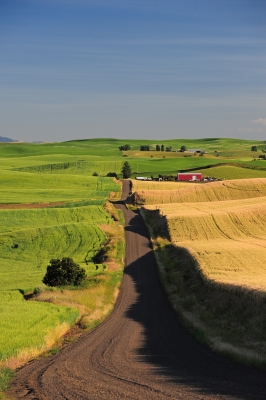
In which a blimp pilot, a chef, an international development consultant and a former restaurant worker decide to try their hand at farming, and, despite a polar vortex winter, decide to carry on with their adventure! Stories from Montgomery County, MD.
Posted in Uncategorized
Researchers Hope ‘Super Bananas’ Will Combat Vitamin A Deficiency
Fortified bananas to combat Vitamin A deficiency proposed for Uganda.
Posted in Uncategorized
 Thought + Food