Is Your Dinner Home Cooked?

khana

An article in Slate magazine argues that cooking dinner at home is a glorified ideal which actually results in nothing but drudgery for the one who prepares the meal, most often the woman in the household. The article references a study from researchers at North Carolina State University which argues that the benefits of a home cooked dinner, often cited by well known food writers such as Michael Pollan,  might be overestimated.

Predictably, this lead to much debate and dissent. A response  by  Joel Salatin that there should be any reaction other than reverence for the ritual of the dinner cooked at home. He exhorts us to stop the soccer run, ditch the TV shows, “get out of the car and get in the kitchen”. This is directed mostly again at Mom who picks up chicken nuggets on the way to practice rather than taking advantage of the slow cooker, the refrigerator and today’s “techno enabled kitchens” to cook the family a healthy meal. There is a mention, at the end of the piece, of men who are part of the problem as they spend their weekends rider a mower on an “ecological dead zone” aka the suburban lawn instead of growing a vegetable garden to feed their families.

The first step in making sense of this would be to ask the question: what, exactly, is a home cooked meal? Does heating up frozen dinners at home qualify? A family sitting and eating together at a table,  each with their own frozen choice perhaps,  is certainly a component of the dinner-at-home scenario.  Does it matter of the meal was actually cooked at home from scratch? It is important to think about this because the problem with the idea of the home cooked dinner is really twofold: the problem of time and the problem of choice.  Cooking a meal from start to finish: including cleaning and cutting vegetables and meat, actual cooking time, serving and cleaning up afterwards is an enormous time sink. In the real world we are all dealing with several chores and errands plus working at earning a living and there is never enough time so those frozen dinners or pasta in the box becomes an important resource.  This option also allows each member of the family to pick the option they want. Nothing is more energy sapping than cooking and serving up a nutritious dinner and have kids (and adults!) say they do not like it or want to eat it.

The frozen scenario is not really the one that  the pro-cooked-dinner writers favors. They paint a picture of Mom coming out of the kitchen with heaping bowls of  steaming hot food , fresh from the kitchen.  This picture has really no basis in reality. In every society at every time of human life, those who were financially able to, employed cooks and maids to cook and serve food, this was not just for royalty or the very rich but even true for middle class families.

Today, no one has a cook other than the 1% . So, it is mostly up to Mom to come home from work, tidy up the house, take care of errands, laundry, help with homework and cook dinner. Many mothers would prefer to heat up the frozen meal and use the extra few precious minutes to be with their children. Are these parents unaware of the results of the trade-off? No, they are simply trying to make sense of the options in our increasingly hectic and complicated lives. It is not easy to ditch soccer and ballet if every other parent around you is fixated on the “best activities” to put on the college applications of their kid who is , at the moment, just learning to tie his shoe laces.

It takes  organizing to plan meals for a family for a whole week, to shop accordingly and have the meals appear on time. Let us start by acknowledging that. When was the last time someone said of their spouse, with pride, that they cooked dinner at home every day? Did we as adults recognize that while today’s meal may not crack our top ten, it does represent a whole hour of labor and caring from someone? And do we encourage our children to recognize this as well? It is not simply about who makes dinner but the true value we assign to this task.


Cyprus’ ongoing conflict has a new victim: halloumi cheese

No matter how many times boundaries are redrawn and countries refined, the “idea” of food, a certain flavor, an aroma, memories of preparing it with friends and family are hard to fit into little bureaucratic boxes!

#Farming Friday 22: Want To Be A Farmer?

farmer

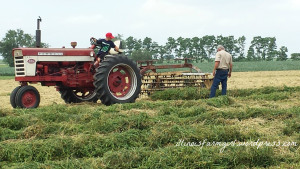
Are you planning your life ahead and thinking you might want to try farming?  Is this going to be a viable and fulfilling option, you wonder? The answer, it seems , can vary widely. In the US, a recent article with the somewhat dismal title “Don’t Let Your Children Grow Up to be Farmers” has been gaining  a lot of attention. The discussion throws up concerns over scale of farming, credit etc. In contrast, young farmers in Kenya are presented with farming as a great opportunity to contribute to their country’s development, earn a good living and even, be “cool”! What is your opinion?

A Reason to Love Okra

okra

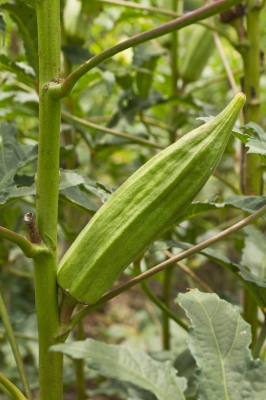
When I first moved to the US, I was surprised by the prevailing wariness toward okra that I saw on the cooking shows. I always loved okra, or ladyfingers as they are known in India (part of the British legacy). It was one of the delights of summer, cut fine and crisped up with sprinkle of turmeric and salt or in a variety of other recipes brimming with flavor. And then I realized that okra (I finally got used to calling it that) was mostly eaten in stew form and realized that the American and Indian okra experience were fundamentally different.

For me, okra cooked and served as almost a stir fry without any sauce (or gravy, as it is sometimes called in India) is the most alluring option. The main difficulty in cooking okra is the slime that suddenly oozes out during cooking , catching the novice cook by surprise and leaving them bogged down with a goopy mess instead of the crisp, green slices of flavor that was their goal. I found the easiest way to deal with this is to cook rapidly on fairly high heat. If the recipe calls for cooking slowly on medium or low heat, then I turn to the trick recommended by grandmothers; add some acid, slices of tomatoes will usually make the slime disappear.

And, why, you are thinking, do I need to learn slime slaying techniques anyway? Well, it turns out that a study in China found that okra may be helpful in treating Type 2 diabetes and cardiovascular diseases. Rats who received the okra supplement had lower glucose and insulin levels and their triglyceride levels were also lower than the rats which did not consume okra. More than enough reason to try out some new okra recipes!

#Farming Friday 21: Student Farmers

ID-10046584

From Bend, Portland and Broadway, Virginia, stories of students learning to raise and butcher hogs and seeing the process of getting meat to the table from a new perspective.


(Image Courtesy: freedigitalphotos.net)

Goodbye Emad Asfour, Slow Food in Gaza

Reflections on war and food….

Kitchen-Counter-Culture's avatarKitchen Counter Culture

Dear Slow Food friends, 

One of us has been killed in Gaza.

His name, Emad Asfour.

Here’s what Slow Food founder, Carlo Petrini wrote.

As for me:

One power it would seem is to use my social media and blogging to express a strong conviction that the methods and outcome of Israeli military might in Gaza, and Palestine, is definitively wrong.  And encourage others to do the same.

I didn’t know Emad Asfour, but when someone dies– killed by a bomb– and that someone shares things with you, you grieve.

I have tried to think through what’s happening in Gaza this past month through the lens of a cookbook called The Gaza Kitchen, and the work of Zaytoun, a Fair-Trade local-produce company working to ensure UK markets for Palestinian produce.

Through all the death, destruction, carnage, uprooting– I’m also thinking a little about the small gardens people plant, the rabbits, the bakeries…

View original post 26 more words

ISAAA publishes Brief 47: The Status of Commercialized Bt Brinjal in Bangladesh

On the progress of Bt Brinjal (eggplant) in Bangladesh

Quinoa isn’t the only ancient crop falling prey to Western gluten-free appetites

I am always bemused with the sudden obsessions with some ancient grain, presented as the answer to all health issues. As consumers chase the grain of the moment, one wonders how this impacts those people who have been growing and consuming this over centuries? Here they were, “eating local” and minding their own business, and now the market explodes, prices spike and they have to rework their lives and diets. Here is an idea: there is no one single miraculous solution, if we look closer around us, chances are we will find healthy options here as well. After all, it is not as though , in the past people collapsed into globs of gluten because they did not have access to quinoa. What food choices did they make that could hold lessons for us? Distant vistas often look more alluring but what is close by might be just as beautiful, it merely requires us to refocus.

Wordless Wednesday: Farm Kid Summers

What do farm kids go in summer?

illinoisfarmgirl's avatarRural Route 2

Farm Kid SummerFrom author Michelle Houts new book The Practical County Drama Queen:

“What Sarah Cuthbert and other town kids just don’t get is that farm kids have a life beyond the swimming pool. But, that’s okay. I’ll try to make it there once or twice, just to see people and show that I’m not a complete and total farm nerd.”

How true. How true. During my childhood, I spent more time with my cows or in the garden or in the fields than at any typical kid-friendly summer activity.  And this summer, in particular, my farm boy is doing the same.  Farm kid summers are different and that’s okay.


View original post

#Farming Friday 20: Farmer Blog Carnival

ID-10055163(1)

First, a personal note: I am moving home and have sporadic Internet access so posting is slow. But I do not like to drop a Friday in the series so here is a quick post. A Farmer-to-Farmer Blog Carnival takes place next week which would be interesting, I look forward to learning a lot! The link is here.