Category Archives: Uncategorized

#Farming Friday 33: The Vulnerabe Situation of the Indian Smallholder Farmer

ID-10059100

The growth and prosperity that has brought better times to so many  is not reflected in the condition of the smallholder  Indian farmer. Those earning larger  farms are making nearly 10 times as much as those with 1-2 hectares or even less.  The smaller plots of land they won mean that have less product to bring to the market, the fragmentation of holdings also makes it more expensive to utilize better seeds, fertilizers, have access to credit, and most of all, to get the water that they need. Of the total 141 million hectares of cultivated land in the country, only 65 million hectares is irrigated. The rest are dependent on paying for drawing groundwater  or waiting for the monsoons. Evidently, major changes are needed, prime among which should be public investment in irrigation, reducing post harvest losses and facilitating farmer access to finance and technology.

(Image Courtesy: cooldesign  at freedigitalophotos.net)

The Scent of Bitter Almonds

ID-10080595

“It was inevitable:  the scent of bitter almonds always reminded him of the fate of unrequited love.”- Gabriel Garcia Marquez.

The drought in California is bringing to us a preview of what we could be facing regularly in the near future: water scarcity. The response to the water crisis aimed at cutting down water  use has been criticized for going easy on agriculture , which is the largest consumer of water in the state.  Some argue, though, that farmers have been receiving less water already and were forced to leave 400,000 acres unplanted last year as they would not have enough water to sustain the crops. And while the drought may be forcing the issue of water use to public regard for the first time, water scarcity has been a reality for farmers over the years, compensated by the largely ignored method of ground water pumping.

Well, who is to blame for this? It was suggested that the state should tell farmers to stop planting water guzzling crops (like almonds) and turn to less water intensive crops like tomato. And all of a sudden, almonds became the poster crop of bad water use. But why did this happen? Was it simply an  error of judgement on the part of the farmers? No, this almond rush was catalyzed by the information about the impressive health benefits of almonds that flows out in the media every day. Suddenly all of us are eating more almonds or drinking almond milk, and this is not just in the  U,S but also around the world (California provides about 80% of the world’s almond supply). This means huge profits to almonds growers and in turn, good revenues for California and the nation. And while everything was going well, no one complained about too many almonds, so allegations of “water abuse” by nut farmers do sound a little unfair. Faced with other crop failures due to lack of water, farmers may actually be motivated to turn to almond farming now because of the high value of the product in the market.

Or, they could turn to alfalfa, a crop which many of us may not have given much thought to in the past, but which, we now learn, is in high demand in countries like China and the UAE. It is grown for forage using the water resources already under pressure in Arizona and California and being shipped abroad. In 2012, 50 billion gallons of water were exported to China, virtual water embedded in the alfalfa that would feed animals in that country.  But we too have been consuming virtual water from elsewhere: embedded in the asparagus we demand in winter or the avocados that we need all year round.

So, what solutions are possible? As noted, it has been suggested that farmers grow crops that require less water, so that water use in agriculture is more efficient. Could the answer also lie in a sensible shift in our eating patterns? Yes, almonds are good for us, but we could also choose other healthy options, and asparagus are delicious but we can wait for spring instead of having them shipped over and contributing to the depletion of resources in another country. Every few years a new “superfood” is announced when , in reality, there is nothing of the sort. Choosing a plant rich diet with moderate portion size would be a useful tip for a healthy life. Eat kale, almonds, coconut oil, all the good stuff but in a reasonable way. Sometimes too much love can be as bitter as unrequited feelings. We will have to learn to love almonds a little less.


(Image courtesy koratmember at FreeDigitalPhotos.net)


#Farming Friday 32: Potlucks Bring Women Farmers Together

ID-100135126

A common feature of agriculture in most countries of the world, be they developed or developing, is the lack of voice for women farmers. Though their contribution on the farm matches that of their male counterparts, when it comes to making decisions regarding farming , receiving extension services or applying for credit, women are often overlooked or find themselves excluded. A network of women farmers in the US reached out to each other over potlucks and found  much needed support in farming and, even, their daily lives!

(Image Courtesy franky242, freedigitalphotos.net)

Scientists have engineered the food that will help save a starving, warming planet

The new bean that raises hopes for food production in the age of climate change.

#Farming Friday 31: Who is Growing your Food?

ID-10053484

If you live in the US, then the answer, according to agriculture census data is family farms! The data reflects that while family owned farms are diverse in nature, they do account for 97% of all farms in this country. So when the shouting starts about “Big Ag”, how farms are now faceless factories, what exactly could that mean? We need to make a distinction between farms and farmers that actually grow our food and the businesses that work in the food journey from farm to table via the grocery store.

Also changing, in small steps, are rural towns where inhabitants are returning with fresh ideas to transform the rural landscape:  some stories from Virginia.

(Image Courtesy dan from freedigitalphotos.net)

How genetic engineering creates food security: Pamela Ronald speaks at TED2015

#Farming Friday 30: Climate Smart Women Farmers

ID-10071545

When climate change is discussed, farming often does not feature in it as much as it should; but farmers the world over are already living and dealing with it. For International’s Women Day, here is an encouraging piece on women farmers in Kenya finding their voice, adopting and advocating climate smart farm practices.

And, as I write this, new research highlighting the threat, not just to food yield, but to food safety, emphasizes the need for climate resilient agriculture.

(Image Courtesy:freedigitalphotos.net)

Plant beans to fertilize the soil

“We want to feed the people and feed the soil.”

Willem Van Cotthem's avatarDESERTIFICATION

Photo credit: SciDevNet

Image credit: Robin Hammond / Panos

  • Beans could help fill Africa’s fertiliser gap

    Speed read

    • Sub-Saharan Africa sees low amounts of nitrogen fertiliser use, which results in low yields
    • The N2Africa project backs the cheaper option of growing nitrogen-fixing beans
    • This has helped to raise average maize yields by at least 40 per cent

    Growing beans - http://pixabay.com/static/uploads/photo/2014/01/29/05/31/planting-of-beans-254075_640.jpg Growing beans – http://pixabay.com/static/uploads/photo/2014/01/29/05/31/planting-of-beans-254075_640.jpg

    An ongoing project that encourages African farmers to plant beans as food and fertiliser could help counteract the impact of limited fertiliser take-up across the continent as highlighted in a recent report.

    Global use of nitrogen fertiliser is forecast to grow by 1.4 per cent each year to above 119 million tonnes in 2018, according to a report published last week (16 February) by the UN’s Food and Agriculture Organization (FAO).

    But less than five per cent of that growth will come from Sub-Saharan Africa, largely because fertiliser…

View original post 137 more words

#Farming Friday 29: Coming Back to the Farm

ID-100192992


We often read about the graying of the farm sector, children leaving the farms to live and work in the cities. What happens to the farms when the older generation are no longer to here to care for them? A fascinating piece on women inheriting farmland and coming back to take care of it, and programs that reach out to them, aimed at ensuring that soil health is preserved and maintained. It is an encouraging story of women who have not farmed (or even if they farming wives, were somehow not an integral part of the decision making process), coming back and taking up the responsibilities of stewardship.


(Image Courtesy: freedigitalphotos.net)

Fair Standards for Animals Raised for Food

 ID-100220813

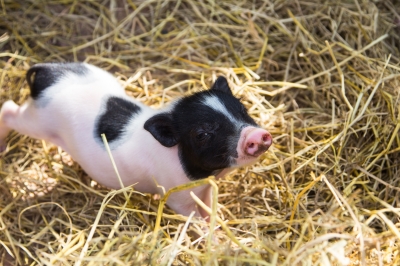
 When Chipotle made its pork shortage announcement recently, I was somewhat skeptical. How low were the standards that Chipotle was concerned about?One could be led to think that this was some horrible factory farm scenario gone wrong. But, in fact, it was simply that Chipotle objected to two standard and widely accepted practices used by farmers: farrowing crates which enable them to ensure the safety of newborn pigs and slatted floors which are critical to maintaining cleanliness. NPR spoke to a farmer whose standards meet and extend those of Chipotle  but who was skeptical of this demand from Chipotle. He pointed out that while a small farm with fewer pigs could allow them to roam outside, this is not practical in a large scale operation. And the demand for pork, not juts from a particular fast food chain but from the market as a whole is huge. To meet this, large scale operations are essential. While no one wants a dilution in the care of animals, the demands often come from the consumer side. Most of us, to be perfectly honest, have little or no clue about the raising of pigs.

Yes, as this farmer describes it, we want to think about pigs being raised outdoors because we have a mental image of a gorgeous , sunny summer day. Th reality of a winter day in Minnesota, as she relates might mean broken legs and frost bite for the animals. The writer also takes issue with the vilification of farmers for brand enhancement. Perhaps it is not so much about the pork as it is about nudging consumers toward other options:  Chipotle recently debuted a tofu item in an effort to keep costs down. Maybe the concern over animal welfare would make us pick that instead. And for those who would like their usual options but worry about how green it is, there may soon be an app for that!

(Image Courtesy: freedigitalphotos.net)