Category Archives: Living

Book Review: “Gaining Ground”


book cover


When I first heard of “Gaining Ground” by Forrest Pritchard, I was intrigued because Smith Meadows is in my area and I had heard good things about it. But I approached the book with some reservation, wondering what a book about  farming, of which I have a limited understanding, would be like. While I try to learn and write about how our food is being grown, everyday life on a farm is unfamiliar to me. It is, however, precisely, this kind of reader that would be fascinated by this book. Forrest Pritchard, who came to farming after graduating in English and Geography from William and Mary, takes us on an absorbing journey  as he attempts to revive the family farm.

Smith Meadows farm is located in Virginia, in an area known as the Apple Capital of the world, lush with fruits and apple blossoms. Over the course of the book, the suburbs and farmers markets come in closer and city lights are not as distant as before. This change is also reflected in the way the farm works; in the efforts Mr. Pritchard has to make to find a butcher, a trade going extinct with the spread of large scale meat processing; and sometimes in the cluelessness of some city people about the way their food comes to the table. One of the really interesting aspects of the book is the authors’ experience with farmers’ markets: why markets in some shiny new suburbs (carved out from erstwhile farmland!) saw hardly any interest while some more urban spots actively sought out the grass fed beef and free range eggs (among other products) that the author offered, and thus opened the way to making the farm viable. Partly, the answer to that question lies in the value we put on our food, the understanding that cheap food has an invisible price attached that we do not pay at the checkout but  in other ways:  inadequate nutrition, poor health and environmental outcomes, and rising medical costs.

As we read about the beginner farmer’s  learning experiences raising hens, cows, pigs, sheep and cultivating pasture in an organic and sustainable way; we come to appreciate the effort and care that goes into raising our food. There are passages here that you might want to share with your kids: the goat who wandered off, the little pigs who wake up late, stretch lazily, and then go out to the specific area they have designated as their “bathroom”, and of course, the episode involving chicken poop, lots of it!

In the noisy debate over issues in the food system, we seldom hear first hand the voice of the farmer and this book brings us that experience. The choices for a farmer and the constraints faced by family farms become clear  as does their tenacity and love for their way of life. While he may not (yet) have written the Great American Novel that he describes himself as planning, he has given us an account of his attempt to grow food in a sustainable , thoughtful way that kept me  absorbed throughout.

“Gaining Ground” from Lyons Press comes to bookstores May 21st.

The Price of Fear

ram

An interesting piece on the price we pay for our fears, in The European Magazine. This question is central today in much of the issues being debated in the food world. There is distrust of biotechnology because there is no way to prove that they are “completely” safe. If its not food, then its public health which is vulnerable to fear and distrust.The irrational (and, as proven recently,) baseless fear of vaccination is being blamed for a measles epidemic in Wales and also a persistent Pertussis outbreak in the US. Why have we become so fearful?

If our ancestors had not been adventurous and ready to take a risk, we would be living in a very different world. One where we would never have been to the Moon because no one could show conclusively that it was safe to travel there or even tried a fruit like the rambutan which, looks somewhat scary but is actually delicious.

When new seeds and fertilizers were introduced to the Indian farmer in 1963, they too may have been fearful but they adopted this technology thereby bringing in the Green revolution that ultimately saved so many from hunger, malnutrition and untimely death. Instead of obsessing about what is on my plate and in my food, can we agree to try something that might provide solutions for those who have nothing on their plates? At this point in the discussion usually some one jumps up to say that production alone cannot solve the problems of the food system. I could not agree more but I would point out that by spending all our time and energy talking about GM food/organic cultivation/local or not, we have little left to spend on enormously important matters like consumption patterns, food waste, or malnutrition, among others. That is also part of the price we pay for being fearful , we are left with less than optimal solutions because we did not use our time and resources wisely.

And we can start with baby steps, perhaps move on produce item from the organic to regular column on our grocery list and try that or trace a news report to the actual study they are talking about and decide for oneself what to believe. And if you should choose conventional watermelon instead of organic this week,  you could  also try out this watermelon stroller, bringing you portable and chilled watermelons just in time for picnic season!

Why Should We Cook?

cooked

Michael Pollan’s “The Omnivore’s Dilemma”  was one of the first non-policy books on food that I found totally absorbing. It showed me food in a totally new light, never again would I look at corn the same way! So I look forward to reading his new book “Cooked” which is  being released today. While the reviews at the New York Times,  Washington Post or on NPR are generally warm, I am curious about some of the points that came up. I am a strong advocate for cooking at home. It is the healthier and cheaper option. But Mr. Pollan’s belief that people don’t cook because they are doing other things like surfing the Internet or watching TV  is not a view I share. The pre-dinner hour is usually the craziest in a household with homework, piano lessons, soccer practice all converging and squeezing out cooking time.  It is rarely a time to watch TV or surf the web, there are other factors at work here: lack of time, knowledge of basic cooking skills come to mind.

More concerning for me was his nostalgic call for a return to the “communal fire”. He posted this quote on Twitter: “The microwave is as anti-social as the cook fire is communal.”  Food prepared  in the microwave qualifies as “food” solely on technical points, I agree, but the communal fire is not the answer. There are many places in the world where even today, food is cooked over fire ( a real fire not the stove top familiar to us). This requires the women and young girls to walk miles in search of firewood, carry it back on their heads and then labor over starting and maintaining the fire to cook on, all the while inhaling huge amounts of smoke that is toxic for them and , indeed, for the entire household. So, for these women, an option to that fire is very welcome.

Mr. Pollan also makes the point that women left the kitchen to participate in the outer world but did not success in bringing men into the kitchen, other than in the form of the men who head the processed food companies. Well, if there is a movement on the part of men to occupy the kitchen, it has not hit my part of the world yet. The grim reality of home cooking is that it takes a whole lot of time: time to clean and prepare fresh produce/meat for cooking, the actual cooking time and then cleaning up afterwords and it is going to take more than one person to do all this so it requires a time commitment from everybody. And while watching amazing dishes come together on TV is mesmerizing, packing lunches and making dinner everyday is , to be honest, fairly tedious.Once we acknowledge this and also the fact that however boring and time consuming it may be, cooking at home is essential for a healthy society and for building family bonds we will be closer to working out a life pattern that works for everyone and still lets us eat home cooked food.

Antibiotic Use in Organic Apple and Pear Cultivation

appear

Apple and pear trees are apparently susceptible to an infection called fire blight which is capable of devastating entire orchards. To combat this, organic farms received an exemption which allowed them to use antibiotics (Streptomycin and Oxytetracycline) to combat the disease. This issue is in the news now, because the exemption is set to expire in 2014. It was hoped that by now other methods would have become available to treat this problem so that antibiotics would no longer be needed. While some progress has been made, more work is required before the use of antibiotics can be completely discontinued.

So, given the controversy over labeling and the consumers’ “right to know” it is a little disconcerting to find that this organic produce has no label disclosing antibiotic use.  Even more interesting was the rationale offered for the use of antibiotics: they apparently leave little residue, not enough to be harmful to consumers, anyway. The same logic offered for conventional produce would be vilified as a conspiracy to “poison” consumers.

Does this mean we should support the continued use of antibiotics? Absolutely not. In fact, the article mentions that in addition to antibiotics better cultivation practices are being used to keep the healthy and this is the way to go:make use of all the knowledge and techniques that are available to achieve the common good.

Food Bloggers Against Hunger

bl

Today  I am posting as part of Food Bloggers Against Hunger, an effort to find solutions to the problem of hunger and food insecurity in America. The country has been going through rough economic times and the number of households which are depending on the SNAP program has increased. While the program provides some relief, it is a small supplement which can usually not be used to buy things like fresh produce. A trip to the grocery store with the daily assistance amount of $3 or $4 would be an eye opening experience for  those of us who are unfamiliar with this situation.

The impact of food insecurity is particularly crucial for children. A child who comes to school on an empty stomach cannot learn, no matter what lavish amounts we spend on classrooms, technology etc. Some of the options currently on the menu for school breakfasts and lunches, available to kids in need, are not the healthiest but they still offer some options to families. It is crucial that spending cuts do not hurt the most vulnerable:food insecure kids. If you would like to make your voice be heard in this regard, please follow the link here to let your opinion be known to Congress.

As part of today’s program, we have been asked to include a recipe which would be useful for anyone depending on the SNAP program. Keeping in mind the limited options available, I would like to suggest a recipe for beans which are remarkably versatile. Dry beans bought in bulk are great value for money. However, they require longer cooking times unless you own a pressure cooker. Canned beans are quick and easy, and one or the other kind is usually on sale at the grocery store each week. We can forget our preconceived notions of which kinds work together,mixing and matching whatever is available will still make a delicious meal. The recipe calls for onions which can be bought in bulk and last a long time so they can bring an element of freshness to any recipe. Tomatoes are also a flavor booster and can be bought in the canned form. What you get is a dish that is tasty,  rich in fiber and antioxidants, and will keep you filled up for a while.

Bean A Long Day Supper

Beans (any kind)    2 cans

Onion     1 medium

Garlic   1 clove (optional)

Tomato  1 medium(or canned)

Taco seasoning/cumin/paprika(as available at the grocery store)

Oil and Salt   as desired

Heat oil. Chop the onion finely and add to the oil on medium heat. When the onion has softened, add the chopped garlic, if using and cook for a minute. Now add the tomatoes and let this cook till the tomatoes have softened, canned ones will mix faster with onions. For flavor, add 1 or 2 teaspoons of any of the seasonings, depending on your mood of the day! Mix everything well, and cook on medium heat for 10 minutes, then add 2 cups of water and cook for another 20 minutes on low heat to let the flavors all meld together well. Serve with rice or tortillas.

This post is part of the effort to focus the spotlight on a serious issue, please feel free to share this information.In case you wish to learn more, click here   for the trailer of the movie on hunger in America, “A Place At The Table”.

What We Expect From Fast Food

burger

A recent road trip brought up for me the fraught issue of the cost of food. Traveling with kids (who for some reason seem to be ravenous  on the road although they have to be coaxed to finish up at home!) means that at least some of the meals have to come from fast food outlets as the process isquicker, cheaper and gives rise to less controversy and negotiation. Still, when you get home and do the bills, the amount spent on food is a big part of the trip expenses.

So I was intrigued to read Mark Bittman’s take on the possibility of healthy and edible fast food and was mostly in agreement but for two points. The first is cost:   if we define a fast food meal (as the article does) at about $10 for a wrap/taco/sandwich and shake, that works out to an average of $40 per family for just one meal of the day (and ravenous kids eat frequently!). I fully support paying  fair wages to farm workers and a fair price for food grown with good farm practices but do look for good prices which won’t bust the budget. How do we reconcile these two variables?

The second issue is that of our expectations from fast food . What proportion of our meals do we actually eat at such places? If it is an occasional meal, on a journey or for a treat (“I cleaned my room, can we get donuts?”), or the house is getting a makeover and we can’t cook tonight, my expectations would be moderate. Yes, it should not be greasy and disgusting and tasteless but fresh-from-the-fields-the-way-Mom-made-it is not really essential.

Let us not delude ourselves: it is possible to maintain the highest quality levels only in our own kitchens when we source and handle the ingredients ourselves. So if the food meets basic health standards, the workers have been fairly treated and it comes out fast, the pricing should position it where it is an option available to all. Demanding the highest quality ingredients and standard of cooking will push prices too high and make it unaffordable and inconvenient. After all, when we opt for fast food, it is the “fast” rather than the “food” which is the key factor in our decision-making process.

Why Do We Watch Cooking Shows

tv

My idea of a perfect spring break would have been to laze around at home working my way down the pillar of books at my bedside and , for a change, watching my favorite cooking shows. (Instead, I found myself taking a road trip, indulging in awesome food, and spending way too much on souvenirs without which, kids seem to think , no trip is complete).

There are shows that bring out our inner competitor. We watch “Chopped” and think, ‘Oh, I could do better than that in 20 minutes”. Top Chef is a peek into a world that we never usually get to see and we marvel at the skills on display. Do we ever try to learn anything from these shows or try out these foods at home? Well, Rachel Ray is a practical guide for some, Ina Garten of “Barefoot Contessa” does explain things well and now that she has okayed frozen asparagus, I actually pay attention instead of merely fantasizing about having a kitchen and herb garden like hers. But , by and large, TV shows are entertainment for me. If I want to learn how to make sushi or samosas or want to know how to fillet a fish correctly, I depend on all those helpful people who have posted their videos on YouTube! This post came on as I was reading this lovely piece by Emily Nussbaum in The New Yorker.

The Tastiest Cookie….

cofcok

…is one that has been dunked in coffee or tea! Famous British chef Heston Blumenthal set up an experiment to see whether cookies taste better after dipping in a beverage and the answer is yes they do! The science behind it is here.

What’s in a Potato?

pso

Have you ever asked yourself that question? We see different kinds of potatoes at the store or farmers’ markets: brown, red, gold, fingerlings, purple but that is just a surface difference, right? Actually there is much more to it than that and I learnt about it from this delightful post  at The Botanist in the Kitchen, on  making potato and leek soup. I loved the way an everyday ingredient was explained in a scientific way so that we see it with fresh eyes…and can also choose the right potato for soup next time!

The Inconvenient Dinner

dinner

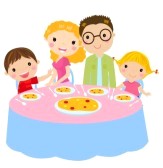
A fascinating study out today compares the dinner time habits of American and Italian families and finds that a lot depends on what  “dinner at home” actually means. Is everybody at the table or are one or more of the kids lounging on the couch watching TV and eating dinner there? Is everyone eating the same meal? This leads to an interesting discovery about grocery shopping. American homes, equipped with bigger (and sometimes multiple ) refrigerators are loaded with packaged food which often come in single serve packages. So a family can sit around the table, each with their own choice of microwaved meal; while Italians who, with smaller refrigerators will shop more frequently , prepare one meal to be shared by the family.

It has been argued that  the American dinner experience is a consequence of the pace of life. Packaged dinners are more convenient to prepare because they take less time. The study finds, however, that they reduce preparation time by only 10-12 minutes. Although I am no fan of packaged dinners (I was conferred the title of “meanest Mom ever” for refusing to buy something called “Kids Cuisine” from the freezer section, apparently all the rage in the kindergarten demographic), I have to add that this does not seem to take into account the cleaning time involved with preparing meals from scratch which would involve even more time in the kitchen.  But the real surprise here was that only 22% of dinners are actually prepared from fresh or raw ingredients without any processed or packaged ingredients.  I can understand using frozen or canned vegetables, or a base for sauces but seriously, how hard is it to use all of this to prepare a pasta dish while the chicken gets done in the oven?

How can we do this better?  Perhaps we could follow the rule that eating is an activity for a certain time and place, that means an end to never ending single serve snacks that ruin dinner, and it also means eating at the table with everyone or not at all. Everybody helps to prepare dinner, if the adult cuts the vegetables  the older kids get to clean them, early graders can lay and clear the table, and everyone tries to appreciate and value the effort put in by the  cook. It’s not that hard at all, we should give it a try.