Category Archives: Green

Just Label It!


cherry

I watched the GMO labeling debate closely in California and cheered when the proposition was defeated there. But when I read the arguments from the pro-labeling side,(based mostly on misinformation and unsubstantiated fears) I began to think that blocking labeling is perhaps not the best strategy. GMO foods, it has been proven, again and again, are  safe for human consumption. The pro-label lobby has therefore, framed the debate in terms of the “consumer’s right to know what is in their food”. It is hard to make the case that the consumer should not know/does not need to know what is in their food and so, blocking labeling makes it seem like the producers of food containing GM ingredients are hiding something. One would like to ask the question: how would knowing this be useful to the consumer anyway? If they do not want to purchase GMO products, there is already a label for them: it says “organic” or that fascinating mystery term, “natural” which many seem to rely on.

It is important to remember that this debate is being played out in parts of the world that have the luxury to debate about food. In other areas, where people are going hungry every day, children are malnourished and suffering from dietary deficiencies, food on the table is a survival issue. Biotechnology offers a way to combat global hunger. By  blocking labeling and letting the “there is something to hide” misinformation gain ground, we are denying choices precisely to those who are most vulnerable. If we continue to block labeling, the ultimate aim of the anti-GM lobby; to take biotechnology out of the options forever, would be achieved and this would be a disaster in the struggle to deal with hunger and malnutrition.

Instead, imagine a situation where the labeling issue is actively owned by those seeking to make sure the benefits of GM foods actually reach the public. Companies need to proactively steer the labeling issue in a positive direction: uniform labels for the whole country so that the same chaotic battles do not have to be fought over and over again in each state, providing more opportunities for spreading misinformation. The actual words on the label are crucial and that should not be dictated by the naysayers. Ideally, I would propose :”This product contains GM ingredients which have been more rigorously tested than most products in your grocery store. They are produced using less pesticides and so are better for the farmers who grow them and our planet. They are also fortified with Vitamin A (for example) which will prevent blindness and death in millions of children.” But that is a dream and in the real world, companies will have to work hard to merely ensure that negativity is minimized.

In purely economic terms, there is a far bigger market out there as measured by currently undernourished/malnourished people than the few who might switch from buying products post labeling. And, most important to remember, the one piece of information on the label which seals the deal for a consumer on a budget is the price.If there is an initial cost increase involved, companies need to refrain from passing that on immediately to the consumer. Instead, let them read the label, see the price, compare it to the high priced organic option and make their decision.

You can read more on both sides of this here and here.

New Day, New Diet Trend

garlic

The Mediterranean Diet, long known as the “ideal” diet to follow , is problematic for those who live in countries where some ingredients, olive oil for example, are not readily available. So, researchers in Norway, Sweden, Iceland, Denmark and Finland came up with a dietary regime based on local foods and tested the results on two groups of people: one of which was put on the local foods based diet with the added rule of no red meat  and no sugar; and another which consumed red meat and white bread as is normally done in these countries. Not surprisingly, the people in the first group showed an improved good cholesterol/bad cholesterol ratio and also changes in a marker for inflammation.

The benefits of a diet based on local food are not only financial and environmental but are also reflected in improved health outcomes as we eat the diet best suited for the conditions in which we are living. But pursuing the goal of local eating alone is not enough, even better is to eat in season. When we explore, as this chef did, what is actually growing around us, we will discover foods we did not even know existed. Case in point: I could not have identified the greens in the image above last month but have just discovered how delicious these garlic scapes can be! This is the top part of the plant, we normally use the bulb, and; here is the best part: by using every bit of the plant we reduce food waste and crucially, a waste of the water that went into growing that plant.


The Mystery of the Suddenly Appearing GM Wheat

11312703-closeup-view-of-green-wheat-ears-on-a-white-background

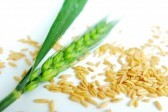
You have been reading about the sudden appearance of GM wheat in a field in Oregon, the ongoing USDA investigation into how it appeared there, the possibility of a boycott of American wheat by countries worried about GM wheat in their food supply, and the possibility of stiff losses to farmers (90% of Oregon wheat is exported). However, being a member of that vast group,  Clueless Urban Consumers, you held back on giving your opinion on social media because you were discovering a whole new world which you knew very little about , and did not feel comfortable asking out to the world  the questions burning in your brain: for instance,” where do baby wheat come from anyway?”; and, “wait, what, there are different kinds of wheat?”

Here is something to start with: wheat is not pollinated by insects, it self pollinates inside the flower while the flower is closed. Why is this important? Because bees or insects flying around cannot carry pollen to other wheat plants and enable  cross pollination. The pollen is heavy and cannot be carried far, anyway. Extra pollen may fall to the ground but is not viable for long so the possibility of pollen in soil getting moved to the field planted with regular wheat is remote.

There are several varieties of wheat and the distinctions are important. The wheat grown in Oregon is soft white winter wheat, bought by Japan and Korea where it is used for noodles and crackers. There is also, “hard red winter wheat, “hard red spring” “hard white wheat’ and keeping all these varieties separate is a special concern of wheat growers and there are associations on every state to ensure that correct procedures are followed.

Now to the incident in question. A farmer in Oregon discovered that some wheat plants in his fields were resistant to glyphosphate and contacted researchers at Oregon state University where it was determined that this was indeed, genetically modified wheat. GM wheat was tested by Monsanto from 1998 to 2005 and last grown in Oregon in 2002. Monsanto then withdrew the application and closed the trial. After this, proper measures should have been taken to deal with the seeds and other materials from the trial. (It is important to note here that this GM wheat had been certified safe by the FDA, but before the deregulatory process could start, there were threats of international boycott, protests etc so GM wheat never came to the market). Also worth noting,   Monsanto is currently testing GM wheat in Hawaii and North Dakota.

So if I have understood all this correctly, some questions arise. The obvious one, how did the GM plants get to this field? No one, wheat growers, scientists, or even those opposed to GM technology else has a plausible explanation of how this wheat could come up, years after testing had stopped in a field  which has been cultivated regularly without any previous occurrence of GM wheat.  GM corn and soy are widely grown in the US so logically there would be a higher probability of these sprouting randomly than wheat.

And that brings us to some notable observations: if I wanted GM technology to vanish overnight or even scare the population enough to push through my agenda of labeling everything in sight, what crop would I pick to create a fuss over? One that had already been the object of controversy which lead to abandonment of the GM version, (and , double bonus, the GM version was being tested by the company that has been made virtually synonymous with biotechnology in agriculture by anti-GM groups), one which forms a huge share of exports and is essential to the livelihood of many people , one where the distinction between varieties is crucial, one that would stir international controversy: wheat is the perfect answer.  Is it possible that this is not a random occurrence?

While we wait for for the USDA to publish its findings, it is important to remember that even if this wheat entered the food chain it is perfectly safe for human and animal consumption. So there is no reason for panic. All this does is stir, once again, the pot of fake science and fear that some people cannot seem to let alone. Let us take a step back and understand this: every time fears are raised and technology is abandoned, farmers and consumers, specially in the developing world, lose options. There is so much noise about GM seeds being expensive, well, look at how expensive the process is: if GM wheat ever comes to market the whole process would have taken decades, and who has the resources to stay the course over that period of time? Not universities or governments or research institutions but, you guessed right, a corporation like Monsanto.

“I Have Measured Out My Life With Coffee Spoons”

15759463-scoop-of-coffee-beans

T.S.Elliot spoke for so many of us when he wrote that, but now, this warm indulgence so crucial in equipping us to fight the cruel world is under threat.  Coffee plants in Central America  face the possibility of being wiped out by a pathogen called Coffee Leaf Rust (Hemileia vastatrix).  This pathogen was earlier responsible for the devastation of coffee plantations in Ceylon.  Is there a way to avoid this? Yes, it can be dealt with by using a synthetic fungicide called Triazaline. The problem? Coffee drinkers in the US and other prosperous countries want their coffee to be organic. The organic fungicide that is used by farmers who grow organic coffee is copper based, much less effective and the run off from the plants poses environmental problems. Most of the organic coffee is grown by smallholder farmers who would lose their organic certification if they used the synthetic fungicide. However, if they had the option of using the synthetic fungicide  solely in order to deal with this crisis, they could save their crop (coffee is grown from seeds which could be saved from the current year’s crop) and be re-certified after 3 years. But faced with the consistent insistence on the organic label, these smallholder farmers may have to lose their livelihood.

How important is the “organic” label anyway? We already know the organic fungicide is not a good option. For farmers to receive certification, they have to pay stiff fees which puts a huge burden on them. Unless the coffee is shade grown, it means forest cover has been cut down to make way for farms (even organic ones) which is not environmentally optimal. Often, middlemen buy from the poor, smallholder farmers paying them a fraction of what this coffee will eventually earn in a market driven by the drinking tastes of consumers who remain unaware of the ground reality of those who produce the coffee.

Colombian coffee growers with the help of their government were able to eradicate leaf rust. Could these results be replicated elsewhere? I am still trying to research what methods were used there. Accessible and detailed information on the leaf rust issue is here at Applied Mythology. Solutions are available, the outcome is not inevitable. In this as in so many problems with the food system today, two things are essential: first, the voice of the farmer has to be heard on par with the consumer; second, a pragmatic perspective that brings us a good outcome for all and not just a few privileged people.  Otherwise those coffee spoons might just be left there, unused…

The Price of Fear

ram

An interesting piece on the price we pay for our fears, in The European Magazine. This question is central today in much of the issues being debated in the food world. There is distrust of biotechnology because there is no way to prove that they are “completely” safe. If its not food, then its public health which is vulnerable to fear and distrust.The irrational (and, as proven recently,) baseless fear of vaccination is being blamed for a measles epidemic in Wales and also a persistent Pertussis outbreak in the US. Why have we become so fearful?

If our ancestors had not been adventurous and ready to take a risk, we would be living in a very different world. One where we would never have been to the Moon because no one could show conclusively that it was safe to travel there or even tried a fruit like the rambutan which, looks somewhat scary but is actually delicious.

When new seeds and fertilizers were introduced to the Indian farmer in 1963, they too may have been fearful but they adopted this technology thereby bringing in the Green revolution that ultimately saved so many from hunger, malnutrition and untimely death. Instead of obsessing about what is on my plate and in my food, can we agree to try something that might provide solutions for those who have nothing on their plates? At this point in the discussion usually some one jumps up to say that production alone cannot solve the problems of the food system. I could not agree more but I would point out that by spending all our time and energy talking about GM food/organic cultivation/local or not, we have little left to spend on enormously important matters like consumption patterns, food waste, or malnutrition, among others. That is also part of the price we pay for being fearful , we are left with less than optimal solutions because we did not use our time and resources wisely.

And we can start with baby steps, perhaps move on produce item from the organic to regular column on our grocery list and try that or trace a news report to the actual study they are talking about and decide for oneself what to believe. And if you should choose conventional watermelon instead of organic this week,  you could  also try out this watermelon stroller, bringing you portable and chilled watermelons just in time for picnic season!

Why Should We Cook?

cooked

Michael Pollan’s “The Omnivore’s Dilemma”  was one of the first non-policy books on food that I found totally absorbing. It showed me food in a totally new light, never again would I look at corn the same way! So I look forward to reading his new book “Cooked” which is  being released today. While the reviews at the New York Times,  Washington Post or on NPR are generally warm, I am curious about some of the points that came up. I am a strong advocate for cooking at home. It is the healthier and cheaper option. But Mr. Pollan’s belief that people don’t cook because they are doing other things like surfing the Internet or watching TV  is not a view I share. The pre-dinner hour is usually the craziest in a household with homework, piano lessons, soccer practice all converging and squeezing out cooking time.  It is rarely a time to watch TV or surf the web, there are other factors at work here: lack of time, knowledge of basic cooking skills come to mind.

More concerning for me was his nostalgic call for a return to the “communal fire”. He posted this quote on Twitter: “The microwave is as anti-social as the cook fire is communal.”  Food prepared  in the microwave qualifies as “food” solely on technical points, I agree, but the communal fire is not the answer. There are many places in the world where even today, food is cooked over fire ( a real fire not the stove top familiar to us). This requires the women and young girls to walk miles in search of firewood, carry it back on their heads and then labor over starting and maintaining the fire to cook on, all the while inhaling huge amounts of smoke that is toxic for them and , indeed, for the entire household. So, for these women, an option to that fire is very welcome.

Mr. Pollan also makes the point that women left the kitchen to participate in the outer world but did not success in bringing men into the kitchen, other than in the form of the men who head the processed food companies. Well, if there is a movement on the part of men to occupy the kitchen, it has not hit my part of the world yet. The grim reality of home cooking is that it takes a whole lot of time: time to clean and prepare fresh produce/meat for cooking, the actual cooking time and then cleaning up afterwords and it is going to take more than one person to do all this so it requires a time commitment from everybody. And while watching amazing dishes come together on TV is mesmerizing, packing lunches and making dinner everyday is , to be honest, fairly tedious.Once we acknowledge this and also the fact that however boring and time consuming it may be, cooking at home is essential for a healthy society and for building family bonds we will be closer to working out a life pattern that works for everyone and still lets us eat home cooked food.

Antibiotic Use in Organic Apple and Pear Cultivation

appear

Apple and pear trees are apparently susceptible to an infection called fire blight which is capable of devastating entire orchards. To combat this, organic farms received an exemption which allowed them to use antibiotics (Streptomycin and Oxytetracycline) to combat the disease. This issue is in the news now, because the exemption is set to expire in 2014. It was hoped that by now other methods would have become available to treat this problem so that antibiotics would no longer be needed. While some progress has been made, more work is required before the use of antibiotics can be completely discontinued.

So, given the controversy over labeling and the consumers’ “right to know” it is a little disconcerting to find that this organic produce has no label disclosing antibiotic use.  Even more interesting was the rationale offered for the use of antibiotics: they apparently leave little residue, not enough to be harmful to consumers, anyway. The same logic offered for conventional produce would be vilified as a conspiracy to “poison” consumers.

Does this mean we should support the continued use of antibiotics? Absolutely not. In fact, the article mentions that in addition to antibiotics better cultivation practices are being used to keep the healthy and this is the way to go:make use of all the knowledge and techniques that are available to achieve the common good.

Is the “Rice Revolution” for Real?

rice

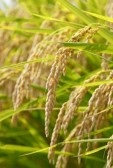
This week, the media was full of reports about a “rice revolution ” in India. The trail started from the article in the Guardian, which claimed that record yields of rice had been achieved in the state of Bihar, in India, without GM or herbicides. It reported how 5 farmers decided to use the SRI system( System of Rice Intensification) and came up with unprecedented yields of 22 tonnes per hectare. Nobel Prize winning economist Prof. Stiglitz is quoted as saying this type of inspiring organic farming should be studied and replicated elsewhere.

So, first I needed to understand what SRI involves: it is a set of techniques for managing soil , water, planting conditions to increase yield ,which was first noted in Madagascar by a priest and then tried out elsewhere as well. Improving agroecological practices is crucial for the food system but can this be replicated effectively to solve the system’s inherent problems? This question is best answered by looking at the report which gives details of this effort: the farmers start off with hybrid seeds from Bayer and Syngenta, and plants in the SRI as well as regular fields receive doses of inorganic fertilizer so this rice crop cannot actually be termed “organic”. The experiment provides pesticides to the regular crop but uses cono weeding to control pests in the SRI field. More labor is required in the SRI field for careful application of water but less water is actually required for the process, also fewer seedlings are planted in the SRI field and so less labor is required on that account. So what we have a is conventional seeds with good farming practices giving encouraging results. This is not unknown, to the contrary, many advocates have been recommending such a  mix of methods rather than depending for the sake of ideology on any one particular option.

Whether the results from Bihar can be replicated over time, countries and scale to have a real impact remains to be seen and one can hope that it will be useful specially for smallholder farmers. But long before that, the waters have been muddied by people pushing agendas. It seems strange that a year’s effort from five fields is touted as proof that biotechnology is useless but years of tests and safe consumption of biotech crops are dismissed as lies. For fixing a global food system breaking down under the strain of feeding a growing population and quite unprepared to withstand the shocks of climate change, we need the calm  of the middle not the chaos of the extreme and we owe it to the planet and to our children  to make that happen.

The Race to Grab Farmland

land

“But land is land, and it’s safer than the stocks and bonds of Wall Street swindlers.” —- Eugene O’Neill, “Long Day’s  Journey Into Night

Today, though, land is not safe anymore as the increasing population, volatility of food prices and leveling off of yield is leading to a global rush to grab farmland before it runs out. Investors, agribusinesses and governments  are buying up land mostly in less developed areas where the population can be easily displaced as land records are not easily available. Some of these may be communal lands , held in trust over centuries so when they are taken over, the community is displaced and scattered and deprived of a livelihood.

Recent reports show that approximately 203 million acres of land has been acquired and the top land grabbers include the UK, the USA, China and Saudi Arabia. In Cambodia, about 55% of  the arable land is now under the control of agribusiness and foreign investors.  The investors who make these deals often make promises about providing employment to local workers or introducing new technology but these are seldom fulfilled. And what  about the actual crop that is grown? Chances are it would not be the traditional crop but one that is destined solely for export. In one case, Saudi Arabia decided to grow sorghum in Sudan, not for the Sudanese market where it is a food item, but for consumption by camels in their own country. As the decisions regarding crop choices changes, this might take food choices out of the market and exacerbate the problem of hunger in already vulnerable populations.

Last year’s drought in the US brought home the importance of water, a fact that will only become more evident as we deal with the impact of climate change. Land grabs also put this resource out of the public domain and into the hands of private investors. This presents a daunting challenge for poor rural populations depending on farming for a living. In future, they might have to pay extra for drinking and irrigation water.

How did we get here? Perhaps the first step was the morphing of agriculture into big business, the disconnect between profit and the provision of food on the table, and the second was the sad collusion of corrupt governments and predatory investors.This trend toward land grabs poses a grave challenge to food and livelihood security in the countries and communities where it occurs and also impacts what people elsewhere can put on their plates and how much they have to pay for it.

How Coke Makes Orange Juice

oj

Is anyone surprised by the news that Coca Cola’s Simply Orange product is somewhat different from slicing an orange and squeezing it? It seems that Coca Cola uses an algorithm (apparently also used by Delta to balance its books!) to prepare the juice, blending different batches to ensure uniformity of taste. The whole process is described as efficient and of course, for the consumer, very convenient.

Why is this story deemed unusual? Was anyone really expecting that what comes out of the carton is not subject to any processing at all? That is only possible if we prepare the juice ourselves by simply slicing and squeezing. This is the lack of clarity on the consumption side that I find mystifying. If we want convenience from a carton and we want it to be at a low price, then we will get processed juice. It is not exactly the same that we would get at home where the fresh burst of citrus flavor hits you as lift the glass to drink, but that would take some planning to ensure we have oranges to hand and a few more seconds to prepare than it takes to open a carton. We make our choice: time or convenience, both together are not possible and demanding that is unrealistic.

This much I can say, once you start with freshly squeezes juice, you will not want to pick up that carton! For this who have never tried it, this is how easy it is:squeezer