Category Archives: Food Security

Is Small Always Beautiful?

In the midst of all the bad food news: the obesity epidemic, use of hormones and toxic chemicals in the food industry, food deserts, to name a few; reports of flourishing urban gardens are always encouraging. But are they really a long term solution to the problems in our food system?  It can be argued that their small size prevents them from spurring economic growth in the community in a meaningful way and they can do little to solve the problem of global hunger.

As in most issues related to the food world, it is essential not to take an extreme view. Urban gardens are an important step toward revitalizing devastated urban areas like Detroit or New Orleans and in small ways their scale can be ramped up to spread the benefits in the community but they are not a magic wand which we can wave and fix the food system.

In this piece the author argues that it would be more efficient to have a Wal-Mart instead as that would create more jobs and bring economic growth to the area. Before we knock the idea, check out a Wal-Mart store. In my neighborhood, the store stocks wild caught fish, organic produce, milk and eggs and has organic options to regular cereals, granola bars and other basics on the shelves, all at an affordable price.

We cannot all grow our own food and small farms cannot feed everyone. We have also learned our lessons from the consistent growth of huge industrialized farms and the subsequent breakdown of the food system. Can we try for a middle path where local, nutritious produce is available at prices consumers can actually afford?
The Case of the Vanishing Sugar Maples

This is an amazing video! Martha Carlson is a farmer raising sugar maples, a teacher, scientist and now a climate activist. she explains that the rise in temperatures in the last three decades is matched by a parallel drop in sugar content of the sap, trees dying early and the possibility of maple sugars vanishing by 2100. We all know that correlation does not mean causation but the problem is evident, “on page 2” as she puts it, and it is time to find a solution.

Organic /Sustainable/Both?

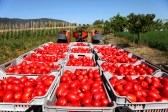
There has been a lot of discussion this week on an article on farms in Mexico growing organic tomatoes to supply the American market. While, the decision to buy organic is understandable, the idea of demanding tomatoes in winter is not such a  good one. Tomatoes are out of season in winter so they have to be shipped in from Mexico: this process, while profitable for the farmers poses sustainability issues.  The climate is conducive to growing tomatoes in winter but it is essentially a dry, desert area which means that, even though the farmers are using drip irrigation methods, water reserves have been almost exhausted. Many consumers feel that if they buy organic, they are doing the right thing by the family they feed and the planet. Unfortunately, these decisions are more complex than they seem at first look.  The cultivation of asparagus in Peru to ship to European markets in winter presents a similar story.

Here is a basic rule to live by: buy in season. There are no tomatoes in winter so choose recipes that do not require them to be produced in an unsustainable way and shipped using fossil fuels just because we think we must have organic tomato salad. It is hard: I know because I am a tomato devotee having a tough time avoiding those luscious piles of redness at the grocery store but  it has to be done to conserve our resources and ease the strain on our planet.

Change Comes to Retail Food Industry in India

Most Indians have always bought their fruits and vegetables at the stall at the corner of the road, or the nice store that would deliver even a bunch of cilantro or a bunch of carrots to your home if you were in a fix. The supply chain that brought this produce to the market was haphazard at best. Now, all that is set to change, with the Indian government deciding to allow foreign investment in the retail sector, upto 51% for multi-brand retailers like Walmart and Carrefour. There will be various conditions that they will have to satisfy, such as a minimum amount invested in 5 years, support for rural infrastructure and jobs etc. How all these plans work out remains to be seen but the retail scene for food will change drastically. The new policy is expected to dampen inflation, bring in more efficiency and productivity and reduce wastage. Matthew Yglesias pointed out that it will probably result in the top 1% getting extremely rich but so along as the families around the median and the extremely vulnerable are not squeezed, the policy should be a positive one. I am not so sure ,mostly for the food sector. All the people involved in growing, transporting and bringing this food to the family table ( and they number in the millions)will be affected as this policy is put in place. In time, they may benefit but the initial impact will be hard. At a time when there is mounting hunger , malnutrition and concerns about the impact of climate change on agricultural productivity ( specially in South Asia), this new policy will add another variable to an already volatile situation. Caution and a long term perspective should be the way to go in this regard.

The Real Farm Subsidy Story

The Environmental Working Group has just published its report on farm subsidies in the US based on data from the year 2009. Before getting to the analysis itself, it is important to note that the report is based on 2009 numbers because the USDA demonstrates a troubling lack of transparency when it comes to giving out information. What emerges is a clear picture of a subsidy program gone astray. First off, the recipients of these payments are not required to even work on or won a farm. Indeed, the biggest beneficiaries of a program intended to help farmers are actually big agribusinesses, particularly in the south. How uneven is the distribution of this pie? The top 10% of the beneficiaries of this program received 55% of the total payments. Even this cursory reading will reinforce what we know already: small farms which are more vulnerable to the vagaries of prices and weather are not befitting from direct payments at all. This program is merely handing out cash to big players in crops like corn, wheat and soy. Remember that fruits and vegetables are not even covered by this program. So if we are looking to overhaul the food system, eliminate junk and encourage healthy eating, subsidy reform seems like a really good place to start. The EWG data presentation is detailed, fascinating and even available by state here.

Trading in Hunger

Worldwide, food inflation is a worry.The rising prices have been attributed to failing harvests, rising population and increased demand for food, increased consumption/changing consumption patterns in emerging economic powers, the demand for ethanol etc. But a key factor that is not often mentioned is speculation in agricultural commodity prices which often cause severe fluctuations in the price of staple foods like corn, wheat, or soy, for the consumer. When we click a button to execute a trade and then look at the profits afterward, we may sometimes lose sight of the fact that food is not like any other commodity and trading in food is often the same as trading in hunger. It would seem obvious that there is a need to ban or at least limit trading in essential food commodities. Like other contentious issues such as subsidies, however, there is a lack of political will and consensus in making this happen. More on this here.

Adapting to Climate Change


A new study ,which analyses data on changes in weather and agricultural production in different countries estimates, that the effects of warmer temperatures has lead to a 20% increase in global prices for maize and wheat. The debate on the factors responsible for these changes may continue but the impact of changing climate patterns is already evident to farmers. In the Midwest, farmers are already investing in machinery, seeds and farm practices that will help them deal with the short term variations in weather. More efforts are required to develop crops that can with stand the long term trend of global warming. It is estimated that a 1 degree Celsius rise in temperature causes a 10 percent fall in crop yield. How will the 2012 Farm Bill provide for these challenges? Funds are required for research into creating strains of crops that will be able to withstand excess heat and flooding, for conservation of existing resources and also for providing counter cyclical insurance to farmers as they grapple with uncertain weather conditions. There needs to be a recognition of the problem and also an openness to scientific methods which can help us face this challenge. In the current economic conditions, obstacles are to be expected.

Seeds of Change

They say every cloud has a silver lining and with this long downturn it seems like the clouds have been here forever. But,even in these difficult times, there is some good news. Rising food and healthcare costs are forcing people to rethink the way they live. Farmer’s markets are thriving and people are trying to grow their own produce. The next step is the revival of (almost) lost skills like canning, pickling and preserving produce. That is how people used to live in the past: enjoy produce when it is fresh and also prepare for the rest of the year. But grocery stores continue to be a source of produce for many and I wonder if this trend will impact what we pay in the store for fruits and vegetables?

Note: the link above is to the New York Times article on the changes in produce growing in rural Kentucky. There is some issue with the link that I am trying to fix at the moment, you could go straight to the new York Times site to read it in full.

Can conventional and GM based crops coexist?

USDA seeks method to compensate farmers for GM contamination.

It would seem from Marion Nestle’s post on her blog (link above) that the government is trying to find ways to ensure that both forms of agriculture can coexist. The effort to discuss compensation methods would also include a discussion of contamination prevention in the first place.  This is where any discussion on the adoption of biotechnology in agriculture should start, with a consideration for environmental and health concerns. These concerns can then be addressed by setting up  suitable biosafety standards. In this way, we can ensure that the best use is made of the gains of biotechnology without undermining traditional /organic agriculture.

Video: Seeds of progress: How urban farming is changing Detroit’s future | Need to Know

Video: Seeds of progress: How urban farming is changing Detroit’s future | Need to Know.