Tag Archives: Green

The Case of the Vanishing Sugar Maples

This is an amazing video! Martha Carlson is a farmer raising sugar maples, a teacher, scientist and now a climate activist. she explains that the rise in temperatures in the last three decades is matched by a parallel drop in sugar content of the sap, trees dying early and the possibility of maple sugars vanishing by 2100. We all know that correlation does not mean causation but the problem is evident, “on page 2” as she puts it, and it is time to find a solution.

Organic /Sustainable/Both?

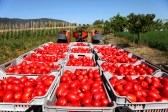
There has been a lot of discussion this week on an article on farms in Mexico growing organic tomatoes to supply the American market. While, the decision to buy organic is understandable, the idea of demanding tomatoes in winter is not such a  good one. Tomatoes are out of season in winter so they have to be shipped in from Mexico: this process, while profitable for the farmers poses sustainability issues.  The climate is conducive to growing tomatoes in winter but it is essentially a dry, desert area which means that, even though the farmers are using drip irrigation methods, water reserves have been almost exhausted. Many consumers feel that if they buy organic, they are doing the right thing by the family they feed and the planet. Unfortunately, these decisions are more complex than they seem at first look.  The cultivation of asparagus in Peru to ship to European markets in winter presents a similar story.

Here is a basic rule to live by: buy in season. There are no tomatoes in winter so choose recipes that do not require them to be produced in an unsustainable way and shipped using fossil fuels just because we think we must have organic tomato salad. It is hard: I know because I am a tomato devotee having a tough time avoiding those luscious piles of redness at the grocery store but  it has to be done to conserve our resources and ease the strain on our planet.

Eat Healthy, Spend Less

How’s that for a new year’s resolution? We knew this time would come: time to put away the cookies and reach for the kale, time to start paying off the holiday bills and trying to stick to a budget. It’s not difficult if we make good choices, such as the helpful tips posted by Chef Marcus Samuelsson . He lists healthy choices like oatmeal and beans which are big on nutrition and easy on the budget. Sometimes, though, we face time constraints and instant oatmeal or a frozen entrée seems to be the only option. In such a case, one can adopt a middle path: beans yes, but canned ones which have been thoroughly rinsed or we could still use the dried beans but cook them in a  pressure cooker. If you have never used a pressure cooker before, please do try one. They cook food in far less time than the stove top so that you save money on utilities as well. And as always, eating fresh produce that is in season means you spend less since the food is not processed and has not been transported over a long distance. And with all that healthy stuff inside us, we will be ready to tackle the tough issues: school lunch, Farm Bill, climate change, food justice, it is a long list!

From the Yard to the Pot

Urban farming is not just about fresh herbs and juicy veggies from the backyard, many people are raising small animals too; ike goats, rabbits and chicken. The ultimate destination for these animals , of course, is the pot. Their living moments, it is argued are more humane in these urban backyards than they would be in a factory farm, but what about their end? Is it safe, hygienic, desirable? While approving of the idea in principle, would we actually welcome it in our own neighborhood? Where I live, you cannot paint the outside of the house any color you like, much less raise and kill chickens in the backyard. There is a logic behind this, we have chosen to live in a community, in an organized way so collective opinion is important. My right to raise animals for dinner has to coexist with your sanitary or health concerns. Right now, these issues are being debated in Oakland, CA as new zoning laws for urban farms are being drawn up.

To me, these conflicts are similar to the raw milk or vaccine debates. Yes, we have a right to choose what we eat and decide how to nurture our children. But we have all opted to live in a social framework as well and harmonious coexistence is crucial.

Food Waste and Climate Change

When food is wasted, the impact is two-fold: not only has the process contributed to continuing global hunger but it also impacts climate change. Food products that go bad and are thrown out emit greenhouse gases that contribute to global warming. Some products have a larger impact than others, meat is a bigger concern than vegetables. So, what can we do to tackle the issue?

Common sense answer: plan the grocery list so we buy what we need and avoid impulse buying; clean, pack and store leftovers or extras in a way that preserves freshness; consider  making meat products a smaller portion of our meals and opt for better options like beans or whole grains.

This article has interesting links and the numbers to convince us of the need to watch what we waste as much as we watch what we eat.

The Origins of Dinner

I came late to the interesting challenge posed by Real Eats: go completely unprocessed for October. In other words, if I take up the challenge I can only eat foods that I could make in my own kitchen, that are unprocessed. What is compelling here is their analysis of what actually goes into what we eat, can anything be actually categorized as “unprocessed” in today’s food system? Coffee, wine and cheese are allowed while bread (and the processing of) requires a whole post to itself.

And while we are reflecting on where food comes from, consider the case of organic strawberries which can, legally, be grown from “starters” that are developed in a conventional nursery. So, the plant starts life in a conventional way but after a year is treated with organic farming practices in an organic farm. Would you consider this “organic” and pay a premium for it?  Note that, if these seedlings were to be developed in an “organic” way from the start, the process would be more expensive and the premium on the price of fruit also would be higher. There are no remnants of the chemicals used in the starting stages of the plants in the fruits themselves.

Seeds of Change

They say every cloud has a silver lining and with this long downturn it seems like the clouds have been here forever. But,even in these difficult times, there is some good news. Rising food and healthcare costs are forcing people to rethink the way they live. Farmer’s markets are thriving and people are trying to grow their own produce. The next step is the revival of (almost) lost skills like canning, pickling and preserving produce. That is how people used to live in the past: enjoy produce when it is fresh and also prepare for the rest of the year. But grocery stores continue to be a source of produce for many and I wonder if this trend will impact what we pay in the store for fruits and vegetables?

Note: the link above is to the New York Times article on the changes in produce growing in rural Kentucky. There is some issue with the link that I am trying to fix at the moment, you could go straight to the new York Times site to read it in full.

Chipotle’s Short Film on Farming

on the need to change farming and animal raising practices, please share it with your children too.

Small is Beautiful

Urban gardens have become synonymous with urban renewal but massive urban overhaul programs are a difficult option for municipalities in these tough times. “Urban acupuncture” which relies on small efforts rooted in the community may fit the moment better. A planter that provides blooms and a relief from the cityscape is low on investment and brings together the community that takes care of it instead of relying on a big government project. Case in point: San Fransisco’s Pavement to Parks initiative which is turning street parking spaces into miniature parks.

So while we nurture our own yards, flower beds, planters or window boxes let’s take a moment to see how we can spread a little green in our urban neighbourhoods.

Wanted: Organic Seed

According to a 2010 nationwide survey conducted by the Organic Seed Alliance (OSA), organic farmers are faced with a seed market that neither possesses sufficient available quantities of certified organic seed to meet demand nor the specific varieties of organic seed that they desire. As a result, many organic farmers have had to compensate by using conventionally bred seed varieties selected for use in high-input chemical farming systems in lieu of those specifically adapted to organic farming systems.

via Wanted: Organic Seed.