Tag Archives: Genetically Modified Organisms

Food Prices on the Rise

wheatseed


So food prices are on the rise …again! And it looks like they might continue on that path given the pessimistic outlook for wheat in the US given the dry growing conditions. In addition, the situation in Ukraine spells uncertainly for the world wheat market. As I read more about this I also discovered the interesting fact that farmers in Ukraine have apparently breached a ban on GMOs and are growing GM soy and corn in response to market demand!

Can a Rice Gene Save the Banana?

r2


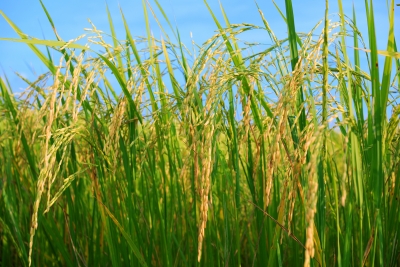
Can a gene from rice help combat the pathogen that threatens the extinction of bananas? That was just one of the many interesting issues featured in Dr. Pamela Ronald’s lecture at the SAIS Global Issues in Agriculture series. Dr. Ronald is a plant geneticist at the University of California, Davis. Many of us following the debate on GMOs  might have read her book, “Tomorrow’s Table”, co-authored with her husband, Mr. R.W. Adamchak, who is an organic farmer.

Speaking to a (mostly) non-scientific audience, Dr. Ronald explained in clear terms that growers have been trying to enhance desirable traits in crops forever. The older method of simply crossing Type x with Type y and waiting to see whether the hybrid plant had the desired trait . This method focused on the outward result but modification at the genetic level did take place but was unobserved. Genetic modification today is precise,  and efficient and enables quick and accurate results. In addition, it is backed by years of research data.

Why do we need genetic modification anyway? Consider, Dr. Ronald said, the case of the GM papaya. The papayas grown in Hawaii were attacked by the ringspot virus which devastated the crop, even moving the crop to another island did not help. Ultimately, the plants were “vaccinated” with a dose of the virus which enabled them to resist when the virus actually attacked. And so it is that we still have papayas in Hawaii. Perhaps a similar solution could be found for coffee rust? We will never know if we cannot try this option in the real world. Dr. Ronald spoke of her own work with rice: how a rice gene could possibly be used to battle the pathogen which threatens  bananas with extinction.

One possible application of genetic modification could be in building climate resilience in crops.Dr. Ronald shared her work on building flood tolerance in rice. In many parts of the world rice is grown in flood prone areas and with increased flooding possible from climate change; the development of a strain of rice which can stand water logging for up to 17 days as compared to the current maximum of 3 days is great news. But all these wonderful possibilities would take years to negotiate the stringent regulatory process and even then be opposed due to fear mongering. In that context, I was hoping to ask Dr. Ronald for her views on labeling of GMO products. But , sadly, there was not enough time; most of the discussion was taken up by two journalists from Germany, which, given that country’s staunch opposition to GMOs was interesting….

The main point to learn from this lecture was that the seed (around which so much of the storm is swirling) is but a small part in the whole process of growing food and we need to incorporate all options, technology and good agro-ecological practices to achieve sustainable development.

While I was learning all this; with ease, I would like to add, as Dr. Ronald is great at making all this scientific information accessible to those not from a science background; I wished more people could hear her, instead of being bombarded by myths of “dangerous farming” and GMOs killing bees.

The Whole Foods-Chobani Episode: The Whole Truth?

greek


When Whole Foods recently decided to discontinue carrying Chobani Greek yogurt, the first news reports attributed this to Whole Foods’ decision to eliminate GM products from their stores. But now, another reason has emerged. Whole Foods, it is argued, wants to reap larger profits from the current Greek yogurt frenzy by introducing their own version of it; a “private label”, apparently, is the term although I always thought of it simply as “store brand” ,the plain cousin of the glamorous big brands but just as good and a boon for a mother on a budget! So the issue of GMO/Organic was simply not relevant here.

This comes just after another GMO vs Organic issue which grabbed the headlines: “Organic Milk Better for You” the media announced quoting a study which found higher levels of omega 3 in certain types of milk. Read a little deeper and you will find that the real cause of higher levels of fat in the milk was determined by the what the cows ate. Grass fed cows produced milk with higher levels of  omega 3. Is this true for all organic milk? Well, it depends. It turns out that cows can be fed grass for only 4 months a year and still qualify for the organic label. Are they living on fresh air the rest of the year? No they are eating feed which would mostly consist of corn. So technically, it seems, you could have a cow feed partly on GMO corn  and partly on pasture and that cow would have healthier levels of omega 3 because it was grass fed, organic feed is not the determinant here.  So next time you think about paying the steep price of organic milk because you think it will be better for your children, remember that in this case “from grass fed cows” would really be the label you need to see.

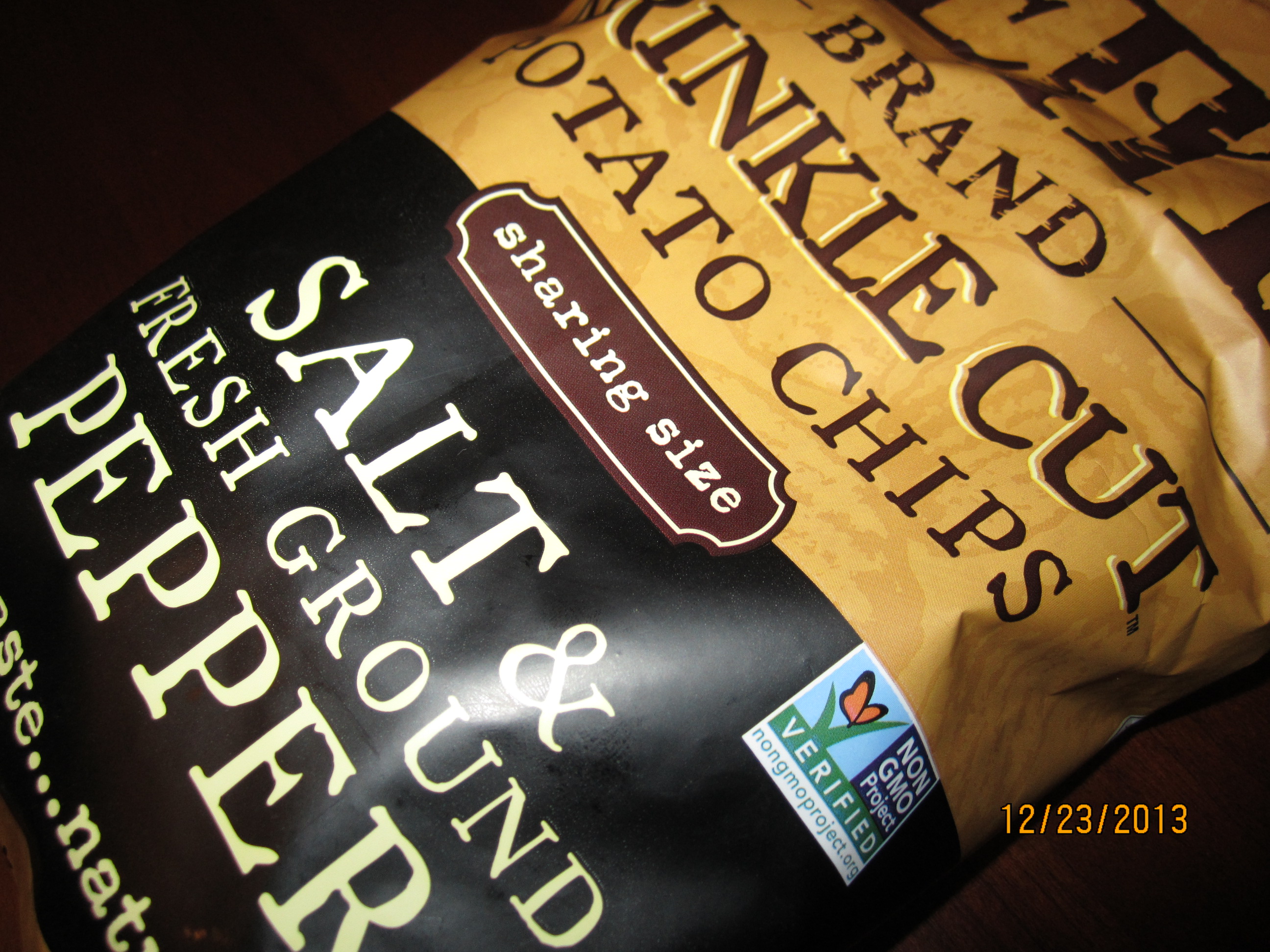
This kind of smudging of facts is not uncommon in the charged discussions on GMO foods, but then I found something that went beyond mere dancing with words. Consider this label:

IMG_0005The label says “NON GMO Project VERIFIED” . So, what is n0n-GMO here? The potatoes? salt? pepper? Genetically modified potatoes are not a part of the food supply of any country on the planet. It is not possible for me to enjoy a genetically modified potato chip even if I was craving it, so why this label?  Perhaps in the hope that the consumer who hears a lot of fear mongering on this issue and, without actually checking on the particular details in the midst of a grocery run, will make a decision to buy this product instead of another.

From all the studies and research that I have followed so far, there appear to be no safety issues with GMO foods so there seems no reason to slap on what is tantamount to a warning label. But faced with the argument that no label indicates something is being hidden, I would advocate labeling because this is only one variable influencing the consumer’s decision to buy; and price is, I think, the variable that carries the greatest weight in that decision making process. But the real troubling issue here is how labeling can be subverted so that the concerns that are supposedly being met here (health, food safety etc) are simply a facade for the drive toward higher profits.

“The Lowdown on GMOs: According to Science” Book Review

21263374-leaf-in-test-tube

The use of biotechnology in agriculture is a topic you hear  a lot about these days: farmers in distant regions of the world, looking to improve their yields, receive two versions (this will save you/this will poison you); voters in conditions altogether more comfortable than those small holder farmers weighed down by debt, are driving up to vote on whether products should be labeled to let consumers know they were grown using biotechnology. All of this and more is contained in 3 letters GMO (Genetically Modified Organisms). But what exactly does this mean? To anyone advocating for food policy issues, the superficiality of information (or, in some cases, complete misinformation) which form the basis of debates on GMO are held is worrisome.  So I am happy to be the bearer of some good news: “The Lowdown on GMOs: According to Science” by Fourat Janabi  is here and is going to be an excellent source of information for anyone seeking to learn more about this issue.

The book is put together with articles from a range of experts in this domain:  molecular biologists, Alan McHughen and Kevin Folta ; plant pathologist Steve Savage and plant geneticist Anastasia Bodnar, among others. The scientific viewpoint, often so frustratingly opaque to those of us who were relieved to be done with science on high school , is presented here in clear terms and the reader can come to their own conclusions.

Also interesting are the accounts of  the journey of those who started out as skeptics but after doing the research became convinced by the actual facts to support the use of biotechnology in agriculture. This is specially useful because it resonates with those of us who may still be educating ourselves but feel intimidated by all the noisemakers into taking up a hasty position. This perspective is a nuance often lost in the noisy and often vicious debates that characterize this topic. It also helps that one of these journeys is that of Mike Bendzela  who is a farmer. That farmers’ voices are not heard often enough in the food debate is something I have often blogged about. You may think you know all that is there is to about Monsanto, but after reading Brian Scotts’s views on using Monsanto’s products on his farm, you might look at the picture differently. Of particular note is the piece by Mark Lynas, the British journalist and environmentalist who recently changed his viewpoint and came out in strong support of GMOs

In his own piece, Fourat Janabi replies to the “Nature does it best” argument that the anti-GMO lobby is so fond of, pointing out that nature is full of experiments which created our diverse world; also drawing our attention to the fact that the Big Ag lobby is matched by a robust Organic lobby!). He also takes up the question of how to feed 9 billion people in a time of climate change and it is here that biotechnology is going to prove crucial. The use of biotechnology can increase yields, enable climate resilience and improve health outcomes through biofortification of crops . It is not the only or perhaps even the most important tool but it is a crucial one and throwing it away on the basis of misinformation and fear mongering would be a grave mistake.

The conclusion consists of an impressive list scientific bodies from all over the world that have found that biotechnology is no more risky than any other conventional breeding technology and is safe for human consumption; hopefully this book will convince many people of that point of view.

“The Lowdown on GMOs: According to Science” has been published by Smashwords and is available, free, in a variety of formats here.