Plant beans to fertilize the soil

“We want to feed the people and feed the soil.”

Willem Van Cotthem's avatarDESERTIFICATION

Photo credit: SciDevNet

Image credit: Robin Hammond / Panos

  • Beans could help fill Africa’s fertiliser gap

    Speed read

    • Sub-Saharan Africa sees low amounts of nitrogen fertiliser use, which results in low yields
    • The N2Africa project backs the cheaper option of growing nitrogen-fixing beans
    • This has helped to raise average maize yields by at least 40 per cent

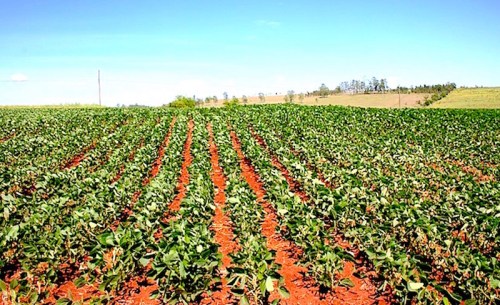
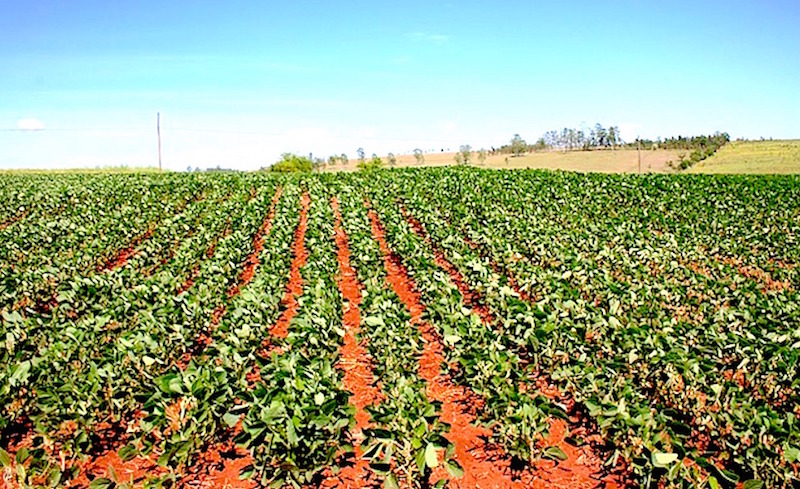
    Growing beans - http://pixabay.com/static/uploads/photo/2014/01/29/05/31/planting-of-beans-254075_640.jpg Growing beans – http://pixabay.com/static/uploads/photo/2014/01/29/05/31/planting-of-beans-254075_640.jpg

    An ongoing project that encourages African farmers to plant beans as food and fertiliser could help counteract the impact of limited fertiliser take-up across the continent as highlighted in a recent report.

    Global use of nitrogen fertiliser is forecast to grow by 1.4 per cent each year to above 119 million tonnes in 2018, according to a report published last week (16 February) by the UN’s Food and Agriculture Organization (FAO).

    But less than five per cent of that growth will come from Sub-Saharan Africa, largely because fertiliser…

View original post 137 more words

#Farming Friday 29: Coming Back to the Farm

ID-100192992


We often read about the graying of the farm sector, children leaving the farms to live and work in the cities. What happens to the farms when the older generation are no longer to here to care for them? A fascinating piece on women inheriting farmland and coming back to take care of it, and programs that reach out to them, aimed at ensuring that soil health is preserved and maintained. It is an encouraging story of women who have not farmed (or even if they farming wives, were somehow not an integral part of the decision making process), coming back and taking up the responsibilities of stewardship.


(Image Courtesy: freedigitalphotos.net)

Fair Standards for Animals Raised for Food

 ID-100220813

 When Chipotle made its pork shortage announcement recently, I was somewhat skeptical. How low were the standards that Chipotle was concerned about?One could be led to think that this was some horrible factory farm scenario gone wrong. But, in fact, it was simply that Chipotle objected to two standard and widely accepted practices used by farmers: farrowing crates which enable them to ensure the safety of newborn pigs and slatted floors which are critical to maintaining cleanliness. NPR spoke to a farmer whose standards meet and extend those of Chipotle  but who was skeptical of this demand from Chipotle. He pointed out that while a small farm with fewer pigs could allow them to roam outside, this is not practical in a large scale operation. And the demand for pork, not juts from a particular fast food chain but from the market as a whole is huge. To meet this, large scale operations are essential. While no one wants a dilution in the care of animals, the demands often come from the consumer side. Most of us, to be perfectly honest, have little or no clue about the raising of pigs.

Yes, as this farmer describes it, we want to think about pigs being raised outdoors because we have a mental image of a gorgeous , sunny summer day. Th reality of a winter day in Minnesota, as she relates might mean broken legs and frost bite for the animals. The writer also takes issue with the vilification of farmers for brand enhancement. Perhaps it is not so much about the pork as it is about nudging consumers toward other options:  Chipotle recently debuted a tofu item in an effort to keep costs down. Maybe the concern over animal welfare would make us pick that instead. And for those who would like their usual options but worry about how green it is, there may soon be an app for that!

(Image Courtesy: freedigitalphotos.net)

#Farming Friday 28: Invisible Farmers

ID-100193367

Women are responsible for 50 to 80% of the work on the rice paddies of Asia but they are virtually invisible. Surveys seek opinions from male farmers as head of households, research, extension and credit programs are mostly designed with men in mind. With more men moving to the cities to work, the role of women farmers grows even more critical. Efforts are on to ensure that policies are not undermined by the lack of attention to gender.

The Tower of Label: What We Do Know

FullSizeRender (6)

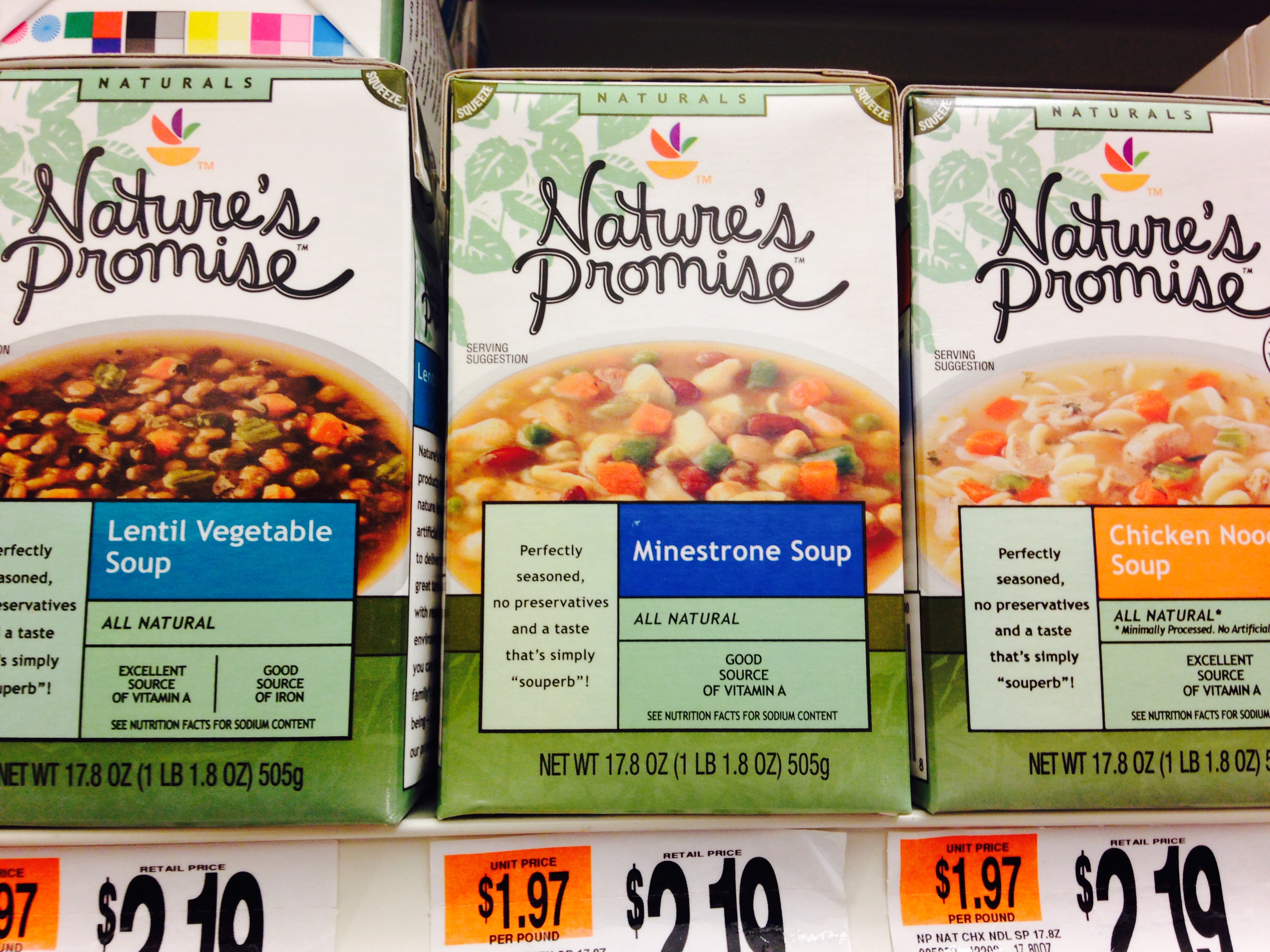
This is a somewhat delayed post, and I almost did not write it, but then it sort of kept going around in my mind and I just had to put it down. It all started when I realized that it was the middle of December and my to do list to prepare for the holiday season was untouched. And though the chilly days were calling out for soup, the only thing that was likely to be simmering in my home, given the mountain of unfinished tasks, was me. So I ventured into the soup aisle to pick up a few options for back up.

Since I usually do not buy soup I was again amazed at the variety of options, somewhat overwhelming, really! Within moments, though, this became a real time experiment to see how much information is already on the cartons or cans and how much of it is accurate or, useful.I see so much about the labeling debate on social media, here was the opportunity to see it in action. Consider the first example, in the image above: it said, “natural” which, while vaguely comforting , does not give any real information at all. Although, some consumers might confuse this with “organic” or “sustainable” though there is no evidence that it si either of those things.

In the second category were the soups which came with volumes of information:
FullSizeRender (10)

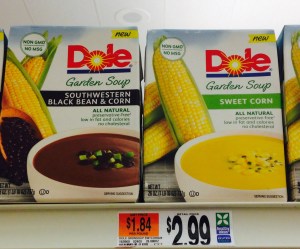
“New”, “No GMO” (so, conventionally grown corn but not organic I suppose), “No MSG”, “All Natural” “Low in fat and calories” and “No Cholesterol”, that is quite a lot to, well, process! Pressed for time, surrounded by kids asking for treats, not many of the shoppers around me were actually reading the carton at all. “What soup do you want?” they would ask and into the cart would go the choices that were voiced. The one criterion that they did stop to consider? the price. “Let’s get one of those, they are on sale” was frequently heard. This was interesting to me and bore out what many believe: the push for labeling is less about information and more about marketing. Just as labeling spiked the prices of  GMO related products in Europe,  forcing them off the supermarket shelves, the same would be seen in the US were mandatory labeling to be introduced, and this would give a huge advantage to other players in the market notably the organic producers.

I was pleasantly surprised by the third category, the cartons with minimal information:

FullSizeRender (9)

“Gourmet Bisques” is all it said and named the soup. Just for that it did get my vote and, subsequently, came out at the top of the taste test of all the soups I got that day. When I ask around, most people say they pick the flavors they like and keep in mind the price, that is all. Of course, there are those who will not buy anything but organic ( and those soups were in the organic aisle, easily sorted for their convenience). Since that label already exists, it is hard to understand why another label needs to be added.

But, of course, one must consider the pro-label point of view. And that is where this piece  is so insightful. The writer believes in the “right to know” and sets out to research whether costs would really go up in a prohibitive way if labeling was mandatory. A survey of work in this area does support the position that costs would rise: to the farmer,  the state and of course, the consumer. Added to the dollars and cents price, there would be a larger price to pay. If rising costs lead to the substitution of GMO ingredients with non-GMO ones, there would be a decline in the research and development of GMO technology and this is crucial. GMO technology is not simply about yield or profits, it also offers the ability, for instance, to combat malnutrition by fortifying foods that people eat daily with essential nutrients. The most famous example of this is Golden Rice which can be used to prevent deaths from Vitamin A deficiency. Equally crucial is the potential of biotechnology in developing drought resistant or flood and salinity tolerant varieties of crops which would be able to combat the challenges of a changing climate. The choice of GMO  crops also has other environmental consequences which are often overlooked, discussed here.

Ultimately, the writer decides that the right to know, while important, has to be considered in conjunction with the realization that while some have the luxury of choice, for others, even the right to eat is an uncertain one. A show I was watching recently had the now familiar scene, where the server recites the provenance if each item in the menu to the diner. After describing in glowing terms the grass fed beef, the carrots and broccoli from the local farm “only x miles from here”, when the server kept it short with the “fresh asparagus”, the irritable diner snapped back “That’s it? You expect me to eat my dinner without any clue about the early life and upbringing of the asparagus?” Our world includes this diner and also the one who will go to bed hungry with no asparagus at all, and our policies need to work for both of them.

What if we were provided information like this: “This crop was grown using biotechnology which meant that less cropland was required to grow it and some land could be left for conservation. It  requires less pesticide use making it gentle on our planet and on our farm workers. This is a variety that was developed to grow with less water so we could conserve our shrinking water reserves. It is fortified with a nutrient that will prevent a common deficiency and ensure better health for children.”Now, that is a label which would have my support.

Map of crops for human consumption, animal feed and biofuels

Fascinating read on how much of the world’s cropland is actually used to grow food!

Willem Van Cotthem's avatarDESERTIFICATION

Photo credit WVC 1996-01: One of the typical Chinese greenhouses with a thick clay wall (left), heated by the sun in summer, radiating heat in winter (here in January). A TC-Dialogue Foundation (Belgium) project in Wushengyi, Inner Mongolia, P.R. China.

How much of the world’s cropland is actually used to grow food?

Updated by Brad Plumer

This fascinating map from National Geographic shows the proportion of the world’s crops that are grown for direct human consumption (in green) versus all the crops that are grown for animal feed or biofuels (in purple):

Crops grown for food (green) versus for animal feed and fuel (purple)

map food vs fuel

Just 55 percent of the world’s crop calories are actually eaten directly by people. Another 36 percent is used for animal feed. And the remaining 9 percent goes toward biofuels and other industrial uses.

Read the full article (marked with highlights): Vox

View original post

Taking Up a New Food Tradition: “Hoppin John” on New Year’s Day


FullSizeRender (1)

Though I have lived in the US for  a while now, I just learned about the tradition of eating “Hoppin John” on New Year’s day. The first description I read of it involved black-eyed peas, pork, rice and some greens. The black-eyed peas represent coins and the wish for prosperity, the greens of course represent cash. This immediately reminded me of a favorite recipe from India  and I thought I would use it. And so our first meal of the year was this bowl of golden goodness, glowing with turmeric and a little chilli powder, with a sprinkling of cilantro standing in for the greens. To me, this represents the best of all possible worlds, memories of the infusing the adventure of the present.

Further reading brought interesting facts to light: the original dish used red cow peas not the black-eyed peas used today; the rice used was  Carolina Gold and the story of how this variety disappeared from the market is a fascinating story: the soft lowlands on which Carolina Gold rice was cultivated were unsuitable for the use of machinery and there was not enough labor for the intense work required, a hurricane added a further blow. So rice production shifted to other states and other varieties. But a resurgence of this variety was brought about from grains obtained from a seed bank and a small number of farmers are growing it. (One wonders though how the issue  of labor/mechanization was resolved, material for another post perhaps!)

As I write this, I discovered yet another Indian take on black-eyed peas, this time with curry leaves, which I love, and coconut, looks like day two of the new year may also involve black-eyed peas…

2014 in review, thank you for stopping by to read and comment!

The WordPress.com stats helper monkeys prepared a 2014 annual report for this blog.

Here’s an excerpt:

A San Francisco cable car holds 60 people. This blog was viewed about 2,000 times in 2014. If it were a cable car, it would take about 33 trips to carry that many people.

Click here to see the complete report.

#Farming Friday 27: Where Do Christmas Trees Come From?

ID-10010347

As you might imagine, growing trees is a tough job but losing a beloved father did not deter this mother and daughter team from carrying on the work they love and their commitment not to disappoint customers at Christmas time! A lovely story!

(Image Courtesy: freedigitalphotos.net)

Weekend Reading: Future Food, Subsistence Living and the Problem with Solutions

ID-100188972

It is a cold, rainy Saturday, and the plan was to catch up some long deferred reading and stay off grid. The first worked beautifully , the second, not so much!

The first sentence that jumped out at me: “…urging a back-to-the-land movement as a  cure for what ails America. Nostalgia for a direct, uncorrupted relationship between between people and animals and plants that sustain us may be as old as civilization itself, and it cycles in and out of fashion, but it seems particularly potent in times of economic crisis..” An excellent explanation of the pull toward “natural” that takes up so much space in the food debate, from “Off The Land” by David Treuer in the November issue of Harper’s Magazine (paywall).  Writing about people following a path of subsistence living, the author finds that “Subsistence…isn’t a philosophy of quiet, inward-turning wonder about how we relate to the land. It’s a mad, violent pragmatism intent on extracting calories and advantage.”

A very interesting piece on how and why development solutions are effective or not and what might be the ways to go forward suggests a change of perspective. Instead of fixating on one, big, perfect idea and trying to, as the author puts it, unfurl it over the whole world like a picnic blanket, perhaps the answer lies in thinking small, trying what works in a particular context and tweaking as we go. Also relevant in the food world where there seems to be so much conviction that there is only a single perfect solution, when a more realistic focus would be to incorporate different approaches in the most optimum combination for the particular problem/part of the world.

In an NYT article, the writer is convinced of the need to stop interpreting  “eating locally” in a narrow way, but is equally sure that organic agriculture is the only solution to food system issues. Looking into the future however (via the popular YA novel, Divergent) shows us that a very different solution could unfold: “Most of what we eat is frozen or canned, because farms these days are far away. My mother once told me that, a long time ago, there were people who wouldn’t buy genetically engineered produce because they viewed it as unnatural. Now we have no other option.”

Hope you enjoy the reads, and let me know what you think!

(Image Courtest: freedigitalphotos.net)