# Farming Friday 41: Myths About Dairy Farms

ID-100355343

What is the difference between “organic” milk and “conventional ” milk? If you are standing in the dairy aisle, the obvious answer might seem to be “price”, as organic milk is usually higher priced and the premium is not small one. But what answer might we get from an organic dairy farmer? Why did they choose this method and how does it  actually work? Read about it here. 

Are cows in large farms treated in an inhumane way? Can they be best loved only in a small farm? To a consumer, a cow is an animal that is the source of the milk for their morning cereal. Dairy farmers tell us what their cows mean to them, no matter what the size of the farm.

(Image Courtesy: Cow by tuelekza at freedigitalphotos.net)

Why is Everyone Suddenly Talking About Food??

ID-100181122

It has been happening for a while now but suddenly it seemed to me that , everyone I met was talking about food: local, organic, GMO, humane, “ethnic” cuisine, paleo diet, juice cleanse, kale, quinoa, almond milk, free range, clean food (were we eating muck till now? I am confused!) , the list goes on and is familiar to most of us. But what I was wondering was how and when did food become the central part of most conversations, a focal point of life? I like food as much as the next person but does it have to come up as a focal point of discussion everywhere? Does it make us, in some way, different or special? Or  is it replacing other issues that used to occupy our minds?

Maybe food is the new music?  Today we discuss cuisines, restaurants and dining experiences the way we would, in the past, discuss music and certain choices signal exclusivity or being on trend.

Exploring different cuisines and ingredients is also a proxy for exploring other places. The line of jars of harissa on supermarket shelves evoke distant places, if we cannot go there we can at least bring a hint of that adventure into our kitchen. Food is the new travel.

Having brought home the pastes and spices and noodles, how do you know what to do with them? Cookbooks, of course! A list of cookbooks out this Fall highlights recipes from Ethiopia to Ukraine, from Nordic cuisine to a taco encyclopedia: the kitchen is a travel portal. But do people actually cook from these books or are these for pleasure and  recipes we actually follow come from Google? Food is the new reading….?

(Image Courtesy: Serge Bertasius Photography at freedigitalphotos.net)

“What Do Syrian Refugees Eat?”

At one of my favorite blogs, “Kitchen Counter Culture”, excellent read on what Syrian refugees eat and how food can reach them.

Kitchen-Counter-Culture's avatarKitchen Counter Culture

People fleeing the hideous violence in Syria are very much on our minds.

Looking at photos of what goes into luggage packed as people flee their homes, you see there’s really very little food going with them on their journeys. Refugees must be hungry indeed, and in such difficulty taking care of the needs– body and spirit– of their children and themselves.

View original post 428 more words

No, Carly Fiorina, the government has not “destroyed” California ag

Its still very early in the election 2016 process but I thought this was worth sharing here. More from other candidates to follow as we get closer to the actual day.

According to the GOP candidate, regulation is strangling the Golden State’s farmers. Yet somehow they are still earning record profits.

Source: No, Carly Fiorina, the government has not “destroyed” California ag

# Farming Friday 40: Strawberry Farming in Palestine

ID-100160950

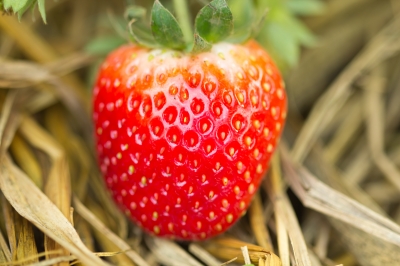
Every once in a while, everything about a farming story is new to me, and an exhilarating discovery. Like this one: the story of a strawberry farmer in Palestine, a place  which features frequently in the headlines but rarely for farming. There are only 20 strawberry farmers in the country!

There was a time when Osama Abu Al-Rub worried about the poor yield from his land but by adopting new techniques including precision irrigation, he was able to change his fortunes. His crop is awaited and coveted in the market. There is hope and there are dreams, for his daughter who is studying agriculture, and for his country. And watching the young women farmers visiting the farm, eager to learn, it is easy to believe that all those goals will be achieved.

(Image Courtesy: Strawberry by tiverylucky at freedigitalphotos.net)

Update on GMO Mustard

mus1

An update on the GMO mustard situation in India: while the regulatory and approval process moves forward,  the debate is warming up. Vandana Shiva, predictably opposes the acceptance of GMO mustard.  She expressed her opinion in a piece entitled “GMO in my Mustard”. The title is interesting: GMO is not an ingredient, to be contained” in” mustard or anything else. It is a technology, one that is now sought to be applied to growing high yielding mustard which, specially as a cooking medium (mustard oil) is crucial in Indian cooking.  India currently imports oil to meet domestic demand, and higher yields would enable it cut down the import bill.

The article seems to indicate some kind of concerted effort to ban mustard oil in favor of soy bean oil. It is true  that adulterated oil has caused significant public health issues including fatalities. Why would this be relevant to evaluating GMO mustard?  The food safety issues occurred in the past, no GMO mustard was cultivated at that point.

Another objection she raises involves dumping and subsidies. Those are important issues but not specific to GMO crops (any product from food to TVs can be dumped and many industries receive subsidies in different countries), they are trade issues, not those of agricultural biotechnology.

Dr. Pental , whose group conducted the research on GMO mustard addresses the issues raised by  Vandana Shiva, in  “The GMO in your mustard is good”, including the much repeated but baseless threat of “Terminator Technology”.  He also notes that since the new seeds have been developed by a research organization  instead of a corporation, they would be available at reasonable cost to the farmer.

And if the idea of “horizontal gene transfer” is causing concern, some facts here will allay your fears.

#Farming Friday 39: Tips from a Starter Vegetable Farmer

ID-10042546

We used to hear a lot about the farms being emptied out and the younger generation moving to the cities. But recently, I seem to read more stories like this: of younger people coming back to the farm and when they do so, they sometimes bring in a fresh approach as well: like the farmer in this story participating in a marketing effort that links the consumer directly to the farmer. That is a good step forward in enabling consumers to understand the actual process of growing food and hopefully, will make for a more nuanced discussion on food issues.

(Image Courtesy: Simon Howden, FreeDigitalPhotos.net)

Kenya, Scotland, India: GMO crops in the news

mustard

Big developments in the agricultural biotechnology world in the past few days:

First, Scotland announced it would ban the cultivation of GMO crops. This follows the recent EU policy change allowing member states to make their own decisions regarding the use of biotechnology. Given that no GMO crops are currently being grown in Scotland, this is symbolic. It would be interesting to know if they will stop importing GMO feed for livestock as well.

 Kenya announced that the ban on GMO crops would be lifted in two months. The ban was put in place in 2012 as a reaction to the now retracted Seralini study. Scientists had been pushing for the ban to be lifted, pointing to the potential benefits of biotechnology particularly in view of the disease affecting maize, the main crop.

In India, activists announced their decision to oppose the possible approval and introduction of GMO  mustard. Mustard oil is a traditional and healthy cooking medium. Currently, India is unable to meet consumer demand for mustard oil and has to import from abroad. The GMO mustard seeds are expected to increase yields and meet domestic demand, in the process farmers incomes would also rise. The research was funded by the government but approval is likely to be a slow process due to the unfounded fears surrounding this technology.

Interesting times ahead……

(Photo credit: Trains @Glance™ !!! / Foter / CC BY-NC-SA)

#Farming Friday 38: What is a Family Farm?

ID-10031968

If we heard that the fifth generation of a family was running a farm , most of us would describe it as a “family farm”. But times have changed with each generation and if the appropriate use of technology helps better functioning of the farm, should we stop calling it a family farm and label it “factory farm” instead? Tagging things we don’t know much about is easy but reading  about this account from a dairy farmer gives us a an insight into why these tags are often far from reality.

(Image Courtesy: Simon Howden at FreeDigitalPhotos.net)

Climate Resilience Solutions: from Laos to Kenya

ID-100108376

What can a farmer do when the dry days go on for longer and longer each year? In the olden days, in Laos, rockets would be fired up at the heavens as a reminder that rains were needed. This ritual continues to be practiced but the government is also implementing schemes like rice-fish farming which has had much success in neighboring Indonesia.

In Kenya, there’s an app for that. “MbeguChoice” or Seed Choice is a new app that provides information on the best seeds to use in rapidly changing growing conditions.

While governments bicker on about what to do, what is happening and who to blame, those who grow our food and face climate change everyday are already devising ways to combat it.

(Image Courtesy: Sura chai at FreeDigitalPhotos.net)