
Reasons for Food Price Rise
Paul Krugman on droughts, floods, speculation and their impact on food prices. Its heartening to see a focus on climate change and agriculture (and thereby food prices), a point not made often enough. On speculation: I feel that it will have a significant impact on the determination of food prices precisely because physical stocks will be impacted negatively by climate change.
Cotton Subsidies…to Brazil? John Green explains.
I have been planning to post on the issue of subsidies in agriculture in the context of the Farm Bill 2012 but that is still in the works courtesy endless snow days (which worktime to almost zero!). That post will come through, but in the meantime, here is a wonderful exposition on cotton subsidies by John Green (of the vlogbrothers).
Posted in Uncategorized
What’s in your food?
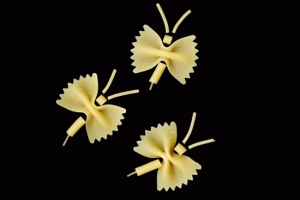
Copepods and Aphids, thats what! Want to know what else is allowed to lurk in your food. Read below, warning, some of it may gross you out!!
How many bugs are allowed in your pasta? Reading the FDA’s Food Defect Action Levels.
Posted in Uncategorized
Drew Brees’ Superbowl FreeRice Challenge
Thought+Food had recommended the Freerice game a while ago. Now Drew Brees bring us his Rice Bowl Challenge. Watch him here:
http://www.youtube.com/watch?v=ue9ykB6dIxE&feature=player_embedded
and please join in, its for a very good cause.
Posted in Uncategorized
How Food Price Rise Fueled Unrest in Egypt
Thought+Food reported on the worrisome global rise in food prices. An insight into how food price inflation factored into the current unrest in Egypt.
Snow and Speculation
 A new book “The Futures” by Emily Lambert recounts the growth of the city of Chicago and that of the futures market. What started out as speculation on the arrival or price of grains in case of bad weather has moved away from the actual commodities and morphed into the present day abstract state. Should be an interesting read.
Posted in Food Policy
A (Whole) Chicken in Every Pot
 Once in a while I read an article that is totally engrossing because it tells me so many new things about a subject that I thought I already knew about. Case in point: Nadia Aramugam’s article on the chicken industry’s problem with excess chicken legs. Breast meat being favored by consumers, there is a huge surplus of legs and thighs which need to be sold elsewhere. According to the article , there is virtually no difference, from the nutritional point of view, between white and dark meat. This perception was created by the poultry industry to make the breasts a “premium product”. It also explains the cultural preference for breast meat in America. This is often a mystery to consumers from other nations such as Asian countries where dark meat ,with a more intense flavor, is actually prefered over white. All this while, Americans have been choosing breast meat and the legs and thighs were welcomed in Russia. Not any more, as President Putin has warned against using them for health reasons (but more likely to implement his “self-sufficiency in chicken by 2012” policy). So where will all the legs and thighs go? The chicken industry which has demonstrated such resourcefulness thus far, will no doubt find a way out. “Legs! The Other White Meat” is a distinct possibility. Perhaps providing nutritious dark meat parts fresh for school lunches might be an option? Or we could go back to the days of using the whole chicken, for stock, soups and then move onto yummy grills and curries? Nose to tail for the poultry world….
When is a Centrist a Radical?
The answer, according to James E. Mcwilliams, is the moment when you enter the domain of food and take up position in the middle. In his book, “Just Food” he notes how polarizing the food wars can be: either you are a diehard supporter of organic farming or you are a “frankenfood” fan. “The dull but respectable place called the center” he finds, is a lonely place.
The subtitle of the book is “Where Locavores get it wrong and how we can truly eat responsibly” and this goes against the current push towards buying and eating locally. I started out with some scepticism but his essential arguement is convincing : eating locally may be a good plan on a personal level but we are not going to be able to solve the problems of the food system at the global level by eating and growing only local, organic food. The book is an easy read, the evidence is presented in an accessible way. So, pick it up if you can and see if you agree that “To be a centrist when it comes to food is, unfortunately, to be a radical.
Posted in Food Policy, Food Safety, Food Security, Nutrition
Tagged food policy, food safety, food security, nutrition
Global Food Price Rise

The rise in global food prices is has been noted by the U.N. and is now likely to be a topic for discussion at the G20 meeting in France.
While arguments are being made in favor of trade liberalisation or a ban on speculation in commodity prices, the contentious subject of subsidies is also going to come up.That agricultural subsidies distort prices is known but dealing with lowering or abolishing subsidies has proven difficult in the past. Everybody likes to point the finger elsewhere: China pays out $15 bn in agricultural subsidies, Brazil and India also make large subsidy payments to support their farmers but most of the pressure will be mounted on the EU and the US as developed countries who need to do their share. At this moment the US is also going to consider the new Farm Bill 2012 and subsidies are likely to feature in that discussion as well. It will be interesting to watch how domestic interests and the global agenda are balanced as the discussions start on the Farm Bill.
 Thought + Food