Food Fraud!

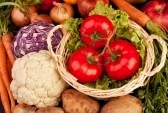
This is a pet peeve of mine: the theory that it is a smart idea to get kids to eat vegetables by  “hiding”/”disguising” them. So you “sneak in” as the proponents like to say, a serving of vegetables into the mac and cheese or other dishes that kids love and they will eat it without objection. I always want to ask this question: what happens when the kid leaves for college or gets a job (assuming the economy improves!)? Will he/she gravitate to the salad bar at the cafeteria or buy a nice steamer with their first pay check? No, because they will not have learned to enjoy veggies and make them a part of their diet.

So,what do we do about the daily veggie war? I would remind you of the old rule of parenting: kids do what they see not what they are told. So if your kids see you enjoying vegetables at your meal they will follow as well. Also, kids will eat it if it is tasty. Vegetables cook fast and there are plenty of recipes out there to suit the needs of all cooks. Splashing on some olive oil, salt and pepper and putting a tray of broccoli heads in the oven  does not take much longer than spinning  it in the microwave but it tastes much better.

I wrote this after learning that Kraft is adding a portion of freeze dried cauliflower to its instant mac and cheese and marketing it as a “healthy” option. First, what nutritional value do you think the kids will get from freeze dried anything? Second, in the time it takes to reconstitute the mac and cheese from the box, you could roast up some cauliflower heads and get more taste and nutritional value. Third, it is up to us parents to decide what is healthy, do not rely on what the box says.

Instant mac and cheese is a great option for crazy days when we seem to be rushing from work to school to ballet to swimming without pausing to breathe, but pushing veggies is still something we need to do.

Food Advocacy

Food Advocacy: The Ultimate Guide to Getting Involved – The Atlantic.

Marion Nestle’s list of organizations working to reform our food system provides many alternatives to those wishing to join in this effort.

Five Foods for Home Gardens


Five Great Foods to Grow in Urban Gardens. Great ideas and gorgeous pictures!

What is Local?

There is a general feeling that eating local is more “green”. Farmer’s markets are getting more business and more people are experimenting with vegetable gardens. But here is what a new study shows: the biggest impact on the global climate comes from growing food, not transporting it. If you want to make a good environmental choice, it would be more effective to focus on going meatless for some meals as meat production is a huge contributor to global warming.

So, does this mean we should stop reading the produce labels? Not really. The answer lies in analyzing the intent behind eating locally. One, it provides an outlet for local produce and contributes to local farmer’s incomes. Second, it is fresh and has not been treated in any way to last out the journey to your plate. Third, eating local, means also eating in the season. Instead of eating the same group of fruits and vegetables throughout the year (as they are readily available at the supermarket), we start eating a more varied diet as we are pushed to try different options from the local produce basket. This is a healthier way to eat and more importantly, it helps to conserve biodiversity by ensuring that a variety of produce is grown. If I only buy bananas, apples, broccoli and carrots throughout the year then that is what farmers will grow. By eating locally, I might try something new like a different type of squash or berry and these varieties will not be ignored and lost.

Now, about the meat question: both grass-fed and conventional beef fail badly on the green meter. Also, we know that a diet rich in fruits, vegetables and whole grain is better than one based on meat. So making a change towards a less meat-centric diet is beneficial to people and the planet. We can always start with baby steps: incorporate some beans that, like meat, are high in protein and also have big flavors, or start a new-veggie-a-week plan and discover some great flavors at your farmer’s market!

Eating locally= healthier diet+healthier planet so continue to read those labels and make good choices!

The Economics of Climate Change

So, by now, we have all heard or read about climate change and what we need to do to combat it. Assuming that most of us do not doubt the process of climate change, there is the debate on how to take care of it and most important how to pay for this efforts. The “how to take care” part depends on our evaluation of what the impact of climate change is going to be. On this, there are several schools of thought ( surprise!!), there are climate change models and also economic models which analyse this question.  We need to inform ourselves about this debate if we are to contribute meaningfully. If , like many of us, you have been otherwise occupied recently, fear not, here is a piece  from Grist.com that will introduce you to all of this in an easy way.

The Netherlands Is An Agricultural Exporter

I did not know this! Apparently, they have achieved this by using methods like aquaponics to obtain high yields. So what are they producing? I suspect it would mostly be flowers, fruits and vegetables. Faced with scarce land, the Dutch made smart use of water. faced with a water shortage , partly due to a warming planet, we need to think about drought resistant varieties of crops such as this initiative with maize in Uganda.

via Population Density Fact Of The Day: The Netherlands Is An Agricultural Exporter.

Local Food Sourcing By Chipotle

Chipotle is often the option of choice for those of us who need a quick meal without having to sacrifice quality. The beans are mostly organic, the meat is largely naturally raised and now that it is planning to double its use of locally sourced food, it should get a big boost in business. This is not “local” as in farmer’s market “local”  (“local” here is a 350 miles limit); but I would take it any day over a distorted food system where we insist on importing out of season produce over huge distances  just so we can satisfy our demand for asparagus in the dead of winter.We hear businesses say profit constraints prevent them from making choices that are better for the planet so when we see an initiative like this, we need to support it.

Food Price Rise Report

The USDA’s  Economic Research Service analysis on rising food prices is now available online here.

Senate Votes to Abolish Ethanol Subsidies

 http://www.economist.com/node/18867278?fsrc=scn/fb/wl/ar/fiscalsobriety.

What Budget Crunch?

NPR reports that $20b is spent annually on air conditioning in Iraq and Afghanistan. Now consider the speculation that agricultural programs may face cuts of $ 2o b to $ 30 b in the 2012 Farm Bill. It makes you wonder when our priorities went so astray. Sure, the welfare of troops in combat is crucial but it is time now to bring them to comforts at home and free up the money spent on endless engagements to restore the economy to a robust state. When there are 15 m children hungry, the battle has to be fought at home. Right now, as we are surrounded by the bounty of summer, luscious tomatoes and gleaming blueberries, hunger is an acute problem for kids who depend on the school lunch program the rest of the year. The annual school lunch budget? $ 9b. It can be argued that there is much room for improvement here.

There is no denying that we are going through testing times. While we do have the financial resources and skills to overcome this challenge, we need to make tough decisions regarding our priorities. This is not the time to make safe choices and cling to the status quo or live in denial. 2012 is not only the year for the next Farm Bill to be passed, it is also election year. When your candidate comes to ask for your vote, make sure he/she knows that food security, food safety and a fair food system are priorities for all of us.