Category Archives: Uncategorized

# Farming Friday 40: Strawberry Farming in Palestine

ID-100160950

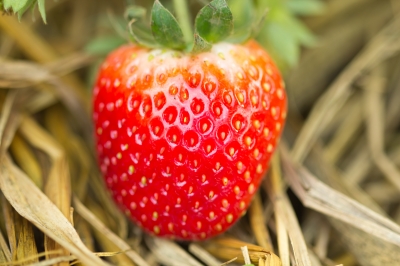
Every once in a while, everything about a farming story is new to me, and an exhilarating discovery. Like this one: the story of a strawberry farmer in Palestine, a place  which features frequently in the headlines but rarely for farming. There are only 20 strawberry farmers in the country!

There was a time when Osama Abu Al-Rub worried about the poor yield from his land but by adopting new techniques including precision irrigation, he was able to change his fortunes. His crop is awaited and coveted in the market. There is hope and there are dreams, for his daughter who is studying agriculture, and for his country. And watching the young women farmers visiting the farm, eager to learn, it is easy to believe that all those goals will be achieved.

(Image Courtesy: Strawberry by tiverylucky at freedigitalphotos.net)

Update on GMO Mustard

mus1

An update on the GMO mustard situation in India: while the regulatory and approval process moves forward,  the debate is warming up. Vandana Shiva, predictably opposes the acceptance of GMO mustard.  She expressed her opinion in a piece entitled “GMO in my Mustard”. The title is interesting: GMO is not an ingredient, to be contained” in” mustard or anything else. It is a technology, one that is now sought to be applied to growing high yielding mustard which, specially as a cooking medium (mustard oil) is crucial in Indian cooking.  India currently imports oil to meet domestic demand, and higher yields would enable it cut down the import bill.

The article seems to indicate some kind of concerted effort to ban mustard oil in favor of soy bean oil. It is true  that adulterated oil has caused significant public health issues including fatalities. Why would this be relevant to evaluating GMO mustard?  The food safety issues occurred in the past, no GMO mustard was cultivated at that point.

Another objection she raises involves dumping and subsidies. Those are important issues but not specific to GMO crops (any product from food to TVs can be dumped and many industries receive subsidies in different countries), they are trade issues, not those of agricultural biotechnology.

Dr. Pental , whose group conducted the research on GMO mustard addresses the issues raised by  Vandana Shiva, in  “The GMO in your mustard is good”, including the much repeated but baseless threat of “Terminator Technology”.  He also notes that since the new seeds have been developed by a research organization  instead of a corporation, they would be available at reasonable cost to the farmer.

And if the idea of “horizontal gene transfer” is causing concern, some facts here will allay your fears.

#Farming Friday 39: Tips from a Starter Vegetable Farmer

ID-10042546

We used to hear a lot about the farms being emptied out and the younger generation moving to the cities. But recently, I seem to read more stories like this: of younger people coming back to the farm and when they do so, they sometimes bring in a fresh approach as well: like the farmer in this story participating in a marketing effort that links the consumer directly to the farmer. That is a good step forward in enabling consumers to understand the actual process of growing food and hopefully, will make for a more nuanced discussion on food issues.

(Image Courtesy: Simon Howden, FreeDigitalPhotos.net)

#Farming Friday 38: What is a Family Farm?

ID-10031968

If we heard that the fifth generation of a family was running a farm , most of us would describe it as a “family farm”. But times have changed with each generation and if the appropriate use of technology helps better functioning of the farm, should we stop calling it a family farm and label it “factory farm” instead? Tagging things we don’t know much about is easy but reading  about this account from a dairy farmer gives us a an insight into why these tags are often far from reality.

(Image Courtesy: Simon Howden at FreeDigitalPhotos.net)

#FarmingFriday 38: Women Farmers in Europe

ID-100198731

Absorbing piece in Modern Farmer about women farmers in Europe: raising goats in Iceland, a cheese maker advocating for family farms in Holland, an urban farmer in London, and a new farmer starting up a hydroponic greenhouse in the Midi-Pyrenees region of France.

(Image Courtesy: dan at FreeDigitalPhotos.net)

#Farming Friday 37: Mizoram, India, Farmer’s Markets Built on Trust

ID-100116158

From Mizoram, in north east India , a unique marketing technique. Along the hillsides of this beautiful state, farmers display their produce: fruits, vegetables, dried fish, fresh snails, mark the prices and then, leave. Yes, leave! Customers come by and take what they want and put down the payment. None of the farmers mentioned in the piece have ever had a loss. Great story of trust and community!

(Image Courtesy: marin at freedigitalphotos.net)

The Unbearable Sadness of Cooking Without Chillies

ID-100219638

Finally, the silent crisis has been brought to light. Indian kitchens in the US have been battling this crisis for a while now. It is the sudden disappearance of green chillies from the market. At first, I thought it was a temporary glitch  and  asked about it on Facebook, back came the flood of answers. No, the problem was grave, green chillies were nowhere to be found. Friends from Texas offered to send us some, they were growing them in backyards. But it was not just the solution to my cooking problems I was looking for, I wanted to know what had caused the crisis. At my local Indian store the answer was surprising: the green chillies we prized so much came from the Dominican Republic and had been banned by the US after a invasion of Mediterranean fruit flies in that country.

So, some readers may wonder, why is this such a crisis? The aisles of grocery stores have plenty of peppers and chillies on offer. And yes, we are making do with jalapenos and other substitutes for the time being. But green chillies have a very special place  in the Indian kitchen: on a frozen Pennsylvania morning, the bite of  chillies in my scrambled eggs would bring a little fire into the grey morning.  Even if I was cooking for kids, adding in a chilli for a last simmer would bring in a swirl of flavor that no other spice can replicate. And once in a while I have a craving for a “chilli moment”, where it is the star of the dish and the ensuing tears are markers of delight! Without  them, every cooking session seems drab and incomplete.

This attachment we have to our food, the meaning it holds for us, beyond simply being a source of sustenance, is what makes our food debates so fraught. A practical response to existing conditions is often complicated by our emotions, memories, and habits associated with that food. So, climate change impacting Assam tea is not merely a problem that can be resolved by growing a different variety, it is the sinking feeling that that certain cup of tea shared at breakfast will cease to exist.

Hopefully, the green chilli will continue to exist. For now, we wait in hope that somewhere small emerald green slivers are ripening and will one day come to us to brighten our food and our lives.

(Image Courtesy: freedigitalphotos.net)

#Farming Friday 36: Synergistic Farming

ID-10043460

A farmer writes about the choices she makes in her work, picking what is effective from different farming systems. It is simplistic, she says, to try and categorize farms in discrete boxes, pulling practices from various systems can help achieve better solutions.

(Image “Harvesting” by Dan from freedigitalphotos.net)

Climate change impacts on livestock: ‘This information does not exist’

I have shared here issues around climate change and farming but as this piece reflects, not as much is known or discussed about the impact of climate change on livestock. More to learn…..

Susan MacMillan's avatarILRI news

CoulsonCryingCows

Rock engravings depicting long-horned cattle with their heads bowed, from the Early Hunter Period and found at the base of an inselberg at Tegharghart, south of Djanet,Tassili n’Ajjer, Algeria, a site known as ‘Crying Cows’ because of the way teardrops appear to roll down the faces of the animals (via David Coulson/©Trust for African Rock Art [TARA]).

A new working paper from the CGIAR Research Program on Climate Change, Agriculture and Food Security (CCAFS) has been published on the impacts of climate change on livestock across Africa. Lead author of the new paper, Philip Thornton, is a scientist with the International Livestock Research Institute (ILRI) and CCAFS.

The good news is that there are interventions that can help livestock keepers and their stock adapt to climate change. The bad news is that every widely applicable option available has its downsides when it comes…

View original post 678 more words

#Farming Friday 35: Farmers Talk About Climate Change

ID-10083401

One would think that if there was a group of people most involved in discussing the impact of uncertain climate , it would be farmers, as it is such an integral factor in their work. Politics, however, colored the debate and climate silence became the norm in Montana. Now, farmers are publishing reports on the impact of climate change as they experience it on their harvests with earlier harvests and seeding seasons and starting up the climate conversation again.

(Image Courtesy: koratmember at freedigitalphotos.net)