Category Archives: Uncategorized

Food for the Soul

cook

One of my favorite things to do to relax, is to pick up a cookbook about a cuisine and culture with which I am unfamiliar. That way, I feel I have taken a little holiday, walked (in spirit) down unknown and enticing roads, in a different light, breathing a different kind of air and I make up imaginary  meals from the recipes I am reading. Here are a few books that look intriguing. I bookmarked them for that “holiday” I just have to find time for, and I wanted to share them with you.

Polish history and polish cuisine feature in Anne Applebaum and Danielle Crittenden’s “From a Polish Country House Kitchen: 90 Recipes for the Ultimate Comfort Food”

Many of us are familiar with kimchi , thanks to the popularity of Korean food. “Cuisine, Colonialism and Cold War: Food In Twentieth Century Korea” by Katarzyna J. Cwiertka  explores how Koreans identify with this staple of their cuisine.

Celebrity chef Yottam Ottolenghi pays tribute to his homeland and its cuisine in “Jerusalem: A Cookbook”. 

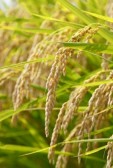
Is the “Rice Revolution” for Real?

rice

This week, the media was full of reports about a “rice revolution ” in India. The trail started from the article in the Guardian, which claimed that record yields of rice had been achieved in the state of Bihar, in India, without GM or herbicides. It reported how 5 farmers decided to use the SRI system( System of Rice Intensification) and came up with unprecedented yields of 22 tonnes per hectare. Nobel Prize winning economist Prof. Stiglitz is quoted as saying this type of inspiring organic farming should be studied and replicated elsewhere.

So, first I needed to understand what SRI involves: it is a set of techniques for managing soil , water, planting conditions to increase yield ,which was first noted in Madagascar by a priest and then tried out elsewhere as well. Improving agroecological practices is crucial for the food system but can this be replicated effectively to solve the system’s inherent problems? This question is best answered by looking at the report which gives details of this effort: the farmers start off with hybrid seeds from Bayer and Syngenta, and plants in the SRI as well as regular fields receive doses of inorganic fertilizer so this rice crop cannot actually be termed “organic”. The experiment provides pesticides to the regular crop but uses cono weeding to control pests in the SRI field. More labor is required in the SRI field for careful application of water but less water is actually required for the process, also fewer seedlings are planted in the SRI field and so less labor is required on that account. So what we have a is conventional seeds with good farming practices giving encouraging results. This is not unknown, to the contrary, many advocates have been recommending such a  mix of methods rather than depending for the sake of ideology on any one particular option.

Whether the results from Bihar can be replicated over time, countries and scale to have a real impact remains to be seen and one can hope that it will be useful specially for smallholder farmers. But long before that, the waters have been muddied by people pushing agendas. It seems strange that a year’s effort from five fields is touted as proof that biotechnology is useless but years of tests and safe consumption of biotech crops are dismissed as lies. For fixing a global food system breaking down under the strain of feeding a growing population and quite unprepared to withstand the shocks of climate change, we need the calm  of the middle not the chaos of the extreme and we owe it to the planet and to our children  to make that happen.

An Upside Down Food System

Image


An interesting piece from NPR on food experiences in Puerto Rico. The team found that local fresh fish and produce like mangoes and passion fruit were not easily found because they were exported to New York or London where they fetch higher prices. When the agricultural system was moved towards a more industrial model, local crops were often overlooked and that had an impact on eateries that served local specialties. Dining out in San Juan often means sushi or tacos these days. This experience is not atypical. The allure of trying out different cuisines and a smaller market for traditional fare leads to an eclipse of more homey foods. It also sometimes leads to quirky combos like “masala pasta”. 

Where do we go from here? With time, people will make an effort to grow local crops again. Food is so intimately linked to our feelings and memories that we find it hard to completely detach ourselves from our roots. If the local economy  becomes robust and can support higher prices, the produce that is currently exported will again find a market at home. But , in the meantime, what about all the recipes for this local produce? The grandmoms, moms and aunts have them in their hearts so make sure to write it all down so that future generations can share the same flavors  and feel a connection to their land and people.

What Should Tomatoes Cost?

tom

In keeping with my resolution to cook and eat in season, I have been trying to limit my tomato purchases. Still, I find myself gazing longingly at the piles of tomatoes at the grocery store. The price sticker shows the same price as it did over the summer. This puzzles me: should they not cost more as they are not in season? What determines the price of tomatoes anyway? It would include the cost of resources: seeds, water, fertilizers, labor, to start with. If any of these sees a rise in prices, tomatoes will cost more as well. So far land and water have not been an issue in the Unites States but with rising population and climate change these resources are the source of tension in many parts of the world. Farmland grabbing is now  a major phenomenon on several continents.

Cheap labor has also helped to keep food prices low but as countries like Mexico improve the standards of living, the flow of migrant labor will slow down. Will there be enough people to meet the demand for farm labor in America? Farm work is hard and the wages are very low. One way to resolve this would be to ensure a fair wage for farm workers, this might induce some current unemployed workers to move into this sector. This would make the food system better by ensuring that it is just and that we are not in the position of watching fruit rot on trees as there is no labor to harvest them while children go to bed hungry.

“Big Doors..”

This is the third anniversary of blogging at Thought+Food for me and  I am deeply thankful to all of you who check in, read, and share your views.  It is a small effort  and  the problems of our food system, may in contrast,  appear monumental but things have got to start somewhere. Every time we share information or make informed decisions as consumers it gives a little nudge to the status quo. As the saying goes, “Big doors swing on little hinges”. Let us make that door swing!

What Is Next?

Now that the elections are over, we can turn our attention back to all the unfinished business that never got done: food safety issues, hunger, the Farm Bill, re-calibrating the entire food system so it can deal with the impact of climate change. These are complex matters but not intractable, what is crucial is the will to find and enact the right solutions. Let us hope that everyone can find in them the ability to work together for better outcomes  for the food system.

The “Red Sorghum Experience”

When Mr. Mo Yan was awarded the Nobel Prize for Literature this year, I felt  bad I had never read his books. To make up for that I started trying to read up about his work and came across this fun read from The Telegraph, which reports that the Chinese government is planning to set up a “Mo Yan  Culture Experience Zone” in the author’s village. The irony of doing this to celebrate a book which depicts the horrors of war and violence against the backdrop of a beautiful landscape is lost on the planners, it is safe to say.

What is more interesting is that Mr. Mo Yan continues to live and work on his family farm, though neither he nor anyone else in the  village grows sorghum which was such a vital part of life in the past. Apparently, even in the novel, by the 1970s , the red sorghum had been replaced a by a green hybrid variety. The new “culture zone” plans to grow sorghum to maintain authenticity.

I liked the fact that Mr. Mo Yan is unmoved by all the plans unfolding around him, so unusual in these days of frenetic publicity tours and tie-ins. Now, I must read the book!

Eating Smart

How did we humans get to be the ones to control the world? By being smarter than other species, yes, but how did we get smarter? The answer, according to a Brazilian study, is because we learned to cook our food. Food became easier to chew and digest and , in some cases, contributed more calories. So  ancient humans now needed to spend less time looking for food and could , instead, ponder other important questions like who made the universe, is the earth flat, could I work even less than now if  I conquered another country and made those people work for me etc.

Cooking our food instead of eating it raw brought a new ritual to human lives: the camaraderie in the kitchen of those who prepared the meal, the gathering around the table  to enjoy nourishment and appreciate the food and also those who prepared it were all special moments. Perhaps that is why sometimes our strongest memories relate to food: the smell of herbs fresh from the garden, the crunch of the apple just picked from the tree, the aroma of meals on festive days. The act of cooking gives a deeper meaning to what would otherwise be, merely, fuel.

There’s More….

As the blog title says, this is a “thoughtful look” at many issues relating to food and I try to provide meaningful updates so if a couple of days go by without a post , please do continue to keep in touch.  Please look at the column on the right for current items from Twitter (or you could also follow me, @greenfork). Your interest and comments are greatly appreciated!

Food: Election Special

It’s that time of the election cycle when every detail of the candidates’ lives is discussed. So, the spotlight is now on Mormon food. There are very specific directions about food in Mormon culture: no alcohol or caffeine, a diet based on grains and produce with less  meat. It sounds like the basis for a healthy life. There is also an emphasis on canning and preserving which is also an important part of the current effort to eat locally and in season. But it’s not only the healthy stuff, there are desserts involving  jello and cool whip! Sounds like a lot of good rules leavened with some fun, perhaps a food platform we could live with….and in case you were thinking about canning, these pointers might prove useful.