Category Archives: Uncategorized

Guest Post: Why I’m Through with Organic Farming

Think you know what organic farming is all about? You are actually going to learn a lot from this organic farmer!

Fourat's avatarRandom Rationality

Following on from my last guest post, The Insanity of Biotech by biochemist Paul Little, Mike Bendzela is the author of this guest post. These guest posts have been tangentially exploring similar subjects I have in my book, but in different directions; and this post explores organic farming. In S3: Science, Statistics and Skepticism, I lightheartedly tackle the naturalistic fallacy and use some bad (and funny) statistics that purposefully confuse correlation with causation, intending to teach a lesson. As I was writing the book, Mike Bendzela reached out to me with his organic story that sprouts off from that Correlation chapter, and it is a supremely informative read. (A bit long, well worth it, and you’re used to long articles from me anyway.)


Why I’m Through with Organic Farming

by Mike Bendzela of Dow Farm Enterprise

It’s not what goes into your mouth that defiles you;

you are defiled by…

View original post 3,319 more words

The Conservation Question

ecot


Going through all the postings/ articles shared on the occasion of Earth Day, it is encouraging to note the concern for preserving the environment. But, along with  that, comes the realization that preservation/conservation really means different things to different people. As one writer notes, the idea of pristine nature, left to itself; without humans going in and wrecking it is somewhat of an artificial construct.  Delinking people and their surroundings is a distortion. Over centuries, people have lived in harmony with their surroundings but this relationship has become fractured in recent times. The need is to restore it, rather than banish people from these spaces.

In rural areas, the poorest sections of the population often depend on their surrounding environment for food, fuel, fodder,even medicine and shutting them out to “preserve” nature makes the rural poor more vulnerable to economic hardship. Even the practice of eco-tourism as a means of balancing conservation and economic priorities can actually have a negative impact on those who depend on the land for survival.This would become worse as climate change poses a challenge to the food system and way of life of many communities causing them to become food insecure and  displaced from their homelands.

There is a need to emphasize that tackling climate change is not solely a matter of desertification, rising oceans or vanishing habitats for plants and animals. Climate change is impacting the livelihoods of people, specially the rural poor. So any plan of action should, ideally, take the whole picture into account: how can people and the environment coexist in a time of climate change? The answer  can be found partly in the technology that is available to us today and also in the knowledge that indigenous communities possess that enabled them to prosper in their environment in the past.

(Image Courtesy: freedigitalphotos.net)

Coptic Easter and A Feast in Rural Egypt – Recipes Included

This is a fascinating post on food and culture which I enjoyed and wanted to share:

dianabuja's avatarDIANABUJA'S BLOG: Africa, The Middle East, Agriculture, History and Culture

Villages and hamlets in Egypt have traditionally been compactly built of mud brick, with crop leavings and fuel wood (such as cotton stocks) being stored on the roofs, as here.  In the absence of both space and rain, this is a good policy.  Source - Impresions de Egipto Villages and hamlets in Egypt have traditionally been compactly built of mud brick, with crop leavings and fuel wood (such as cotton branches) being stored on the roofs, as here. In the absence of both space and rain, this is a good policy. In this picture, a woman is bringing her expectant donkey a serving of barsiim or other succulent greens from her fields.  Source – Impresions de Egipto

During the years that I spent a good deal of my time working and living in Upper [southern] Egypt while conducting  doctoral research, I was invited by friends in a nearby izba [small, extended family-based village, or hamlet] to join them at their church for Easter celebrations. Not having been to a Coptic Easter, I gladly accepted.

[19/04/2014 – On reflection, I am not happy with some of the pictures or some of recipes, and will be revising over the next…

View original post 2,635 more words

Has modern agriculture cleaned up its dirty runoff act?

This is an interesting read on conservation efforts. What was interesting is that farm practices change depending on corn prices with higher price years focusing on increased production pressure on the land. But it was also an interesting insight into how conservation can be an integral part of farming and the two are not separate.

#Farming Friday 9: The Farm Worker

blue


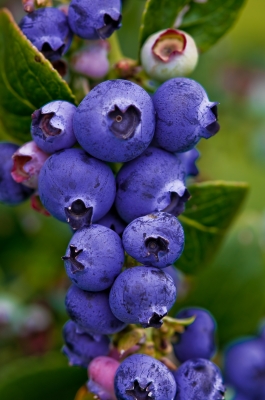
Despite the movie on Cesar Chavez playing everywhere, discussions on the food system swirl around producers (local, organic, Big Ag) and consumers. About the farm worker laboring under difficult conditions , often forced to live in appalling situations, and with hardly way of making his/her voice heard; little is mentioned. Here is the story (one among many) of workers on blueberry farms being deprived of their true wages and denied the value of their work.

#Farming Friday: An All Woman Farm

A whole different look at life on a farm: a farm run solely by women who hold agricultural degrees and work on the land. And they have to follow the rules just like any other farming operation, including the one about putting on make up before going to the fields!

#Farming Friday 8: How to Groom a Pig

pig


From Modern Farmer, a delightful story of teenagers and their care of the pigs they show in fairs.

The homogenisation and globalisation of diets

canwefeedtheworld's avatarOne Billion Hungry: Can We Feed the World?

ID-10083665 The UN Food and Agriculture Organization has estimated that some 75% of the diversity of cultivated crops was lost during the 20th Century and, by 2050, we could lose a third of current diversity.

A recent study by Khoury et al in Proceedings of the National Academy of Sciences of the United States of America, investigated how the composition of crops contributing to human diets has changed over the past 50 years. As suspected by many, diets across the world are becoming more homogenised or more similar with greater reliance on only a handful of crops, notably wheat, rice, potatoes and sugar (energy-dense foods). Wheat is now a major food in 97% of countries. Local and traditional crops, important regionally, such as millet, rye, yams and cassava (many of which are nutrient-dense) are being produced and consumed less. Although the amount of calories, protein and fat we consume has increased…

View original post 417 more words

#Farming Friday: A Farmer’s Take on GMO Labeling

Here is the Foodie Framer’s post on her testimony to the Maryland Legislature on why she has chosen GMO seeds and her stand on labeling. Much appreciation for her taking a public stance on this issue!

South Korea’s cheese binge is driving American milk prices to an all-time high